
- Ozempic
- Mounjaro
- Wegovy
- Semaglutide
- Retinol
- Finasteride
- Metformin
- Wellbutrin
- Melatonin
- Ashwagandha
- Lexapro
- Sertraline
- Creatine
- Prozac
- Fluoxetine
- Pregabalin
- Spironolactone
- Amlodipine
- Trazodone
- Akathisia
- Steroids
- Prednisone
- Doxycycline
- Tramadol
- Lisinopril
- Losartan
- Amoxicillin
- Androgenic
- Azithromycin
- Zoloft
- Statin
- Atorvastatin
- Acetylcysteine
- Adderall
- Alprazolam
- Amitriptyline
- Augmentin
- Cetirizine
- Cipro
- Clonazepam
- Clotrimazole
- Diazepam
- Fentanyl
- Gabapentin
- Hydroxyzine
- Ibuprofen
- Ivermectin
- Lorazepam
- Magnesium
- Meloxicam
- Metoprolol
- Metronidazole
- Mirtazapine
- Naproxen
- Omega 3
- Omeprazole
- Ondansetron
- Paracetamol
- Propranolol
- Quetiapine
- Sildenafil
- Tamsulosin
- Tirzepatide
- Tylenol
- Viagra
- Vitamin B12
- Vitamin C
- Vitamin D
- Xanax
- Acetaminophen
- Acyclovir
- Advil
- Albendazole
- Albuterol
- Alendronate
- Alfuzosin
- Allopurinol
- Amantadine
- Ambien
- Ambroxol
- Amiodarone
- Ampicillin
- Anastrozole
- Apixaban
- Aripiprazole
- Ascorbic Acid
- Aspirin
- Atarax
- Atenolol
- Ativan
- Atomoxetine
- Azelastine
- Bacitracin
- Baclofen
- Bactrim
- Bactroban
- Benadryl
- Bentyl
- Benzonatate
- Benztropine
- Betadine
- Betamethasone
- Biktarvy
- Biotin
- Bisacodyl
- Bisoprolol
- Botox
- Brilinta
- Budesonide
- Glycopyrrolate
- Bumetanide
- Buprenorphine
- Bupropion
- Buspar
- Buspirone
- Calcitriol
- Candesartan
- Captopril
- Carbamazepine
- Carvedilol
- Cefdinir
- Cefixime
- Ceftriaxone
- Cefuroxime
- Celebrex
- Celexa
- Cephalexin
- Chlorpheniramine
- Chlorthalidone
- Cholecalciferol
- Cialis
- Cilostazol
- Citalopram
- Claritin
- Clindamycin
- Clobetasol
- Clonidine
- Clopidogrel
- Clozapine
- Codeine
- Colace
- Colchicine
- Concerta
- Cosentyx
- Crestor
- Cyanocobalamin
- Cyclobenzaprine
- Cymbalta
- Dabigatran
- Dapagliflozin
- Decadron
- Denosumab
- Depakote
- Desloratadine
- Desvenlafaxine
- Dexamethasone
- Dexilant
- Dextroamphetamine
- Dextromethorphan
- Dextrose
- Dicyclomine
- Diflucan
- Digoxin
- Dilaudid
- Diltiazem
- Diphenhydramine
- Divalproex
- Docusate Sodium
- Domperidone
- Donepezil
- Dopamine
- Doxazosin
- Doxepin
- Doxycycline Hyclate
- Doxylamine
- Dulcolax
- Duloxetine
- Dupixent
- Dutasteride
- Echinacea
- Effexor
- Eliquis
- Empagliflozin
- Enalapril
- Epinephrine
- Epipen
- Erythromycin
- Escitalopram
- Esomeprazole
- Estradiol
- Euthyrox
- Excedrin
- Ezetimibe
- Famotidine
- Farxiga
- Febuxostat
- Fenofibrate
- Ferrous Sulfate
- Fexofenadine
- Fish Oil
- Flagyl
- Flecainide
- Flexeril
- Flomax
- Flonase
- Fluticasone
- Fluvoxamine
- Folic Acid
- Formoterol
- Fosamax
- Fosfomycin
- Furosemide
- Gardasil 9
- Garlic
- Gas X
- Gaviscon
- Gentamicin
- Ginkgo Biloba
- Ginseng
- Glimepiride
- Glipizide
- Glucagon
- Glucophage
- Glucosamine
- Glutathione
- Glycerin
- Griseofulvin
- Guaifenesin
- Guanfacine
- Haldol
- Haloperidol
- Heparin
- Hibiclens
- Humira
- Hydralazine
- Hydrea
- Hydrochlorothiazide
- Hydrocodone
- Hydrocortisone
- Hydromorphone
- Hydroxyurea
- Hyoscyamine
- Imiquimod
- Imodium
- Indapamide
- Inderal
- Indomethacin
- Infliximab
- Irbesartan
- Isosorbide
- Isosorbide Mononitrate
- Isotretinoin
- Itraconazole
- Ivabradine
- Janumet
- Januvia
- Japanese Knotweed
- Jardiance
- Kava
- Keflex
- Kenalog
- Keppra
- Ketoconazole
- Ketoconazole Shampoo
- Ketoprofen
- Ketorolac
- Keytruda
- Klonopin
- Labetalol
- Lacosamide
- Lactulose
- Lamictal
- Lamotrigine
- Lansoprazole
- Lantus
- Lasix
- Latanoprost
- Latuda
- Leflunomide
- Letrozole
- Levetiracetam
- Levocetirizine
- Levofloxacin
- Levothyroxine
- Lidocaine
- Linezolid
- Linzess
- Lipitor
- Liraglutide
- Lisdexamfetamine
- Lithium
- Lokelma
- Lomotil
- Loperamide
- Loratadine
- Lovenox
- Lyrica
- Macrobid
- Magnesium Citrate
- Magnesium Oxide
- Meclizine
- Medrol
- Mefenamic Acid
- Memantine
- Meropenem
- Metamucil
- Methadone
- Methimazole
- Methocarbamol
- Methotrexate
- Methylphenidate
- Methylprednisolone
- Metoclopramide
- Metoprolol Succinate
- Midazolam
- Midodrine
- Mirabegron
- Miralax
- Mobic
- Modafinil
- Montelukast
- Morphine
- Motrin
- Moxifloxacin
- Mucinex
- Mupirocin
- Nac
- Naloxone
- Naltrexone
- Narcan
- Nebivolol
- Neomycin
- Neosporin
- Neurontin
- Nexium
- Nexplanon
- Niacin
- Nifedipine
- Nitrofurantoin
- Nitroglycerin
- Norco
- Norepinephrine
- Norethindrone
- Nortriptyline
- Norvasc
- Octreotide
- Ofloxacin
- Olanzapine
- Olmesartan
- Orlistat
- Oseltamivir
- Oxazepam
- Oxcarbazepine
- Oxybutynin
- Oxycodone
- Oxycontin
- Oxygen
- Paroxetine
- Paxil
- Paxlovid
- Pepcid
- Percocet
- Phenazopyridine
- Phenergan
- Phenobarbital
- Phentermine
- Phenylephrine
- Phenytoin
- Pioglitazone
- Plan B
- Plaquenil
- Plavix
- Potassium Chloride
- Pradaxa
- Pravastatin
- Prazosin
- Prednisolone
- Prilosec
- Pristiq
- Prochlorperazine
- Progesterone
- Prolia
- Promethazine
- Propofol
- Protonix
- Pseudoephedrine
- Psyllium
- Pyridium
- Quercetin
- Quinine
- Rabeprazole
- Ramipril
- Ranitidine
- Ranolazine
- Reglan
- Remeron
- Repatha
- Rexulti
- Rifaximin
- Rinvoq
- Risperdal
- Risperidone
- Ritalin
- Rituximab
- Rivaroxaban
- Rizatriptan
- Robaxin
- Rocephin
- Rosuvastatin
- Rybelsus
- Salbutamol
- Scopolamine
- Senna
- Senokot
- Seroquel
- Simvastatin
- Singulair
- Sitagliptin
- Skyrizi
- Sodium Bicarbonate
- Sodium Chloride
- Solifenacin
- Soma
- Sotalol
- Spiriva
- Strattera
- Suboxone
- Sucralfate
- Sudafed
- Sulfasalazine
- Sumatriptan
- Symbicort
- Synthroid
- Tacrolimus
- Tadalafil
- Tamiflu
- Tamoxifen
- Tegretol
- Telmisartan
- Temazepam
- Tetracycline
- Thiamine
- Ticagrelor
- Tizanidine
- Topamax
- Topiramate
- Toradol
- Torsemide
- Tranexamic Acid
- Tremfya
- Tresiba
- Tretinoin
- Triamcinolone
- Triamcinolone Acetonide
- Trileptal
- Trimethoprim
- Trintellix
- Trulicity
- Ubrelvy
- Ultracet
- Unisom
- Urea
- Urea Cream
- Urso
- Ursodiol
- Valacyclovir
- Valium
- Valsartan
- Valtrex
- Vancomycin
- Varenicline
- Venlafaxine
- Ventolin
- Veozah
- Verapamil
- Vicodin
- Victoza
- Vistaril
- Vitamin B6
- Vitamin D3
- Vitamin E
- Vraylar
- Vyvanse
- Warfarin
- Witch Hazel
- Wormwood
- Xarelto
- Xenical
- Xifaxan
- Xolair
- Xylitol
- Xyzal
- Yarrow
- Yasmin
- Yaz
- Yellow Fever Vaccine
- Zantac
- Zepbound
- Zetia
- Zinc
- Zithromax
- Zofran
- Zoladex
- Zolpidem
- Zopiclone
- Zovirax
- Zyprexa
- Zyrtec
- Hydroxytryptophan
- Serious
- Other
Clindamycin Side Effects


I'm John Barbieri, MD, a board-certified dermatologist and acne expert at the Brigham and Women’s Hospital and Harvard Medical School. In this video we will cover the newly released fixed-dose combination Clindamycin phosphate 1.2%/adapalene 0.15%/benzoyl peroxide 3.1% gel for acne. These are some of the most impressive acne topical clinical trial results that I have ever seen.
#acne #adapalene #clindamycin #benzoylperoxide #retinoids #Cabtreo #antibiotics #dermatologist #expert
References:
https://pubmed.ncbi.nlm.nih.gov/37656094/
https://pubmed.ncbi.nlm.nih.gov/37801539/
https://pubmed.ncbi.nlm.nih.gov/37341243/
https://pubmed.ncbi.nlm.nih.gov/20919606/
https://pubmed.ncbi.nlm.nih.gov/37487721/
I have no relevant disclosures. This video is not sponsored.
Please subscribe and follow me on other platforms
X/Instagram: @DrJohnBarbieri
Disclaimer: This YouTube Channel does not provide any diagnosis, treatment or medical advice and does not replace a visit to your doctor. The statements are not intended to treat, diagnose, cure or prevent disease. See your doctor for medical advice and treatment. My statements on this channel are for informational purposes only.
Thumbnail credit: Sherry Ershadi


Clindamycin is an antibiotic which is used to treat for bacterial infections. Clindamycin is the generic name of the prescription drug Cleocin. In this video you can learn about clindamycin side effects.
Common clindamycin side effects
1. Bowel and bladder problems
2. rash
3. nausea
4. vomiting
5. unpleasant taste in your mouth.
Serious clindamycin side effects
1. Severe skin rashes
2. Antibiotic-associated diarrhea
3. Heartburn or acid regurgitation
4. Pain or difficulties when swallowing food
5. low blood pressure causing dizziness or fainting
6. Increased white blood cell count
7. In rare cases, breathing difficulties
Visit https://www.asideeffects.com to find answers for these most frequently asked questions.
1. What will happen if I used more than the recommended dosage?
2. What are Heartburn and clindamycin HCl side effects?
3. Is sore throat a common side effect of clindamycin?
4. How can I manage these issues at home?
5. Does it have major problems in pregnancy than in a normal person?
Read the full article about clindamycin side effects – 9 common questions and answers here.
https://www.asideeffects.com/clindamycin-side-effects-9-common-questions-and-answers/


Clindoxyl Gel is a combination of medicines that are used to treat acne.
In this video, let’s find found:
What is Clindoxyl gel used for?
Does Clindoxyl work on cystic acne?
How long does it take for Clindoxyl to work?
How do you use Clindoxyl gel?
▶Share this video with others: https://youtu.be/SEOsRE7GF6Y
▶Subscribe to learn more about He-info: @HeInFo123
#Clindoxyl #benzoylperoxide #clindamycin
_____________________________________________________
Do not forget to like, share and subscribe #He-info
Youtube: He-Info Channel
Facebook: https://www.facebook.com/Heinfoworld

Metronidazole tablet: - https://youtu.be/6kVmz2yXs2g
Doxycycline capsules: - https://youtu.be/7GVzczR9Ap8
Time topic
00:14 what is in this video
01:40 clindamycin capsule classification
02:23 clindamycin capsule brand name
03:25 clindamycin capsules uses in hindi | clindamycin capsules uses
06:13 clindamycin capsule 300 mg drug interaction
07:00 clindamycin 300 mg capsules side effects
07:44 clindamycin capsules dosage
Clindamycin is belongs to lincosamide class of antibiotics. Clindamycin capsule is primarily bacteriostatic drug. Clindamycin capsules available strength are clindamycin 150 mg capsules | clindamycin hcl 150 mg capsules and clindamycin capsules 300 mg.
Clindamycin capsules brand name are
1. Clindatime capsules
2. Clindacin capsules
3. Clindasure capsules
4. Dalacin c capsules and many other.
Clindamycin bind with 50s ribosome of bacteria and inhibit the bacterial protein synthesis thus death of bacteria.
This video contain information about clindamycin capsules | clindacin capsules including
1. Clindamycin capsules classification
2. Clindamycin capsules strength
3. Clindamycin capsules brand names
4. Clindamycin capsules uses in hindi
5. Clindamycin capsule drug interaction
6. Clindamycin capsules side effects
7. Clindamycin capsules dose and many other in hindi.
Like, share, subscribe
LEARN ABOUT MEDICINE
#lam
#learnaboutmedicine
#clindamycin
#clindacin
#clindasure
#dalacinC
#mohitdadhich


What Are The Side Effects Of Topical Clindamycin? In this informative video, we will discuss the side effects associated with the use of topical clindamycin for acne treatment. This antibiotic is widely used in dermatology to help manage acne and skin infections effectively. While it can provide significant benefits, being aware of the potential side effects is essential for anyone considering this medication.
We will cover common issues such as skin irritation, which may include redness, itching, and a burning sensation. Additionally, we will explore how some users experience dryness or increased oiliness of the skin. Allergic reactions, although less frequent, can also occur, and it’s important to know when to consult a dermatologist for unusual skin reactions.
Furthermore, we will touch on less common side effects, including gram-negative folliculitis and contact dermatitis. Some individuals may even notice a temporary worsening of acne before seeing improvements, which can be frustrating during treatment.
Following your dermatologist's guidance is vital for effective use. We will provide tips on how to use topical clindamycin safely and what to do if you experience persistent or severe side effects. Join us for this essential discussion, and subscribe to our channel for more helpful information on dermatological treatments.
⬇️ Subscribe to our channel for more valuable insights.
🔗Subscribe: https://www.youtube.com/@SkinS....avvyDermatology/?sub
#TopicalClindamycin #AcneTreatment #SkinCare #Dermatology #SkinHealth #Antibiotics #SkinIrritation #AcneMedication #Dermatologist #SkinConditions #ContactDermatitis #GramNegativeFolliculitis #AcneAwareness #HealthySkin #SkinCareTips #SkinCareRoutine
About Us: Welcome to Skin Savvy Dermatology, your go-to source for all things skin! Our channel is dedicated to empowering you with the knowledge and tools to achieve healthy, glowing skin. From understanding common skin conditions to exploring the latest treatments and skincare routines, we cover a wide range of topics that cater to all skin types and concerns. The content provided is for general informational and educational purposes only. It is not intended to substitute for professional medical advice, diagnosis, or treatment. Never disregard professional medical advice or delay seeking it because of something you have seen in this content. Never rely on this information in place of consulting with qualified healthcare professionals. The creators and distributors of this content are not responsible for any adverse effects or consequences resulting from the use of any suggestions, preparations, or procedures described in this material. Always consult with your healthcare provider before starting any new health-related practice or program.

Clindamycin phosphate topical gel for acne is an antibiotic, which is to be used with caution. There can be side effects to Clindamycin as it can be with any antibiotic.. I explain in my video how it works better with Benzoyl Peroxide and follow doctors' prescription fully and not stop midway. I give options of what it can be combined with to make it work more efficiently.
subscribe @involveevolve to find out more such information regarding health and beauty
-----------------------------------------------------------------
-----------------------------------------------------------------
CONNECT WITH ME
INSTAGRAM - @INVOLVE_EVOLVE
FACEBOOK - INVOLVE-EVOLVE
-----------------------------------------------------------------
-----------------------------------------------------------------
As I always say - If it doesn't evolve you it should not involve you ... Hence the name of my brand came about. I truly believe in empowering each other. The more we share the more we grow. We are all in this together.
I will look forward to your comments and suggestions about anything you want me to share in the comment section below
-----------------------------------------------------------------
-----------------------------------------------------------------
Links to my previous videos::
Best anti-hair fall shampoos available in India - https://youtu.be/JAL0HC_u9bk
All about Glycerin - https://youtu.be/YrYV91HTjfQ
Facial oil post my covid experience that saved my skin - https://youtu.be/ukhmJeyUObs
all about Peptides with product recommendations - https://youtu.be/vSxYfJkawXo
Boost your immunity with the best Vitamin-C supplement - https://youtu.be/Mi4bEFRUav0
the link to my first video on Indian face washes where I briefly talk about acids and key ingredients to look for in products
https://youtu.be/fUxqIqtspxI
All about pores -
https://youtu.be/HRSUxN8uzRI
Cellulite treatment - https://youtu.be/J8qTIYAZg6Y
Oil Pulling - https://youtu.be/tG1S3rOjKJQ
All about Hyaluronic Acid - https://youtu.be/wM-sR5_tOEY
All about lip care - https://youtu.be/qBSmZVJYKZ4
Skincare routine - Step by step
https://youtu.be/Bc3vrF8ohcg
-----------------------------------------------------------------
-----------------------------------------------------------------
DISCLAIMER*
I am not a doctor and the information provided is based on my personal experience and research in skincare, health, and wellness over more than a decade. The content is not intended to be a substitute for any professional medical advice, diagnosis, or treatment. The products specified are not to diagnose, treat, or prevent disease. Always seek the advice of your physician or any other qualified health provider with any questions you may have regarding a medical condition.
love ❤️
Umang
#clindamycin #clindamycingel #clindamycinphosphategel


Clindamycin (Cleocin) – Uses, Side Effects, Mechanism of Action, Dosage, Interactions, Warnings
Clindamycin (Cleocin) is a lincosamide antibiotic used to treat a variety of bacterial infections, including skin, respiratory, bone, intra-abdominal, gynecological, dental infections, and acne. It works by inhibiting bacterial protein synthesis via binding to the 50S ribosomal subunit, primarily acting against Gram-positive bacteria and anaerobes. It is usually bacteriostatic but may be bactericidal at higher concentrations. Common side effects include diarrhea, nausea, abdominal pain, and rash, while serious adverse effects can involve C. difficile-associated diarrhea, Stevens-Johnson syndrome, hepatotoxicity, and blood dyscrasias. Dosage varies by infection severity and route, with oral, intravenous, topical, and vaginal formulations available. Key drug interactions include enhanced effects with neuromuscular blockers and antagonism with erythromycin. Caution is advised in hepatic impairment, pregnancy, breastfeeding, and patients with known allergies to clindamycin or lincomycin.
#clindamycin #cleocin #clindamycinsideeffects #cleocinsideeffects #clindamycinuses #cleocinuses
Join this channel to get access to perks:
https://www.youtube.com/channe....l/UC9rsUNnjDbmfLJKTS
---------------------------------------------------------------------------------------------------------------------------------------------
Subscribe for more medical and health content: https://www.youtube.com/channe....l/UC9rsUNnjDbmfLJKTS
Check out our other helpful playlists
Obstetrics and Gynecology
https://www.youtube.com/playli....st?list=PLCol9OTVNl9
General Surgery Lessons
https://www.youtube.com/playli....st?list=PLCol9OTVNl9
Internal Medicine
https://www.youtube.com/playli....st?list=PLCol9OTVNl9
Child Health and Pediatrics
https://www.youtube.com/playli....st?list=PLCol9OTVNl9
Pharmacology Lecture Videos
https://www.youtube.com/playli....st?list=PLCol9OTVNl9
Anaesthesiology | Anesthesiology
https://www.youtube.com/playli....st?list=PLCol9OTVNl9
Medical Parasitology
https://www.youtube.com/playli....st?list=PLCol9OTVNl9
Infectious Diseases
https://www.youtube.com/playli....st?list=PLCol9OTVNl9
Pathology
https://www.youtube.com/playli....st?list=PLCol9OTVNl9
Microbiology
https://www.youtube.com/playli....st?list=PLCol9OTVNl9
Anatomy
https://www.youtube.com/playli....st?list=PLCol9OTVNl9
Ear Nose and Throat - ENT
https://www.youtube.com/playli....st?list=PLCol9OTVNl9
Oral Health | Oral Hygiene | Dental Health
https://www.youtube.com/playli....st?list=PLCol9OTVNl9
Ophthalmology | Eye Infections | Eye Diseases
https://www.youtube.com/playli....st?list=PLCol9OTVNl9
Oncology
https://www.youtube.com/playli....st?list=PLCol9OTVNl9
Sexually Transmitted Disease (STD) | Sexual Wellness & Health - Sexual Infection | STI
https://www.youtube.com/playli....st?list=PLCol9OTVNl9
Women's Health
https://www.youtube.com/playli....st?list=PLCol9OTVNl9
Men's Health
https://www.youtube.com/playli....st?list=PLCol9OTVNl9
Vitamins, Minerals and their Deficiencies | Vitamin Deficiencies | Mineral Deficiencies
https://www.youtube.com/playli....st?list=PLCol9OTVNl9
Clinical Skills | Clinical Techniques
https://www.youtube.com/playli....st?list=PLCol9OTVNl9
Pharmacology Mnemonics
https://www.youtube.com/playli....st?list=PLCol9OTVNl9
Internal Medicine Mnemonics
https://www.youtube.com/playli....st?list=PLCol9OTVNl9

Drugs Information,
CLINDAMYCIN - Generic Name, Brand Names, How to use, Precautions, Side Effects
Generic Name of Clindamycin,
Brand Names of Clindamycin,
What is Clindamycin?
Vital information of Clindamycin,
Before taking this medicine, (Precautions),
How to use of Clindamycin,
Stop Taking Clindamycin,
Miss a Dose of Clindamycin,
Overdose of Clindamycin
Side Effects of Clindamycin
short video
#medicalknowledgeonline
TOPICS
1. ANATOMY – Topics
https://www.youtube.com/playli....st?list=PLpHbgG-0bk1
2. PHYSIOLOGY – Topics
https://www.youtube.com/playli....st?list=PLpHbgG-0bk1
3. DISEASES – Topics
https://www.youtube.com/playli....st?list=PLpHbgG-0bk1
4. PUBLIC HEALTH- Topics
https://www.youtube.com/playli....st?list=PLpHbgG-0bk1
5. Rx – Topics
https://www.youtube.com/playli....st?list=PLpHbgG-0bk1
6. LABORATORY TEST – Topics
https://www.youtube.com/playli....st?list=PLpHbgG-0bk1
7. MEDICAL IMAGING – Topics
https://www.youtube.com/playli....st?list=PLpHbgG-0bk1
8. SURGICAL AND MEDICAL PROCEDURES – topics
https://www.youtube.com/playli....st?list=PLpHbgG-0bk1
9. MICROBIOLOGY – Topics
https://www.youtube.com/playli....st?list=PLpHbgG-0bk1
10. BIOCHEMISTRY – Topics
https://www.youtube.com/playli....st?list=PLpHbgG-0bk1
11. NUTRITION – Topics
https://www.youtube.com/playli....st?list=PLpHbgG-0bk1
12. HEALTH TOPICS
https://www.youtube.com/playli....st?list=PLpHbgG-0bk1
13. MEDICAL & SURGICAL – Topics
https://www.youtube.com/playli....st?list=PLpHbgG-0bk1
14. PAEDIATRICS / CHILD HEALTH – Topics
https://www.youtube.com/playli....st?list=PLpHbgG-0bk1
15. MENTAL HEALTH – Topics
https://www.youtube.com/playli....st?list=PLpHbgG-0bk1
16. MATERNAL HEALTH – Topics
https://www.youtube.com/playli....st?list=PLpHbgG-0bk1
17. COMMUNITY HEALTH – Topics
https://www.youtube.com/playli....st?list=PLpHbgG-0bk1
18. NURSING FOUNDATION – Topics
https://www.youtube.com/playli....st?list=PLpHbgG-0bk1
19. BIOSTATISTICS – Topics
https://www.youtube.com/playli....st?list=PLpHbgG-0bk1
20. PATHOLOGY – TOPICS
https://www.youtube.com/playli....st?list=PLpHbgG-0bk1
21. NURSING EDUCATION – Topics
https://www.youtube.com/playli....st?list=PLpHbgG-0bk1
22. HOSPITAL MANAGEMENT AND HEALTH CARE ADMINISTRATION – Topics
https://www.youtube.com/playli....st?list=PLpHbgG-0bk1
23. NURSING RESEARCH – TOPICS
https://www.youtube.com/playli....st?list=PLpHbgG-0bk1
24. NURSING FOUNDATION – Topics
https://www.youtube.com/playli....st?list=PLpHbgG-0bk1
25. PHARMACOLOGY – TOPICS
https://www.youtube.com/playli....st?list=PLpHbgG-0bk1
26. PUBLIC HEALTH – Topics
https://www.youtube.com/playli....st?list=PLpHbgG-0bk1
27. INTERNATIONAL DAYS
https://www.youtube.com/playli....st?list=PLpHbgG-0bk1
28. NURSING - TOPICS
https://www.youtube.com/playli....st?list=PLpHbgG-0bk1
#medicalknowledgeonline


Clindamycin is a lincosamide antibiotic used to treat serious infections caused by susceptible anaerobic, streptococcal, staphylococcal, and pneumococcal bacteria.
In this video, let’s find found:
What is Clindamycin?
What is Clindamycin used for?
Contraindication
What are the side effects of taking Clindamycin?
How does Clindamycin work?
How to use Clindamycin?
▶ Share this video with others: https://youtu.be/btqudJt31Jw
▶ Subscribe to learn more about @HeInFo123
#clindamycin #antibiotic #Cleocin
_____________________________________________________
Do not forget to like, share and subscribe #He-info
Youtube: He-Info Channel
Facebook: https://www.facebook.com/Heinfoworld
Tags: osteomyelitis, he-info, joint infections, pelvic inflammatory disease, strep throat, pneumonia, acute otitis media, endocarditis, antibiotic, antibiotic medication, bacterial infections, infection, acne, clindamycin, topical clindamycin, lincosamide, lincosamide antibiotic, clindamycin use, clindamycin contraindication, clindamycin side effect, clindamycin mechanism, Acanya, Benzaclin, Biacna, Cleocin, Cleocin-T, Clindacin, Clindagel, Clindesse, Clindoxyl, Dalacin, Dalacin C, Duac, Evoclin, Neuac, Onexton, Veltin, Xaciato, Ziana

Clindamycin 300 mg capsule uses | Clindamycin side effects | clindamycin mechanism of action - This lecture explains Clindamycin 300 mg capsule uses | Clindamycin side effects | clindamycin mechanism of action.
f you're looking for information about the use of Clindamycin 300 mg capsule, you've come to the right place! In this article, we'll discuss the different ways that Clindamycin 300 mg capsule can be used.
From treating acne to preventing pneumonia, Clindamycin 300 mg capsule has a variety of uses. If you're looking for information about the uses of Clindamycin 300 mg capsule, be sure to check out this article! We'll discuss everything from the benefits of Clindamycin 300 mg capsule to the dosages available.
If you're taking clindamycin 300 mg capsules for a UTI, be sure to read the label carefully to see if there are any other prescriptions or supplements you need to take with the clindamycin 300 mg capsules. Some common clindamycin 300 mg capsule uses include: prevention of PID, helping to clear acne, and treating acne.
In this video, we'll be discussing the uses for Clindamycin 300 mg capsules. Clindamycin is an antibiotic that is used to treat a variety of infections.
So if you're looking for an antibiotic to use to treat a bacterial infection, be sure to watch this video! We'll discuss the uses for Clindamycin 300 mg capsules and help you find the right dosage for you. Whether you're a doctor or a patient, this video is a great resource for you!
Join, Shomu's Biology csir net life science online coaching -
http://[a]www.shomusbiology.com%2Fnet-coaching[/a]
Get Shomu's Biology CSIR NET life science study materials here-
http://[a]www.shomusbiology.com%2Fdvd-store%2F[/a]
Download the study materials here-
http://shomusbiology.com/bio-materials.html
Remember Shomu’s Biology is created to spread the knowledge of life science and biology by sharing all this free biology lectures video and animation presented by Suman Bhattacharjee in YouTube. All these tutorials are brought to you for free. Please subscribe to our channel so that we can grow together. You can check for any of the following services from Shomu’s Biology-
Buy Shomu’s Biology lecture DVD set- [a]www.shomusbiology.com%2Fdvd-store[/a]
Shomu’s Biology assignment services – [a]www.shomusbiology.com%2Fassignment[/a] -help
Join Online coaching for CSIR NET exam – [a]www.shomusbiology.com%2Fnet-coaching[/a]
We are social. Find us on different sites here-
Our Website – www.shomusbiology.com
Facebook page- https://www.facebook.com/ShomusBiology/
Twitter - https://twitter.com/shomusbiology
SlideShare- www.slideshare.net/shomusbiology
Google plus- https://plus.google.com/113648584982732129198
LinkedIn - https://www.linkedin.com/in/su....man-bhattacharjee-2a
Youtube- https://www.youtube.com/user/TheFunsuman
Thank you for watching the lecture on Clindamycin 300 mg capsule uses | Clindamycin side effects | clindamycin mechanism of action.

For additional information, please visit: https://amzn.to/3SKVVPV The videos offer credible, free, and comprehensive information about disease prevention and screening, diagnosis and treatment and research. Our videos contain insights from experts and real people on various health issues, answering most of your questions, including how it happened, what it feels like, what you can do about it, and why it is important

WHAT IS CLINDAMYCIN?,
WHAT ARE THE SIDE EFFECTS OF CLINDAMYCIN?,
#medicalknowledgeonline,,
TOPICS
1. ANATOMY – Topics
https://www.youtube.com/playli....st?list=PLpHbgG-0bk1
2. PHYSIOLOGY – Topics
https://www.youtube.com/playli....st?list=PLpHbgG-0bk1
3. DISEASES – Topics
https://www.youtube.com/playli....st?list=PLpHbgG-0bk1
4. PUBLIC HEALTH- Topics
https://www.youtube.com/playli....st?list=PLpHbgG-0bk1
5. Rx – Topics
https://www.youtube.com/playli....st?list=PLpHbgG-0bk1
6. LABORATORY TEST – Topics
https://www.youtube.com/playli....st?list=PLpHbgG-0bk1
7. MEDICAL IMAGING – Topics
https://www.youtube.com/playli....st?list=PLpHbgG-0bk1
8. SURGICAL AND MEDICAL PROCEDURES – topics
https://www.youtube.com/playli....st?list=PLpHbgG-0bk1
9. MICROBIOLOGY – Topics
https://www.youtube.com/playli....st?list=PLpHbgG-0bk1
10. BIOCHEMISTRY – Topics
https://www.youtube.com/playli....st?list=PLpHbgG-0bk1
11. NUTRITION – Topics
https://www.youtube.com/playli....st?list=PLpHbgG-0bk1
12. HEALTH TOPICS
https://www.youtube.com/playli....st?list=PLpHbgG-0bk1
13. MEDICAL & SURGICAL – Topics
https://www.youtube.com/playli....st?list=PLpHbgG-0bk1
14. PAEDIATRICS / CHILD HEALTH – Topics
https://www.youtube.com/playli....st?list=PLpHbgG-0bk1
15. MENTAL HEALTH – Topics
https://www.youtube.com/playli....st?list=PLpHbgG-0bk1
16. MATERNAL HEALTH – Topics
https://www.youtube.com/playli....st?list=PLpHbgG-0bk1
17. COMMUNITY HEALTH – Topics
https://www.youtube.com/playli....st?list=PLpHbgG-0bk1
18. NURSING FOUNDATION – Topics
https://www.youtube.com/playli....st?list=PLpHbgG-0bk1
19. BIOSTATISTICS – Topics
https://www.youtube.com/playli....st?list=PLpHbgG-0bk1
20. PATHOLOGY – TOPICS
https://www.youtube.com/playli....st?list=PLpHbgG-0bk1
21. NURSING EDUCATION – Topics
https://www.youtube.com/playli....st?list=PLpHbgG-0bk1
22. HOSPITAL MANAGEMENT AND HEALTH CARE ADMINISTRATION – Topics
https://www.youtube.com/playli....st?list=PLpHbgG-0bk1
23. NURSING RESEARCH – TOPICS
https://www.youtube.com/playli....st?list=PLpHbgG-0bk1
24. NURSING FOUNDATION – Topics
https://www.youtube.com/playli....st?list=PLpHbgG-0bk1
25. PHARMACOLOGY – TOPICS
https://www.youtube.com/playli....st?list=PLpHbgG-0bk1
26. PUBLIC HEALTH – Topics
https://www.youtube.com/playli....st?list=PLpHbgG-0bk1
27. INTERNATIONAL DAYS
https://www.youtube.com/playli....st?list=PLpHbgG-0bk1
#medicalknowledgeonline


🔥 *Want to BURN off some fat? Click here!* 🔥 https://www.burnmyfats.com
👉 For more Medical Videos: https://bit.ly/2KF7OFe
- This is lesson n# 47 in "A DRUG IN BRIEF" Series. In this video I'm gonna discuss almost all you need to know about Clindamycin ( Cleocin ): What is Clindamycin Used For, Dosage, Side Effects, Precautions and mechanism of action
- In less than 3 minutes you'll learn:
- What is Clindamycin ( Cleocin )?
- Clindamycin is a Lincosamide antibacterial. It is a bacteriostatic agent. It binds to the 50S ribosomal subunit of the bacteria, leading to inhibition of translocation steps for protein synthesis.
- It is available as 75 mg, 150 mg and 300 mg tablets. And also available as oral solution, injection, vaginal cream and topical gel.
- Common uses include orofacial infections, cellulitis in beta-lactam intolerant patients, oral treatment of diabetic foot infections, prevention of bacterial endocarditis in patients unable to take amoxicillin, acne, bacterial vaginosis (usually topical), anaerobic lung abscess, pelvic inflammatory disease.
- Learn more about Clindamycin ( Cleocin ) mechanism of action ( mao ), uses, dosage, side effects, and precautions in this video...
- MORE "DRUG IN BRIEF" VIDEOS HERE:
https://www.youtube.com/watch?v=BM5dg5f2daE&t=2s&list=PLL3y4VLBMQfgmQqcppCvUdJvlsoQVlCvI&index=2
------------
Thanks for watching and don't forget to SUBSCRIBE, hit the LIKE button👍 and click the BELL button🔔 for future notifications 👌
**** LET'S CONNECT ****
- " Medical Videos " Android application on Google Play store:
https://play.google.com/store/....apps/details?id=com.
https://healthusher.com
https://www.facebook.com/MedicalVideosAnimated
https://www.instagram.com/medical_videos1
👉 Support Us to Help Us Continue Making Videos.. Thanks in Advance :)
- Via PayPal: https://www.paypal.me/medicalvideos
- Via Patreon: https://www.patreon.com/medicalvideosanimated
- The creator:
Pharmacist. Alaa Nasr
#MedicalVideosAnimated #aDrugInBrief
Affiliate Disclaimer: This video and description contains affiliate links, which means that if you click on one of the product links, I'll receive a small commission. This is at no extra cost to you and in many cases include exclusive discounts where applicable. This helps support the channel and allows me to continue to make free videos like this. Thank you for the support!

Welcome back to How To Medicate and welcome to this video on how and when to use clindamycin. I already made several videos on different antibiotics and if you are interested you can find those in the playlist here:
https://www.youtube.com/playli....st?list=PLaG3Bo3L0gX
Generic name: Clindamycin.
Brand names: Dalacin, Cleocin and Clinacin.
Available as: powder for oral suspension, capsules and injections.
How to use it?
Swallow the capsule whole with half a glass of water. Don’t break it or chew on it.
If you are using the suspension, than resolve the powder in half a glass of water and drink it.
Take it after or while eating some food. Also make sure to take it on fixed times. This lowers your chances on missing a dose.
Duration of treatment?
Usually 5 to 14 days, but it can be up to several months.
It is important that you do not interrupt the treatment and finish it completely.
When to use it?
Clindamycine is used for ”serious” infections caused by micro-organisms sensitive to clindamycin.
What is the correct dosage?
Always use the dosage and frequency prescribed by your own doctor.
General guideline for adults using capsules or oral suspensions: 150 mg every 6 hours.
In severe infections this can be increased to max. 600 mg every 8 hours.
Forgotten a dose?
Does it take less than 4 hours till your next dose? Than skip the dose you missed and take the forgotten dose at the end of your treatment.
What are the side-effects?
Very common (more than 10%): nausea, vomiting, abdominal pain, diarrhea.
Common (1-10%): inflammation of the mouth, esophagus or intestines, stomach pain, and a rash.
Safety:
You can combine clindamycin with any type of food and even with alcohol. However it can have some interactions with other drugs. Therefore always ask your prescribing doctor if clindamycine is safe for you to use.
It is also important you don’t use clindamycin if you are hypersensitive to lincomycins.
Pregnancy and Lactation:
It is “probably safe”. However, rarely it can have some negative consequences.
So discuss with your prescribing doctor is it is strictly necessary to use clindamycin and if there are better/safe options.
- Disclaimer: this video is meant purely informational! This is not medical advice! If you are looking for medical advice always contact your own doctor. -
Literature:
1: Farmacotherapeutisch Kompas. (2020). Clindamycine (systemisch).
2: Apotheek.nl. (2020). Clindamycine om in te nemen.
3. Durbin K. (2019). Clindamycin.
* The images in this video are used for educational purposes only.
Music:
1. Erik Lund, Summertime, Music promoted by Vlog No Copyright Music.
2. Jarico, Island, Music promoted by Vlog No Copyright Music.
Follow me on instagram: @HowtoMedicate
Follow me on twitter: @HowtoMedicate
Books I used In Medical School:
Lehninger Principles of Biochemistry Seventh Edition, https://amzn.to/2PFGidh
Guyton and Hall Textbook of Medical Physiology 14th Edition, https://amzn.to/3inL6jM
Human Anatomy & Physiology (12th Edition), https://amzn.to/2DHlHCT
Oxford Handbook of Clinical Specialties, https://amzn.to/3fU854s
Oxford Handbook of Emergency Medicine, https://amzn.to/31LfMVg
Oxford Handbook of Clinical Medicine, https://amzn.to/3ky73hZ
Janeway's Immunobiology, https://amzn.to/3gLZW3e
Atlas of Human Anatomy (Netter Basic Science), https://amzn.to/3afFe9c
Netter's Anatomy Flash Cards, https://amzn.to/2XSAMIN
The House of God, S. Shem, https://amzn.to/31I7HAU
Gear I use:
Camera: Canon EOS M50: https://amzn.to/33SNMSn
Microphone: Boya Lavalier Microphone: https://amzn.to/3aggLkc
Microphone: Rode VideoMicPro: https://amzn.to/3amCmrh
Computer: Apple Macbook Pro: https://amzn.to/33PDEtu
Grab our free cheatsheet covering the 50 most commonly prescribed medications right here: http://NURSING.com/50meds
Listen to all the episodes at: https://www.NURSING.com/medmaster-podcast/
View the blog post here: https://www.NURSING.com/clindamycin-cleocin/
Clindamycin
Generic Name: clindamycin
Trade Name: Cleocin Indication skin infections, respiratory tract infections, septicemia, intra-abdominal infections, osteomyelitis Action:
bacteriostatic: inhibits protein synthesis
Therapeutic Class: Anti-infectives
Pharmacologic Class: none
Nursing Considerations:
arrythmias, pseudomembranous colitis, diarrhea, phlebitis
monitor bowel function
assess for infection, obtain cultures prior to therapy
monitor liver function tests
monitor CBC


It's been over a year since the American Heart Association recommended that clinicians stop using clindamycin as the first choice for antibiotic prophylaxis in dentistry, but there's still a lot of confusion. Get ready to dive into this mystery!
The Dental Economics Network brings you the best content from Dental Economics, RDH, DentistryIQ, and Perio-Implant Advisory. Subscribe to get new videos each week.
Dental Economics: https://www.dentaleconomics.com/
RDH magazine: https://www.rdhmag.com/
DentistryIQ: https://www.dentistryiq.com/
Perio-Implant Advisory: https://www.perioimplantadvisory.com/


In this episode, I discuss a medication known as clindamycin and go over three things that you should know before using it:
1. Black Box Warning
2. Skin Reactions, Rash, etc.
3. Liver Issues
My book is now available! It discusses my experience with Bipolar Disorder.
The Fifth Episode - Inside The Manic Mind.
Find it here:
BookBaby (best way to support this project):
https://store.bookbaby.com/book/the-fifth-episode
Amazon:
https://www.amazon.com/Fifth-Episode-Inside-Manic-Mind/dp/1667843451/ref=sr_1_12?crid=26PVK90TTXRBO&keywords=the+fifth+episode+paperback&qid=1654191898&sprefix=the+fifth+episode+paperback%2Caps%2C61&sr=8-12
Barnes & Noble:
https://www.barnesandnoble.com..../w/the-fifth-episode
Support the channel on Patreon:
https://www.patreon.com/DrugTalk
Twitter: https://mobile.twitter.com/talkaboutdrugs
Instagram: https://www.instagram.com/garrett.campb/
Connect on Facebook: https://www.facebook.com/talkaboutdrugs
For information purposes only!

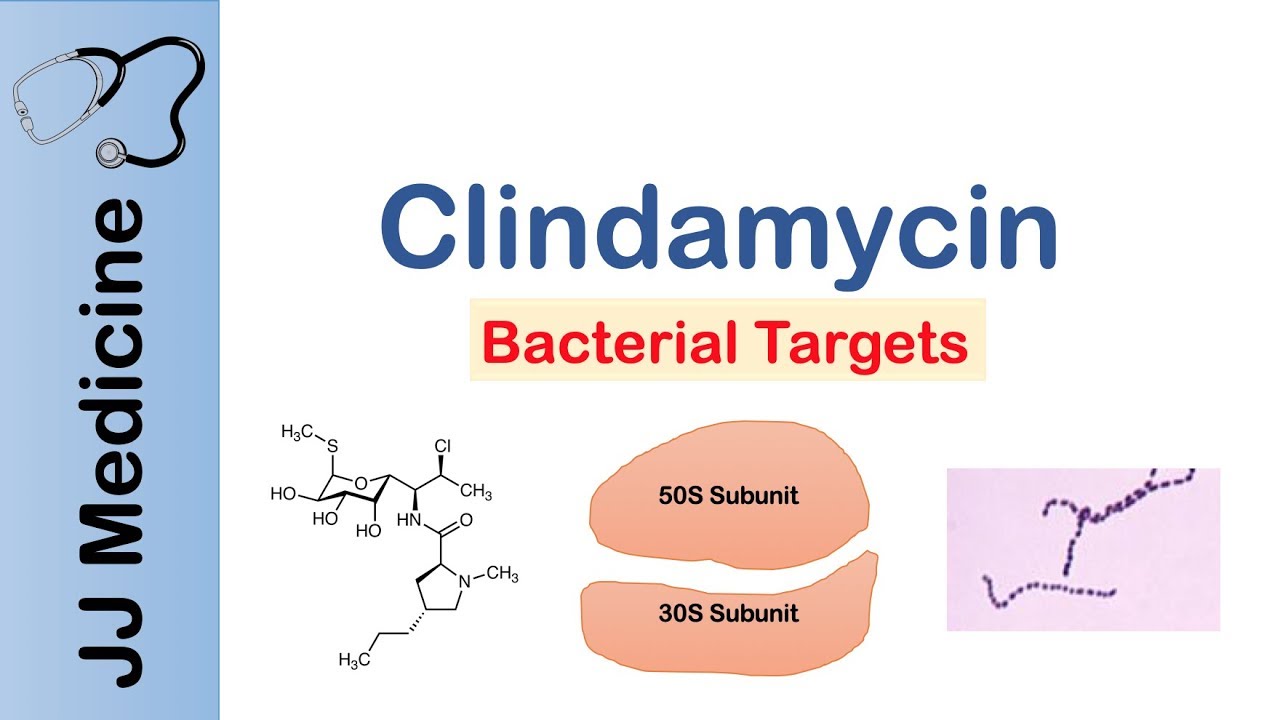
Lesson on the antibiotic Clindamycin (cleocin), what bacteria clindamycin targets, the mechanism of action of clindamycin, and adverse effects of clindamycin. Clindamycin is a lincosamide antibiotic that targets anaerobic bacteria well, being used for a variety of infections involving anaerobic bacteria such as oral infections, and intra-abdominal and pelvic infections.
Hey everyone! This is another antibiotic lesson! In this lesson, you will learn about the antibiotic clindamycin, the gram positive aerobes and anaerobes that clindamycin targets, how clindamycin works, and some of the adverse reactions associated with clindamycin usage. If you found this video helpful, please like and subscribe for more videos :)
JJ
*Subscribe for more free medical lessons* https://www.youtube.com/channe....l/UCFPvnkCZbHfBvV8Ap
-------------------------------------------------------------------------------------------------------------
For books and more information on these topics
https://www.amazon.com/shop/jjmedicine
Support future lessons (and get other cool stuff) ➜ https://www.patreon.com/jjmedicine
Follow me on Twitter! ➜ https://twitter.com/JJ_Medicine
Come join me on Facebook! ➜ https://www.facebook.com/JJ-Me....dicine-1006426481611
Start your own website with BlueHost ➜ https://www.bluehost.com/track/jjmedicine/
Check out the best tool to help grow your YouTube channel (it’s helped me!)
https://www.tubebuddy.com/jjmedicine
-------------------------------------------------------------------------------------------------------------
Check out some of my other lessons.
Medical Terminology - The Basics - Lesson 1:
https://www.youtube.com/watch?v=04Wh2E9oNug
Fatty Acid Synthesis Pathway:
https://www.youtube.com/watch?v=WuQS_LpNMzo
Wnt/B Catenin Signaling Pathway:
https://www.youtube.com/watch?v=NGVP4J9jpgs
Upper vs. Lower Motor Neuron Lesions:
https://www.youtube.com/watch?v=itNd74V53ng
Lesson on the Purine Synthesis and Salvage Pathway:
https://www.youtube.com/watch?v=e2KFVvI8Akk
Gastrulation | Formation of Germ Layers:
https://www.youtube.com/watch?v=d6Kkn0SECJ4
Introductory lesson on Autophagy (Macroautophagy):
https://www.youtube.com/watch?v=UmSVKzHc5yA
Infectious Disease Playlist
https://www.youtube.com/playli....st?list=PLRjNoiRtdFw
Dermatology Playlist
https://www.youtube.com/playli....st?list=PLRjNoiRtdFw
Pharmacology Playlist
https://www.youtube.com/playli....st?list=PLRjNoiRtdFw
Hematology Playlist
https://www.youtube.com/playli....st?list=PLRjNoiRtdFw
Rheumatology Playlist
https://www.youtube.com/playli....st?list=PLRjNoiRtdFw
Endocrinology Playlist
https://www.youtube.com/playli....st?list=PLRjNoiRtdFw
Nephrology Playlist
https://www.youtube.com/playli....st?list=PLRjNoiRtdFw
----------------------------------------------------------------------------------------------------
**MEDICAL DISCLAIMER**: JJ Medicine does not provide medical advice, and the information available on this channel does not offer a diagnosis or advice regarding treatment. Information presented in these lessons is for educational purposes ONLY, and information presented here is not to be used as an alternative to a healthcare professional’s diagnosis and treatment of any person/animal.
Only a physician or other licensed healthcare professional are able to determine the requirement for medical assistance to be given to a patient. Please seek the advice of your physician or other licensed healthcare provider if you have any questions regarding a medical condition.
----------------------------------------------------------------------------------------------------
*Although I try my best to present accurate information, there may be mistakes in this video. If you do see any mistakes with information in this lesson, please comment and let me know.*
I am always looking for ways to improve my lessons! Please don't hesitate to leave me feedback and comments - all of your feedback is greatly appreciated! :) And please don't hesitate to send me any messages if you need any help - I will try my best to be here to help you guys :)
Thanks for watching! If you found this video helpful, please like and subscribe!
JJ


