- Ozempic
- Mounjaro
- Wegovy
- Semaglutide
- Retinol
- Finasteride
- Metformin
- Wellbutrin
- Melatonin
- Ashwagandha
- Lexapro
- Sertraline
- Creatine
- Prozac
- Fluoxetine
- Pregabalin
- Spironolactone
- Amlodipine
- Trazodone
- Akathisia
- Steroids
- Prednisone
- Doxycycline
- Tramadol
- Lisinopril
- Losartan
- Amoxicillin
- Androgenic
- Azithromycin
- Zoloft
- Statin
- Atorvastatin
- Acetylcysteine
- Adderall
- Alprazolam
- Amitriptyline
- Augmentin
- Cetirizine
- Cipro
- Clonazepam
- Clotrimazole
- Diazepam
- Fentanyl
- Gabapentin
- Hydroxyzine
- Ibuprofen
- Ivermectin
- Lorazepam
- Magnesium
- Meloxicam
- Metoprolol
- Metronidazole
- Mirtazapine
- Naproxen
- Omega 3
- Omeprazole
- Ondansetron
- Paracetamol
- Propranolol
- Quetiapine
- Sildenafil
- Tamsulosin
- Tirzepatide
- Tylenol
- Viagra
- Vitamin B12
- Vitamin C
- Vitamin D
- Xanax
- Acetaminophen
- Acyclovir
- Advil
- Albendazole
- Albuterol
- Alendronate
- Alfuzosin
- Allopurinol
- Amantadine
- Ambien
- Ambroxol
- Amiodarone
- Ampicillin
- Anastrozole
- Apixaban
- Aripiprazole
- Ascorbic Acid
- Aspirin
- Atarax
- Atenolol
- Ativan
- Atomoxetine
- Azelastine
- Bacitracin
- Baclofen
- Bactrim
- Bactroban
- Benadryl
- Bentyl
- Benzonatate
- Benztropine
- Betadine
- Betamethasone
- Biktarvy
- Biotin
- Bisacodyl
- Bisoprolol
- Botox
- Brilinta
- Budesonide
- Glycopyrrolate
- Bumetanide
- Buprenorphine
- Bupropion
- Buspar
- Buspirone
- Calcitriol
- Candesartan
- Captopril
- Carbamazepine
- Carvedilol
- Cefdinir
- Cefixime
- Ceftriaxone
- Cefuroxime
- Celebrex
- Celexa
- Cephalexin
- Chlorpheniramine
- Chlorthalidone
- Cholecalciferol
- Cialis
- Cilostazol
- Citalopram
- Claritin
- Clindamycin
- Clobetasol
- Clonidine
- Clopidogrel
- Clozapine
- Codeine
- Colace
- Colchicine
- Concerta
- Cosentyx
- Crestor
- Cyanocobalamin
- Cyclobenzaprine
- Cymbalta
- Dabigatran
- Dapagliflozin
- Decadron
- Denosumab
- Depakote
- Desloratadine
- Desvenlafaxine
- Dexamethasone
- Dexilant
- Dextroamphetamine
- Dextromethorphan
- Dextrose
- Dicyclomine
- Diflucan
- Digoxin
- Dilaudid
- Diltiazem
- Diphenhydramine
- Divalproex
- Docusate Sodium
- Domperidone
- Donepezil
- Dopamine
- Doxazosin
- Doxepin
- Doxycycline Hyclate
- Doxylamine
- Dulcolax
- Duloxetine
- Dupixent
- Dutasteride
- Echinacea
- Effexor
- Eliquis
- Empagliflozin
- Enalapril
- Epinephrine
- Epipen
- Erythromycin
- Escitalopram
- Esomeprazole
- Estradiol
- Euthyrox
- Excedrin
- Ezetimibe
- Famotidine
- Farxiga
- Febuxostat
- Fenofibrate
- Ferrous Sulfate
- Fexofenadine
- Fish Oil
- Flagyl
- Flecainide
- Flexeril
- Flomax
- Flonase
- Fluticasone
- Fluvoxamine
- Folic Acid
- Formoterol
- Fosamax
- Fosfomycin
- Furosemide
- Gardasil 9
- Garlic
- Gas X
- Gaviscon
- Gentamicin
- Ginkgo Biloba
- Ginseng
- Glimepiride
- Glipizide
- Glucagon
- Glucophage
- Glucosamine
- Glutathione
- Glycerin
- Griseofulvin
- Guaifenesin
- Guanfacine
- Haldol
- Haloperidol
- Heparin
- Hibiclens
- Humira
- Hydralazine
- Hydrea
- Hydrochlorothiazide
- Hydrocodone
- Hydrocortisone
- Hydromorphone
- Hydroxyurea
- Hyoscyamine
- Imiquimod
- Imodium
- Indapamide
- Inderal
- Indomethacin
- Infliximab
- Irbesartan
- Isosorbide
- Isosorbide Mononitrate
- Isotretinoin
- Itraconazole
- Ivabradine
- Janumet
- Januvia
- Japanese Knotweed
- Jardiance
- Kava
- Keflex
- Kenalog
- Keppra
- Ketoconazole
- Ketoconazole Shampoo
- Ketoprofen
- Ketorolac
- Keytruda
- Klonopin
- Labetalol
- Lacosamide
- Lactulose
- Lamictal
- Lamotrigine
- Lansoprazole
- Lantus
- Lasix
- Latanoprost
- Latuda
- Leflunomide
- Letrozole
- Levetiracetam
- Levocetirizine
- Levofloxacin
- Levothyroxine
- Lidocaine
- Linezolid
- Linzess
- Lipitor
- Liraglutide
- Lisdexamfetamine
- Lithium
- Lokelma
- Lomotil
- Loperamide
- Loratadine
- Lovenox
- Lyrica
- Macrobid
- Magnesium Citrate
- Magnesium Oxide
- Meclizine
- Medrol
- Mefenamic Acid
- Memantine
- Meropenem
- Metamucil
- Methadone
- Methimazole
- Methocarbamol
- Methotrexate
- Methylphenidate
- Methylprednisolone
- Metoclopramide
- Metoprolol Succinate
- Midazolam
- Midodrine
- Mirabegron
- Miralax
- Mobic
- Modafinil
- Montelukast
- Morphine
- Motrin
- Moxifloxacin
- Mucinex
- Mupirocin
- Nac
- Naloxone
- Naltrexone
- Narcan
- Nebivolol
- Neomycin
- Neosporin
- Neurontin
- Nexium
- Nexplanon
- Niacin
- Nifedipine
- Nitrofurantoin
- Nitroglycerin
- Norco
- Norepinephrine
- Norethindrone
- Nortriptyline
- Norvasc
- Octreotide
- Ofloxacin
- Olanzapine
- Olmesartan
- Orlistat
- Oseltamivir
- Oxazepam
- Oxcarbazepine
- Oxybutynin
- Oxycodone
- Oxycontin
- Oxygen
- Paroxetine
- Paxil
- Paxlovid
- Pepcid
- Percocet
- Phenazopyridine
- Phenergan
- Phenobarbital
- Phentermine
- Phenylephrine
- Phenytoin
- Pioglitazone
- Plan B
- Plaquenil
- Plavix
- Potassium Chloride
- Pradaxa
- Pravastatin
- Prazosin
- Prednisolone
- Prilosec
- Pristiq
- Prochlorperazine
- Progesterone
- Prolia
- Promethazine
- Propofol
- Protonix
- Pseudoephedrine
- Psyllium
- Pyridium
- Quercetin
- Quinine
- Rabeprazole
- Ramipril
- Ranitidine
- Ranolazine
- Reglan
- Remeron
- Repatha
- Rexulti
- Rifaximin
- Rinvoq
- Risperdal
- Risperidone
- Ritalin
- Rituximab
- Rivaroxaban
- Rizatriptan
- Robaxin
- Rocephin
- Rosuvastatin
- Rybelsus
- Salbutamol
- Scopolamine
- Senna
- Senokot
- Seroquel
- Simvastatin
- Singulair
- Sitagliptin
- Skyrizi
- Sodium Bicarbonate
- Sodium Chloride
- Solifenacin
- Soma
- Sotalol
- Spiriva
- Strattera
- Suboxone
- Sucralfate
- Sudafed
- Sulfasalazine
- Sumatriptan
- Symbicort
- Synthroid
- Tacrolimus
- Tadalafil
- Tamiflu
- Tamoxifen
- Tegretol
- Telmisartan
- Temazepam
- Tetracycline
- Thiamine
- Ticagrelor
- Tizanidine
- Topamax
- Topiramate
- Toradol
- Torsemide
- Tranexamic Acid
- Tremfya
- Tresiba
- Tretinoin
- Triamcinolone
- Triamcinolone Acetonide
- Trileptal
- Trimethoprim
- Trintellix
- Trulicity
- Ubrelvy
- Ultracet
- Unisom
- Urea
- Urea Cream
- Urso
- Ursodiol
- Valacyclovir
- Valium
- Valsartan
- Valtrex
- Vancomycin
- Varenicline
- Venlafaxine
- Ventolin
- Veozah
- Verapamil
- Vicodin
- Victoza
- Vistaril
- Vitamin B6
- Vitamin D3
- Vitamin E
- Vraylar
- Vyvanse
- Warfarin
- Witch Hazel
- Wormwood
- Xarelto
- Xenical
- Xifaxan
- Xolair
- Xylitol
- Xyzal
- Yarrow
- Yasmin
- Yaz
- Yellow Fever Vaccine
- Zantac
- Zepbound
- Zetia
- Zinc
- Zithromax
- Zofran
- Zoladex
- Zolpidem
- Zopiclone
- Zovirax
- Zyprexa
- Zyrtec
- Hydroxytryptophan
- Serious
- Other
Tresiba Side Effects


Tresiba insulin?
My name is Ali ABDUL-Kareem, I am 21 years old, I do daily vlogs on my journey towards achieving great health with diabetes. I've had type 1 diabetes for about 3 years now. Comment and say hi! I wanna get to know YOU and how you live with this disease. Be sure to SUB to stay updated on daily vlogs!
--------------
Catch me hanging here with my Diabuddies!
Instagram: https://www.instagram.com/ali.abdlkareem/
Snapchat: https://www.snapchat.com/add/alawey96
-------------
Podcast!
https://itunes.apple.com/us/po....dcast/diabetes-hustl
Soundcloud: https://soundcloud.com/alawey-abdulkareem
Spreaker: https://www.spreaker.com/show/diabetesdailyhustle
--------------
The Diabetes Daily Hustle Facebook Support Group!
https://www.facebook.com/groups/153556628691697/
Music: https://www.youtube.com/watch?v=9ycJsnzJ-hA
https://www.youtube.com/watch?v=hfOUDPCy9FA
Please click here https://bit.ly/3kWYNwG, or scroll below to see Important Safety Information. Please see the Prescribing Information for Tresiba® at https://bit.ly/3JEzfPg
View information on Tresiba® FlexTouch® U-100 and learn how it compares to Insulin Glargine U-100.
For more information about features, dosing instructions, and coverage visit the Tresiba® Pro website – https://bit.ly/3XXs4pw
Indications and Usage
Tresiba® (insulin degludec) injection is indicated to improve glycemic control in patients 1 year of age and older with diabetes mellitus.
Limitations of Use
Tresiba® is not recommended for treating diabetic ketoacidosis.
Important Safety Information
Contraindications
• Tresiba® is contraindicated during episodes of hypoglycemia and in patients with hypersensitivity to insulin degludec or any of the excipients in Tresiba®
Warnings and Precautions
• Never Share a Tresiba® FlexTouch® Pen, Needle, or Syringe Between Patients, even if the needle is changed. Patients using Tresiba® vials should never share needles or syringes with another person. Sharing poses a risk for transmission of blood-borne pathogens.
• Hyperglycemia or Hypoglycemia with Changes in Insulin Regimen: Changes in an insulin regimen (e.g., insulin strength, manufacturer, type, or injection site or method of administration) may affect glycemic control and predispose to hypoglycemia or hyperglycemia. Repeated insulin injections into areas of lipodystrophy or localized cutaneous amyloidosis have been reported to result in hyperglycemia; and a sudden change in the injection site (to an unaffected area) has been reported to result in hypoglycemia. Make any changes to a patient’s insulin regimen under close medical supervision with increased frequency of blood glucose monitoring. Advise patients who have repeatedly injected into areas of lipodystrophy or localized cutaneous amyloidosis to change the injection site to unaffected areas and closely monitor for hypoglycemia. Adjustments in concomitant anti-diabetic treatment may be needed.
• Hypoglycemia: Hypoglycemia is the most common adverse reaction of insulin, including Tresiba®. Severe hypoglycemia can cause seizures, may be life-threatening or cause death. Hypoglycemia can impair concentration ability and reaction time; this may place the patient and others at risk in situations where these abilities are important (e.g., driving or operating other machinery). Hypoglycemia can happen suddenly and symptoms may differ in each patient and change over time in the same patient. Symptomatic awareness of hypoglycemia may be less pronounced in patients with longstanding diabetes, in patients with diabetic neuropathy, using drugs that block the sympathetic nervous system (e.g., beta-blockers) or who experience recurrent hypoglycemia. The long-acting effect of Tresiba® may delay recovery from hypoglycemia compared to shorter-acting insulins.
Risk Factors for Hypoglycemia: The risk of hypoglycemia generally increases with intensity of glycemic control. The risk of hypoglycemia after an injection is related to the duration of action of the insulin and, in general, is highest when the glucose lowering effect of the insulin is maximal. As with all insulins, the glucose lowering effect time course of Tresiba® may vary among different patients or at different times in the same patients and depends on many conditions, including the area of injection as well as the injection site blood supply and temperature. Other factors which may increase the risk of hypoglycemia include changes in meal pattern, changes in level of physical activity, or changes to concomitant drugs. Patients with renal or hepatic impairment may be at higher risk of hypoglycemia. Patients and caregivers must be educated to recognize and manage hypoglycemia. In patients at higher risk for hypoglycemia and patients who have reduced symptomatic awareness of hypoglycemia, increased frequency of blood glucose monitoring is recommended.
• Hypoglycemia Due to Medication Errors: Accidental mix-ups between insulin products have been reported. To avoid medication errors between Tresiba® and other insulins, always instruct patients to always check the insulin label before each injection. To avoid dosing errors and potential overdose, never use a syringe to remove Tresiba® from the Tresiba® FlexTouch® disposable insulin prefilled pen.
• Hypersensitivity Reactions: Severe, life-threatening, generalized allergy, including anaphylaxis, can occur with insulins, including Tresiba®. If hypersensitivity reactions occur, discontinue Tresiba®; treat per standard of care and monitor until symptoms and signs resolve.
Click here: https://bit.ly/3kWYNwG, or see video above for additional Important Safety information.


Please click here https://bit.ly/3kWYNwG, or scroll below to see Important Safety Information. Please see the Prescribing Information for Tresiba® at https://bit.ly/3JEzfPg
Philip Woodham, MD, discusses why he prescribes Tresiba® as a long-acting insulin for his appropriate patients with diabetes.
Hear from health care professionals about Tresiba® on the Tresiba® Pro website – https://bit.ly/3RrBiYM
Indications and Usage
Tresiba® (insulin degludec) injection is indicated to improve glycemic control in patients 1 year of age and older with diabetes mellitus.
Limitations of Use
Tresiba® is not recommended for treating diabetic ketoacidosis.
Important Safety Information
Contraindications
• Tresiba® is contraindicated during episodes of hypoglycemia and in patients with hypersensitivity to insulin degludec or any of the excipients in Tresiba®
Warnings and Precautions
• Never Share a Tresiba® FlexTouch® Pen, Needle, or Syringe Between Patients, even if the needle is changed. Patients using Tresiba® vials should never share needles or syringes with another person. Sharing poses a risk for transmission of blood-borne pathogens.
• Hyperglycemia or Hypoglycemia with Changes in Insulin Regimen: Changes in an insulin regimen (e.g., insulin strength, manufacturer, type, or injection site or method of administration) may affect glycemic control and predispose to hypoglycemia or hyperglycemia. Repeated insulin injections into areas of lipodystrophy or localized cutaneous amyloidosis have been reported to result in hyperglycemia; and a sudden change in the injection site (to an unaffected area) has been reported to result in hypoglycemia. Make any changes to a patient’s insulin regimen under close medical supervision with increased frequency of blood glucose monitoring. Advise patients who have repeatedly injected into areas of lipodystrophy or localized cutaneous amyloidosis to change the injection site to unaffected areas and closely monitor for hypoglycemia. Adjustments in concomitant anti-diabetic treatment may be needed.
• Hypoglycemia: Hypoglycemia is the most common adverse reaction of insulin, including Tresiba®. Severe hypoglycemia can cause seizures, may be life-threatening or cause death. Hypoglycemia can impair concentration ability and reaction time; this may place the patient and others at risk in situations where these abilities are important (e.g., driving or operating other machinery). Hypoglycemia can happen suddenly and symptoms may differ in each patient and change over time in the same patient. Symptomatic awareness of hypoglycemia may be less pronounced in patients with longstanding diabetes, in patients with diabetic neuropathy, using drugs that block the sympathetic nervous system (e.g., beta-blockers) or who experience recurrent hypoglycemia. The long-acting effect of Tresiba® may delay recovery from hypoglycemia compared to shorter-acting insulins.
Risk Factors for Hypoglycemia: The risk of hypoglycemia generally increases with intensity of glycemic control. The risk of hypoglycemia after an injection is related to the duration of action of the insulin and, in general, is highest when the glucose lowering effect of the insulin is maximal. As with all insulins, the glucose lowering effect time course of Tresiba® may vary among different patients or at different times in the same patients and depends on many conditions, including the area of injection as well as the injection site blood supply and temperature. Other factors which may increase the risk of hypoglycemia include changes in meal pattern, changes in level of physical activity, or changes to concomitant drugs. Patients with renal or hepatic impairment may be at higher risk of hypoglycemia. Patients and caregivers must be educated to recognize and manage hypoglycemia. In patients at higher risk for hypoglycemia and patients who have reduced symptomatic awareness of hypoglycemia, increased frequency of blood glucose monitoring is recommended.
• Hypoglycemia Due to Medication Errors: Accidental mix-ups between insulin products have been reported. To avoid medication errors between Tresiba® and other insulins, always instruct patients to always check the insulin label before each injection. To avoid dosing errors and potential overdose, never use a syringe to remove Tresiba® from the Tresiba® FlexTouch® disposable insulin prefilled pen.
• Hypersensitivity Reactions: Severe, life-threatening, generalized allergy, including anaphylaxis, can occur with insulins, including Tresiba®. If hypersensitivity reactions occur, discontinue Tresiba®; treat per standard of care and monitor until symptoms and signs resolve.
Click here: https://bit.ly/3kWYNwG, or see video above for additional Important Safety information.

Please click here https://bit.ly/3kWYNwG, or scroll below to see Important Safety Information. Please see the Prescribing Information for Tresiba® at https://bit.ly/3JEzfPg
Renowned diabetes expert Dr James R Gavin, III and past president of Morehouse College School of Medicine examines the mechanism of protraction of Tresiba®.
For more information on how Tresiba® works visit the Tresiba® Pro website – https://bit.ly/3Yhk7vL
Indications and Usage
Tresiba® (insulin degludec) injection is indicated to improve glycemic control in patients 1 year of age and older with diabetes mellitus.
Limitations of Use
Tresiba® is not recommended for treating diabetic ketoacidosis.
Important Safety Information
Contraindications
• Tresiba® is contraindicated during episodes of hypoglycemia and in patients with hypersensitivity to insulin degludec or any of the excipients in Tresiba®
Warnings and Precautions
• Never Share a Tresiba® FlexTouch® Pen, Needle, or Syringe Between Patients, even if the needle is changed. Patients using Tresiba® vials should never share needles or syringes with another person. Sharing poses a risk for transmission of blood-borne pathogens.
• Hyperglycemia or Hypoglycemia with Changes in Insulin Regimen: Changes in an insulin regimen (e.g., insulin strength, manufacturer, type, or injection site or method of administration) may affect glycemic control and predispose to hypoglycemia or hyperglycemia. Repeated insulin injections into areas of lipodystrophy or localized cutaneous amyloidosis have been reported to result in hyperglycemia; and a sudden change in the injection site (to an unaffected area) has been reported to result in hypoglycemia. Make any changes to a patient’s insulin regimen under close medical supervision with increased frequency of blood glucose monitoring. Advise patients who have repeatedly injected into areas of lipodystrophy or localized cutaneous amyloidosis to change the injection site to unaffected areas and closely monitor for hypoglycemia. Adjustments in concomitant anti-diabetic treatment may be needed.
• Hypoglycemia: Hypoglycemia is the most common adverse reaction of insulin, including Tresiba®. Severe hypoglycemia can cause seizures, may be life-threatening or cause death. Hypoglycemia can impair concentration ability and reaction time; this may place the patient and others at risk in situations where these abilities are important (e.g., driving or operating other machinery). Hypoglycemia can happen suddenly and symptoms may differ in each patient and change over time in the same patient. Symptomatic awareness of hypoglycemia may be less pronounced in patients with longstanding diabetes, in patients with diabetic neuropathy, using drugs that block the sympathetic nervous system (e.g., beta-blockers) or who experience recurrent hypoglycemia. The long-acting effect of Tresiba® may delay recovery from hypoglycemia compared to shorter-acting insulins.
Risk Factors for Hypoglycemia: The risk of hypoglycemia generally increases with intensity of glycemic control. The risk of hypoglycemia after an injection is related to the duration of action of the insulin and, in general, is highest when the glucose lowering effect of the insulin is maximal. As with all insulins, the glucose lowering effect time course of Tresiba® may vary among different patients or at different times in the same patients and depends on many conditions, including the area of injection as well as the injection site blood supply and temperature. Other factors which may increase the risk of hypoglycemia include changes in meal pattern, changes in level of physical activity, or changes to concomitant drugs. Patients with renal or hepatic impairment may be at higher risk of hypoglycemia. Patients and caregivers must be educated to recognize and manage hypoglycemia. In patients at higher risk for hypoglycemia and patients who have reduced symptomatic awareness of hypoglycemia, increased frequency of blood glucose monitoring is recommended.
• Hypoglycemia Due to Medication Errors: Accidental mix-ups between insulin products have been reported. To avoid medication errors between Tresiba® and other insulins, always instruct patients to always check the insulin label before each injection. To avoid dosing errors and potential overdose, never use a syringe to remove Tresiba® from the Tresiba® FlexTouch® disposable insulin prefilled pen.
• Hypersensitivity Reactions: Severe, life-threatening, generalized allergy, including anaphylaxis, can occur with insulins, including Tresiba®. If hypersensitivity reactions occur, discontinue Tresiba®; treat per standard of care and monitor until symptoms and signs resolve.
Click here: https://bit.ly/3kWYNwG, or see video above for additional Important Safety information.


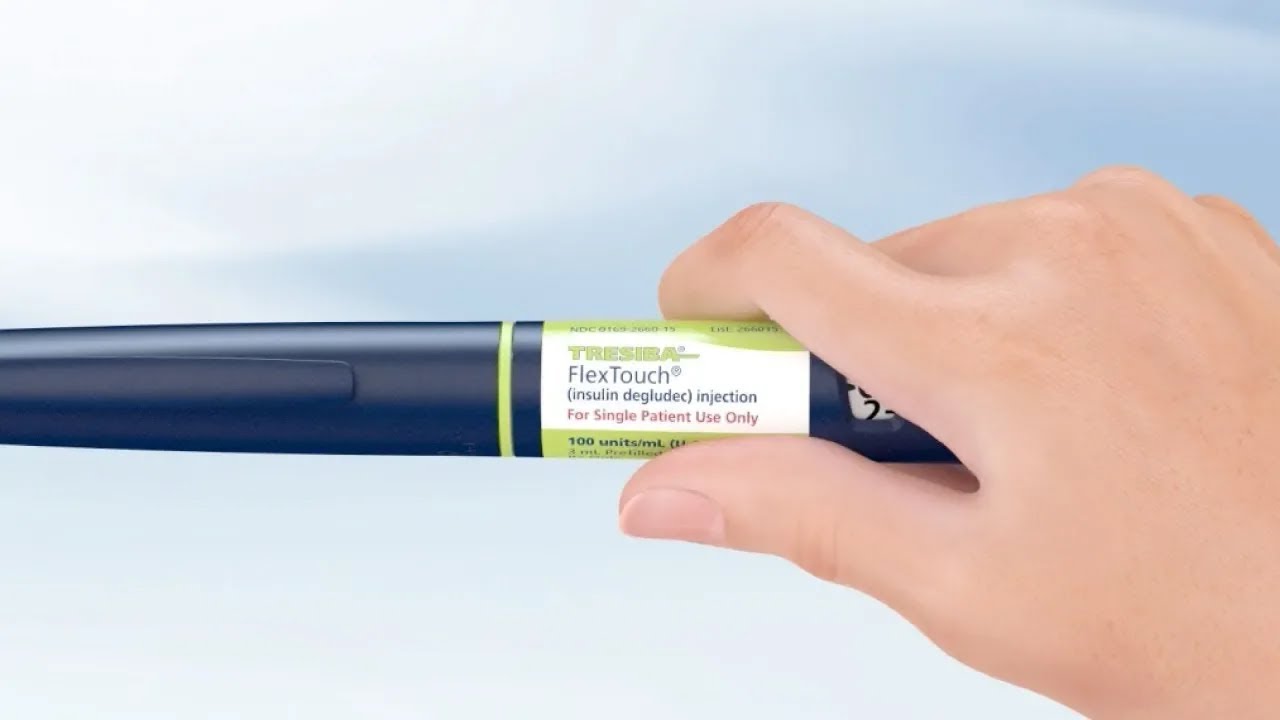
Learn how to use the Tresiba® FlexTouch® (insulin degludec) injection U-100 pen. See Important Safety Information below.
Please click here to see the Prescribing Information for Tresiba® — https://www.novo-pi.com/tresiba.pdf.
What is Tresiba®?
• Prescription Tresiba® is a long-acting insulin used to control high blood sugar in adults and children who are 1 year of age and older with diabetes
• Tresiba® is not for people with diabetic ketoacidosis (increased ketones in the blood or urine)
• It is not known if Tresiba® is safe and effective in children under 1 year of age
• Tresiba® is available in 2 concentrations: 200 units/mL and 100 units/mL
Important Safety Information
Do not share your Tresiba® FlexTouch® with other people, even if the needle has been changed. Do not share needles or syringes with another person. You may give other people a serious infection, or get a serious infection from them.
Who should not take Tresiba®?
Do not take Tresiba® if you:
• are having an episode of low blood sugar
• have an allergy to Tresiba® or any of the ingredients in Tresiba®
Before taking Tresiba®, tell your health care provider about all your medical conditions, including if you are:
• pregnant, planning to become pregnant, or are breastfeeding
• taking new prescription or over-the-counter medicines, vitamins, or herbal supplements
Talk to your health care provider about low blood sugar and how to manage it.
How should I take Tresiba®?
• Read the Instructions for Use and take Tresiba® exactly as your health care provider tells you to
• Do not do any conversion of your dose. The dose counter always shows the selected dose in units
• Know the type and strength of insulin you take. Do not change the type of insulin you take unless your health care provider tells you to
• Adults - If you miss or are delayed in taking your dose of Tresiba®:
o Take your dose as soon as you remember, then continue with your regular dosing schedule
o Make sure there are at least 8 hours between doses
• If children miss a dose of Tresiba®:
o Call the healthcare provider for information and instructions about checking blood sugar levels more often until the next scheduled dose of Tresiba®
• For children who need less than 5 units of Tresiba® each day, use a Tresiba® U-100 vial
• Check your blood sugar levels. Ask your health care provider what your blood sugar levels should be and when you should check them
• Do not reuse or share your needles or syringes with other people. You may give them a serious infection, or get a serious infection from them
• Never inject Tresiba® into a vein or muscle
• Never use a syringe to remove Tresiba® from the FlexTouch® pen
• Tresiba® can be injected under the skin (subcutaneously) of your upper legs (thighs), upper arms, or stomach area (abdomen).
• Change (rotate) your injection sites within the area you choose with each injection to reduce your risk of getting lipodystrophy (pits in skin or thickened skin) and localized cutaneous amyloidosis (skin with lumps) at the injection sites.
o Do not use the exact same spot for each injection.
o Do not inject where the skin has pits, is thickened, or has lumps.
o Do not inject where the skin is tender, bruised, scaly or hard, or into scars or damaged skin.
What should I avoid while taking Tresiba®?
• Do not drive or operate heavy machinery, until you know how Tresiba® affects you
• Do not drink alcohol or use prescription or over-the-counter medicines that contain alcohol
What are the possible side effects of Tresiba®?
Tresiba® may cause serious side effects that can be life-threatening, including:
• Low blood sugar (hypoglycemia). Signs and symptoms that may indicate low blood sugar include dizziness, light-headedness, sweating, confusion, headache, blurred vision, slurred speech, shakiness, fast heart beat, anxiety, irritability, mood changes, and hunger.
• Low potassium in your blood (hypokalemia)
• Heart failure in some people if taken with thiazolidinediones (TZDs). This can happen even if you have never had heart failure or heart problems. If you already have heart failure, it may get worse while you take TZDs with Tresiba®. Tell your health care provider if you have any new or worse symptoms of heart failure including shortness of breath, tiredness, swelling of your ankles or feet, and sudden weight gain
Your insulin dose may need to change because of change in level of physical activity or exercise, increased stress, change in diet, weight gain or loss, or illness.
Common side effects may include serious allergic reactions (whole body reactions), reactions at the injection site, skin thickening or pits at the injection site (lipodystrophy), itching, rash, swelling of your hands and feet, and weight gain.
Get emergency medical help if you have trouble breathing, shortness of breath, fast heartbeat, swelling of your face, tongue, or throat, sweating, extreme drowsiness, dizziness, or confusion.


This is my experience with using first Levemir and then Tresiba as my basal long-acting insulin.
I’ve been managing my diabetes with multiple daily injections (MDI) since 1997. I started used Levemir as my basal insulin in 2005 and switched to Tresiba in November 2020.
Although they are both basal insulins, they have very different blood sugar-lowering profiles and I’ve seen great benefits using both. This is my experience…..
00:00 What’s insulin, why do we need it and what is basal long-acting insulin?
1:43 What is Levemir and my experience
5:33 What is Tresiba and my experience
10:04 Conclusion, why I’ll stick with Tresiba
SUPPORT MY CHANNEL SUBSCRIBE to the Diabetes Strong YouTube Channel HERE ► https://goo.gl/VSNTQI
Check out more Diabetes Tips & Tricks HERE ► https://youtube.com/playlist?l....ist=PLP1_U1UAmvW7TUO
FOLLOW DIABETES STRONG ON:
Website: https://diabetesstrong.com/
Facebook: https://facebook.com/diabetesstrong
Pinterest: https://pinterest.com/diabetesstrong
Instagram: https://instagram.com/diabetesstrong_IG
DISCLAIMER: I’m not a medical professional, never stop your current treatment without consulting with your doctor


Please click here https://bit.ly/3kWYNwG, or scroll below to see Important Safety Information. Please see the Prescribing Information for Tresiba® at https://bit.ly/3JEzfPg
Steven Edelman, MD, reviews the features of Tresiba® FlexTouch® U-100 and U-200 and how device options play a role in his prescribing decisions.
For more information about Tresiba® FlexTouch® and vial visit the Tresiba® Pro website – https://bit.ly/3XXs4pw
Indications and Usage
Tresiba® (insulin degludec) injection is indicated to improve glycemic control in patients 1 year of age and older with diabetes mellitus.
Limitations of Use
Tresiba® is not recommended for treating diabetic ketoacidosis.
Important Safety Information
Contraindications
• Tresiba® is contraindicated during episodes of hypoglycemia and in patients with hypersensitivity to insulin degludec or any of the excipients in Tresiba®
Warnings and Precautions
• Never Share a Tresiba® FlexTouch® Pen, Needle, or Syringe Between Patients, even if the needle is changed. Patients using Tresiba® vials should never share needles or syringes with another person. Sharing poses a risk for transmission of blood-borne pathogens.
• Hyperglycemia or Hypoglycemia with Changes in Insulin Regimen: Changes in an insulin regimen (e.g., insulin strength, manufacturer, type, or injection site or method of administration) may affect glycemic control and predispose to hypoglycemia or hyperglycemia. Repeated insulin injections into areas of lipodystrophy or localized cutaneous amyloidosis have been reported to result in hyperglycemia; and a sudden change in the injection site (to an unaffected area) has been reported to result in hypoglycemia. Make any changes to a patient’s insulin regimen under close medical supervision with increased frequency of blood glucose monitoring. Advise patients who have repeatedly injected into areas of lipodystrophy or localized cutaneous amyloidosis to change the injection site to unaffected areas and closely monitor for hypoglycemia. Adjustments in concomitant anti-diabetic treatment may be needed.
• Hypoglycemia: Hypoglycemia is the most common adverse reaction of insulin, including Tresiba®. Severe hypoglycemia can cause seizures, may be life-threatening or cause death. Hypoglycemia can impair concentration ability and reaction time; this may place the patient and others at risk in situations where these abilities are important (e.g., driving or operating other machinery). Hypoglycemia can happen suddenly and symptoms may differ in each patient and change over time in the same patient. Symptomatic awareness of hypoglycemia may be less pronounced in patients with longstanding diabetes, in patients with diabetic neuropathy, using drugs that block the sympathetic nervous system (e.g., beta-blockers) or who experience recurrent hypoglycemia. The long-acting effect of Tresiba® may delay recovery from hypoglycemia compared to shorter-acting insulins.
Risk Factors for Hypoglycemia: The risk of hypoglycemia generally increases with intensity of glycemic control. The risk of hypoglycemia after an injection is related to the duration of action of the insulin and, in general, is highest when the glucose lowering effect of the insulin is maximal. As with all insulins, the glucose lowering effect time course of Tresiba® may vary among different patients or at different times in the same patients and depends on many conditions, including the area of injection as well as the injection site blood supply and temperature. Other factors which may increase the risk of hypoglycemia include changes in meal pattern, changes in level of physical activity, or changes to concomitant drugs. Patients with renal or hepatic impairment may be at higher risk of hypoglycemia. Patients and caregivers must be educated to recognize and manage hypoglycemia. In patients at higher risk for hypoglycemia and patients who have reduced symptomatic awareness of hypoglycemia, increased frequency of blood glucose monitoring is recommended.
• Hypoglycemia Due to Medication Errors: Accidental mix-ups between insulin products have been reported. To avoid medication errors between Tresiba® and other insulins, always instruct patients to always check the insulin label before each injection. To avoid dosing errors and potential overdose, never use a syringe to remove Tresiba® from the Tresiba® FlexTouch® disposable insulin prefilled pen.
• Hypersensitivity Reactions: Severe, life-threatening, generalized allergy, including anaphylaxis, can occur with insulins, including Tresiba®. If hypersensitivity reactions occur, discontinue Tresiba®; treat per standard of care and monitor until symptoms and signs resolve.
Click here: https://bit.ly/3kWYNwG, or see video above for additional Important Safety information.


As diabetes is on the rise, basal insulins also known as background insulin or long-acting insulins are becoming more popular. More people are starting on insulin now more than ever due to the increasing rise in insulin resistance likely due to obesity. The common long-acting insulins include Lantus, Basaglar, Levemir, Tresiba and Toujeo. However, it is important to note that now all of these insulins work the same. That is why not every patient has been prescribed the same insulin. It is important to know the difference between the insulins and to know how to properly take the insulins you've been prescribed. I educate you on all of these insulins and how basal insulin works in general.
Timecodes:
00:00 Basal insulins (long-acting insulins)
00:54 Basaglar, Levemir, Tresiba, Toujeo and Lantus
01:36 Basal insulins work throughout a 24 hour period
02:14 How to dose basal or long-acting insulins
#basalinsulin #diabetes #insulin #thevoiceofdiabetes
Facebook: https://www.facebook.com/thevoiceofdi...
Instagram: thevoiceofdiabetes
Email: [email protected]
Disclaimer: The information on this channel (The Voice of Diabetes) is provided as an information resource ONLY. It is not to be used or relied on for any diagnostic or treatment purposes. This information is not intended to be patient education, does not create any patient-physician (APRN) relationship, and should not be used as a substitute for professional diagnosis and treatment. Please consult your health care provider before making any healthcare decisions or for guidance about a specific medical condition. Diana Bytyqi, DNP, FNP-C, shall have no liability for any damages, loss, injury, or liability whatsoever suffered as a result of your reliance on the information contained on this site.


Please click here https://bit.ly/3kWYNwG, or scroll below to see Important Safety Information. Please see the Prescribing Information for Tresiba® at https://bit.ly/3JEzfPg
Hear about the pharmacokinetics behind the duration of action of Tresiba® from past president of Morehouse College School of Medicine and renowned diabetes expert Dr James R Gavin, III.
For more information about the duration of action of Tresiba® visit the Tresiba® Pro website – https://bit.ly/3RyvOeH
Indications and Usage
Tresiba® (insulin degludec) injection is indicated to improve glycemic control in patients 1 year of age and older with diabetes mellitus.
Limitations of Use
Tresiba® is not recommended for treating diabetic ketoacidosis.
Important Safety Information
Contraindications
• Tresiba® is contraindicated during episodes of hypoglycemia and in patients with hypersensitivity to insulin degludec or any of the excipients in Tresiba®
Warnings and Precautions
• Never Share a Tresiba® FlexTouch® Pen, Needle, or Syringe Between Patients, even if the needle is changed. Patients using Tresiba® vials should never share needles or syringes with another person. Sharing poses a risk for transmission of blood-borne pathogens.
• Hyperglycemia or Hypoglycemia with Changes in Insulin Regimen: Changes in an insulin regimen (e.g., insulin strength, manufacturer, type, or injection site or method of administration) may affect glycemic control and predispose to hypoglycemia or hyperglycemia. Repeated insulin injections into areas of lipodystrophy or localized cutaneous amyloidosis have been reported to result in hyperglycemia; and a sudden change in the injection site (to an unaffected area) has been reported to result in hypoglycemia. Make any changes to a patient’s insulin regimen under close medical supervision with increased frequency of blood glucose monitoring. Advise patients who have repeatedly injected into areas of lipodystrophy or localized cutaneous amyloidosis to change the injection site to unaffected areas and closely monitor for hypoglycemia. Adjustments in concomitant anti-diabetic treatment may be needed.
• Hypoglycemia: Hypoglycemia is the most common adverse reaction of insulin, including Tresiba®. Severe hypoglycemia can cause seizures, may be life-threatening or cause death. Hypoglycemia can impair concentration ability and reaction time; this may place the patient and others at risk in situations where these abilities are important (e.g., driving or operating other machinery). Hypoglycemia can happen suddenly and symptoms may differ in each patient and change over time in the same patient. Symptomatic awareness of hypoglycemia may be less pronounced in patients with longstanding diabetes, in patients with diabetic neuropathy, using drugs that block the sympathetic nervous system (e.g., beta-blockers) or who experience recurrent hypoglycemia. The long-acting effect of Tresiba® may delay recovery from hypoglycemia compared to shorter-acting insulins.
Risk Factors for Hypoglycemia: The risk of hypoglycemia generally increases with intensity of glycemic control. The risk of hypoglycemia after an injection is related to the duration of action of the insulin and, in general, is highest when the glucose lowering effect of the insulin is maximal. As with all insulins, the glucose lowering effect time course of Tresiba® may vary among different patients or at different times in the same patients and depends on many conditions, including the area of injection as well as the injection site blood supply and temperature. Other factors which may increase the risk of hypoglycemia include changes in meal pattern, changes in level of physical activity, or changes to concomitant drugs. Patients with renal or hepatic impairment may be at higher risk of hypoglycemia. Patients and caregivers must be educated to recognize and manage hypoglycemia. In patients at higher risk for hypoglycemia and patients who have reduced symptomatic awareness of hypoglycemia, increased frequency of blood glucose monitoring is recommended.
• Hypoglycemia Due to Medication Errors: Accidental mix-ups between insulin products have been reported. To avoid medication errors between Tresiba® and other insulins, always instruct patients to always check the insulin label before each injection. To avoid dosing errors and potential overdose, never use a syringe to remove Tresiba® from the Tresiba® FlexTouch® disposable insulin prefilled pen.
• Hypersensitivity Reactions: Severe, life-threatening, generalized allergy, including anaphylaxis, can occur with insulins, including Tresiba®. If hypersensitivity reactions occur, discontinue Tresiba®; treat per standard of care and monitor until symptoms and signs resolve.
Click here: https://bit.ly/3kWYNwG, or see video above for additional Important Safety information.

Dr. B. K. Roy MBBS, MD, DM ( Endocrinology), (Mob. 8800843976, 9911724317 ) MES (USA), ESDCC (USA), Consultant Diabetes Thyroid Hormone Specialist at APOLLO HOSPITAL Noida & his Own Delhi & Noida Centre. Ex. Asstt. Professor at School of Medical Sciences & Research at Greater Noida.
Clinic Certified by Endocrine Society of USA,
Delivers lectures or Chairs Sessions or Speaks as Panelist on Diabetes & Hormone Diseases in various Medical Forums.Took special training from AIIMS Delhi & PGI Chandigarh. Senior Member Endocrine Society of India. Senior Member Diabetes Association Of India of India. Active Member of Indian Medical Association. Attends various National & International Conferences. Regularly shown on various TV Channels as Hormone Specialist.
My Contact Address are :
(1). Delhi Centre: Hormone Centre, Surana Bhawan, Near Laxmi Nagar Metro Station, Vikas Marg, Delhi 110092,
(2) Noida Centre: Chamber No. -17, Savitry Market, Near Sector 18, Metro Station, Noida, Uttar Pradesh , Noida,
(3.) Apollo Hospital, Sector-26, Beside Club 26, Noida
Contact Numbers:
Please Whattsapp or SMS at 8800843976 any Enquiry. Website: www.diabetesthyroidhormone.com
I am very thankful to you for watching my videos. I Promise that I will keep posting useful videos for you. Please do not call for Free Consultation / Advise on Phone as these Telephone Calls are are attended by My Clinic staff, they will not be able to give you answer of any medical query. Thus Please write your problem in Email, Whatsapp or SMS message. We Shall let you know what to do for that. As I am a Practicing Doctor Thus It is not possible for me to give Free Consultation for so many Patients on phone. Thus Kindly contact me via whattsapp or SMS.

Please click here https://bit.ly/3kWYNwG, or scroll below to see Important Safety Information. Please see the Prescribing Information for Tresiba® at https://bit.ly/3JEzfPg
Help your patients learn to use the Tresiba® U-100 Pen in this easy to follow video which shows detailed instructions on how to administer Tresiba® insulin.
For more information on Tresiba®, including cost and coverage, and resources for you and your patients, visit the Tresiba® Pro website – https://bit.ly/3XXs4pw
Indications and Usage
Tresiba® (insulin degludec) injection is indicated to improve glycemic control in patients 1 year of age and older with diabetes mellitus.
Limitations of Use
Tresiba® is not recommended for treating diabetic ketoacidosis.
Important Safety Information
Contraindications
• Tresiba® is contraindicated during episodes of hypoglycemia and in patients with hypersensitivity to insulin degludec or any of the excipients in Tresiba®
Warnings and Precautions
• Never Share a Tresiba® FlexTouch® Pen, Needle, or Syringe Between Patients, even if the needle is changed. Patients using Tresiba® vials should never share needles or syringes with another person. Sharing poses a risk for transmission of blood-borne pathogens.
• Hyperglycemia or Hypoglycemia with Changes in Insulin Regimen: Changes in an insulin regimen (e.g., insulin strength, manufacturer, type, or injection site or method of administration) may affect glycemic control and predispose to hypoglycemia or hyperglycemia. Repeated insulin injections into areas of lipodystrophy or localized cutaneous amyloidosis have been reported to result in hyperglycemia; and a sudden change in the injection site (to an unaffected area) has been reported to result in hypoglycemia. Make any changes to a patient’s insulin regimen under close medical supervision with increased frequency of blood glucose monitoring. Advise patients who have repeatedly injected into areas of lipodystrophy or localized cutaneous amyloidosis to change the injection site to unaffected areas and closely monitor for hypoglycemia. Adjustments in concomitant anti-diabetic treatment may be needed.
• Hypoglycemia: Hypoglycemia is the most common adverse reaction of insulin, including Tresiba®. Severe hypoglycemia can cause seizures, may be life-threatening or cause death. Hypoglycemia can impair concentration ability and reaction time; this may place the patient and others at risk in situations where these abilities are important (e.g., driving or operating other machinery). Hypoglycemia can happen suddenly and symptoms may differ in each patient and change over time in the same patient. Symptomatic awareness of hypoglycemia may be less pronounced in patients with longstanding diabetes, in patients with diabetic neuropathy, using drugs that block the sympathetic nervous system (e.g., beta-blockers) or who experience recurrent hypoglycemia. The long-acting effect of Tresiba® may delay recovery from hypoglycemia compared to shorter-acting insulins.
Risk Factors for Hypoglycemia: The risk of hypoglycemia generally increases with intensity of glycemic control. The risk of hypoglycemia after an injection is related to the duration of action of the insulin and, in general, is highest when the glucose lowering effect of the insulin is maximal. As with all insulins, the glucose lowering effect time course of Tresiba® may vary among different patients or at different times in the same patients and depends on many conditions, including the area of injection as well as the injection site blood supply and temperature. Other factors which may increase the risk of hypoglycemia include changes in meal pattern, changes in level of physical activity, or changes to concomitant drugs. Patients with renal or hepatic impairment may be at higher risk of hypoglycemia. Patients and caregivers must be educated to recognize and manage hypoglycemia. In patients at higher risk for hypoglycemia and patients who have reduced symptomatic awareness of hypoglycemia, increased frequency of blood glucose monitoring is recommended.
• Hypoglycemia Due to Medication Errors: Accidental mix-ups between insulin products have been reported. To avoid medication errors between Tresiba® and other insulins, always instruct patients to always check the insulin label before each injection. To avoid dosing errors and potential overdose, never use a syringe to remove Tresiba® from the Tresiba® FlexTouch® disposable insulin prefilled pen.
• Hypersensitivity Reactions: Severe, life-threatening, generalized allergy, including anaphylaxis, can occur with insulins, including Tresiba®. If hypersensitivity reactions occur, discontinue Tresiba®; treat per standard of care and monitor until symptoms and signs resolve.
Click here: https://bit.ly/3kWYNwG, or see video above for additional Important Safety information.

NCLEX Review: Insulin Degludec (Tresiba) - Mechanism of Action, Uses, Dosing, Side effects, Nursing considerations
Insulin overview: 0:26
Types of Insulin: 1:21
Insulin Degludec: 2:31
Uses: 3:13
Dosing: 3:21
Side effects: 4:13
Nursing considerations: 4:34
**********************************
Instagram: https://www.instagram.com/NurseRyanYT
**********************************
Reference Images:
Thumbnail image (pancreas): lifespan.io
Insulin chart image: healthline.com
Insulin image: flickr.com
Pancreas image: shutterstock.com | eraxion
Pancreas & insulin image: dreamstime.com
Accu-Chek BG test image: accu-chek.ca
***********************************
Music: Summer from bensound.com
Icons by Freepik: flaticon.com/authors/freepik
Intro: adMJ707
Outro: adMJ707

Insulin degludec is a long-acting basal insulin analog used in the management of diabetes mellitus. It is designed to provide a steady and prolonged release of insulin, helping to control blood glucose levels throughout the day and night.
Structure and Mechanism of Action
Insulin degludec is a modified form of human insulin that has been engineered for an extended duration of action. It is produced through recombinant DNA technology, where specific modifications have been made to the insulin molecule. The addition of fatty acid chains to the insulin molecule forms multi-hexamers upon subcutaneous injection. These multi-hexamers gradually release insulin into the bloodstream, resulting in a prolonged and consistent glucose-lowering effect.
References :
2: https://www.sciencedirect.com/....science/article/pii/ Clinical use of insulin degludec
3. Tresiba (insulin degludec) for the Treatment of Type 1 and Type 2 Diabetes, USA https://www.clinicaltrialsaren....a.com/projects/tresi
4. https://dom-pubs.onlinelibrary.....wiley.com/doi/full/ Reduction in insulin degludec dosing for multiple exercise sessions improves time spent in euglycaemia in people with type 1 diabetes: A randomized crossover trial


Insulin degludec is a long acting insulin used to treat hyperglycemia caused by type 1 and 2 diabetes mellitus.
In this video, let’s find found:
What is insulin degludec?
What is insulin degludec used for?
Contraindication
What are the side effects of taking insulin degludec?
How does insulin degludec work?
How to use insulin degludec?
▶ Share this video with others: https://youtu.be/EjWq7VVn7tU
▶ Subscribe to learn more about @he
#insulindegludec #insulin #Tresiba
_____________________________________________________
Do not forget to like, share and subscribe #He-info
Youtube: He-Info Channel
Facebook: https://www.facebook.com/Heinfoworld
Tags: he-info, insulin degludec, insulin degludec uses, insulin degludec dosage, insulin degludec side effects, insulin degludec mechanism, insulin degludec indication, insulin degludec contraindications, insulin degludec mechanism of action, humalog, antidiabetic drugs, Tresiba, Ryzodeg, Xultophy, insulin degludec/insulin aspart, insulin degludec ryzodeg, how to open insulin degludec, insulin degludec tresiba flextouch, how to refill insulin degludec, degludec insulin