
- Ozempic
- Mounjaro
- Wegovy
- Semaglutide
- Retinol
- Finasteride
- Metformin
- Wellbutrin
- Melatonin
- Ashwagandha
- Lexapro
- Sertraline
- Creatine
- Prozac
- Fluoxetine
- Pregabalin
- Spironolactone
- Amlodipine
- Trazodone
- Akathisia
- Steroids
- Prednisone
- Doxycycline
- Tramadol
- Lisinopril
- Losartan
- Amoxicillin
- Androgenic
- Azithromycin
- Zoloft
- Statin
- Atorvastatin
- Acetylcysteine
- Adderall
- Alprazolam
- Amitriptyline
- Augmentin
- Cetirizine
- Cipro
- Clonazepam
- Clotrimazole
- Diazepam
- Fentanyl
- Gabapentin
- Hydroxyzine
- Ibuprofen
- Ivermectin
- Lorazepam
- Magnesium
- Meloxicam
- Metoprolol
- Metronidazole
- Mirtazapine
- Naproxen
- Omega 3
- Omeprazole
- Ondansetron
- Paracetamol
- Propranolol
- Quetiapine
- Sildenafil
- Tamsulosin
- Tirzepatide
- Tylenol
- Viagra
- Vitamin B12
- Vitamin C
- Vitamin D
- Xanax
- Acetaminophen
- Acyclovir
- Advil
- Albendazole
- Albuterol
- Alendronate
- Alfuzosin
- Allopurinol
- Amantadine
- Ambien
- Ambroxol
- Amiodarone
- Ampicillin
- Anastrozole
- Apixaban
- Aripiprazole
- Ascorbic Acid
- Aspirin
- Atarax
- Atenolol
- Ativan
- Atomoxetine
- Azelastine
- Bacitracin
- Baclofen
- Bactrim
- Bactroban
- Benadryl
- Bentyl
- Benzonatate
- Benztropine
- Betadine
- Betamethasone
- Biktarvy
- Biotin
- Bisacodyl
- Bisoprolol
- Botox
- Brilinta
- Budesonide
- Glycopyrrolate
- Bumetanide
- Buprenorphine
- Bupropion
- Buspar
- Buspirone
- Calcitriol
- Candesartan
- Captopril
- Carbamazepine
- Carvedilol
- Cefdinir
- Cefixime
- Ceftriaxone
- Cefuroxime
- Celebrex
- Celexa
- Cephalexin
- Chlorpheniramine
- Chlorthalidone
- Cholecalciferol
- Cialis
- Cilostazol
- Citalopram
- Claritin
- Clindamycin
- Clobetasol
- Clonidine
- Clopidogrel
- Clozapine
- Codeine
- Colace
- Colchicine
- Concerta
- Cosentyx
- Crestor
- Cyanocobalamin
- Cyclobenzaprine
- Cymbalta
- Dabigatran
- Dapagliflozin
- Decadron
- Denosumab
- Depakote
- Desloratadine
- Desvenlafaxine
- Dexamethasone
- Dexilant
- Dextroamphetamine
- Dextromethorphan
- Dextrose
- Dicyclomine
- Diflucan
- Digoxin
- Dilaudid
- Diltiazem
- Diphenhydramine
- Divalproex
- Docusate Sodium
- Domperidone
- Donepezil
- Dopamine
- Doxazosin
- Doxepin
- Doxycycline Hyclate
- Doxylamine
- Dulcolax
- Duloxetine
- Dupixent
- Dutasteride
- Echinacea
- Effexor
- Eliquis
- Empagliflozin
- Enalapril
- Epinephrine
- Epipen
- Erythromycin
- Escitalopram
- Esomeprazole
- Estradiol
- Euthyrox
- Excedrin
- Ezetimibe
- Famotidine
- Farxiga
- Febuxostat
- Fenofibrate
- Ferrous Sulfate
- Fexofenadine
- Fish Oil
- Flagyl
- Flecainide
- Flexeril
- Flomax
- Flonase
- Fluticasone
- Fluvoxamine
- Folic Acid
- Formoterol
- Fosamax
- Fosfomycin
- Furosemide
- Gardasil 9
- Garlic
- Gas X
- Gaviscon
- Gentamicin
- Ginkgo Biloba
- Ginseng
- Glimepiride
- Glipizide
- Glucagon
- Glucophage
- Glucosamine
- Glutathione
- Glycerin
- Griseofulvin
- Guaifenesin
- Guanfacine
- Haldol
- Haloperidol
- Heparin
- Hibiclens
- Humira
- Hydralazine
- Hydrea
- Hydrochlorothiazide
- Hydrocodone
- Hydrocortisone
- Hydromorphone
- Hydroxyurea
- Hyoscyamine
- Imiquimod
- Imodium
- Indapamide
- Inderal
- Indomethacin
- Infliximab
- Irbesartan
- Isosorbide
- Isosorbide Mononitrate
- Isotretinoin
- Itraconazole
- Ivabradine
- Janumet
- Januvia
- Japanese Knotweed
- Jardiance
- Kava
- Keflex
- Kenalog
- Keppra
- Ketoconazole
- Ketoconazole Shampoo
- Ketoprofen
- Ketorolac
- Keytruda
- Klonopin
- Labetalol
- Lacosamide
- Lactulose
- Lamictal
- Lamotrigine
- Lansoprazole
- Lantus
- Lasix
- Latanoprost
- Latuda
- Leflunomide
- Letrozole
- Levetiracetam
- Levocetirizine
- Levofloxacin
- Levothyroxine
- Lidocaine
- Linezolid
- Linzess
- Lipitor
- Liraglutide
- Lisdexamfetamine
- Lithium
- Lokelma
- Lomotil
- Loperamide
- Loratadine
- Lovenox
- Lyrica
- Macrobid
- Magnesium Citrate
- Magnesium Oxide
- Meclizine
- Medrol
- Mefenamic Acid
- Memantine
- Meropenem
- Metamucil
- Methadone
- Methimazole
- Methocarbamol
- Methotrexate
- Methylphenidate
- Methylprednisolone
- Metoclopramide
- Metoprolol Succinate
- Midazolam
- Midodrine
- Mirabegron
- Miralax
- Mobic
- Modafinil
- Montelukast
- Morphine
- Motrin
- Moxifloxacin
- Mucinex
- Mupirocin
- Nac
- Naloxone
- Naltrexone
- Narcan
- Nebivolol
- Neomycin
- Neosporin
- Neurontin
- Nexium
- Nexplanon
- Niacin
- Nifedipine
- Nitrofurantoin
- Nitroglycerin
- Norco
- Norepinephrine
- Norethindrone
- Nortriptyline
- Norvasc
- Octreotide
- Ofloxacin
- Olanzapine
- Olmesartan
- Orlistat
- Oseltamivir
- Oxazepam
- Oxcarbazepine
- Oxybutynin
- Oxycodone
- Oxycontin
- Oxygen
- Paroxetine
- Paxil
- Paxlovid
- Pepcid
- Percocet
- Phenazopyridine
- Phenergan
- Phenobarbital
- Phentermine
- Phenylephrine
- Phenytoin
- Pioglitazone
- Plan B
- Plaquenil
- Plavix
- Potassium Chloride
- Pradaxa
- Pravastatin
- Prazosin
- Prednisolone
- Prilosec
- Pristiq
- Prochlorperazine
- Progesterone
- Prolia
- Promethazine
- Propofol
- Protonix
- Pseudoephedrine
- Psyllium
- Pyridium
- Quercetin
- Quinine
- Rabeprazole
- Ramipril
- Ranitidine
- Ranolazine
- Reglan
- Remeron
- Repatha
- Rexulti
- Rifaximin
- Rinvoq
- Risperdal
- Risperidone
- Ritalin
- Rituximab
- Rivaroxaban
- Rizatriptan
- Robaxin
- Rocephin
- Rosuvastatin
- Rybelsus
- Salbutamol
- Scopolamine
- Senna
- Senokot
- Seroquel
- Simvastatin
- Singulair
- Sitagliptin
- Skyrizi
- Sodium Bicarbonate
- Sodium Chloride
- Solifenacin
- Soma
- Sotalol
- Spiriva
- Strattera
- Suboxone
- Sucralfate
- Sudafed
- Sulfasalazine
- Sumatriptan
- Symbicort
- Synthroid
- Tacrolimus
- Tadalafil
- Tamiflu
- Tamoxifen
- Tegretol
- Telmisartan
- Temazepam
- Tetracycline
- Thiamine
- Ticagrelor
- Tizanidine
- Topamax
- Topiramate
- Toradol
- Torsemide
- Tranexamic Acid
- Tremfya
- Tresiba
- Tretinoin
- Triamcinolone
- Triamcinolone Acetonide
- Trileptal
- Trimethoprim
- Trintellix
- Trulicity
- Ubrelvy
- Ultracet
- Unisom
- Urea
- Urea Cream
- Urso
- Ursodiol
- Valacyclovir
- Valium
- Valsartan
- Valtrex
- Vancomycin
- Varenicline
- Venlafaxine
- Ventolin
- Veozah
- Verapamil
- Vicodin
- Victoza
- Vistaril
- Vitamin B6
- Vitamin D3
- Vitamin E
- Vraylar
- Vyvanse
- Warfarin
- Witch Hazel
- Wormwood
- Xarelto
- Xenical
- Xifaxan
- Xolair
- Xylitol
- Xyzal
- Yarrow
- Yasmin
- Yaz
- Yellow Fever Vaccine
- Zantac
- Zepbound
- Zetia
- Zinc
- Zithromax
- Zofran
- Zoladex
- Zolpidem
- Zopiclone
- Zovirax
- Zyprexa
- Zyrtec
- Hydroxytryptophan
- Serious
- Other
Fatal Side Effects


In this video I cover the most common side effects caused by Qulipta as well as 2 warnings you and your doctor should discuss first.
✔️11 Natural Therapies I Personally Use And Recommend? [free checklist] Click here: https://curtis-alexander.com/
DISCLAIMER:
Any information on diseases and treatments available at this channel is intended for general guidance only and must never be considered a substitute for advice provided by a doctor or other qualified healthcare professional.
Always seek the advice of your physician or other qualified health care professional with questions you may have regarding your medical condition.
Although all measures are taken to ensure that the contents of the YouTube channel is accurate and up-to-date, all information contained on it is provided ‘as is’.
I make no warranties or representations of any kind concerning the accuracy or suitability of the information contained on this channel.
Curtis Alexander may at any time and at its sole discretion change or replace the information available on this channel.
To the extent permitted by mandatory law, Curtis Alexander shall not be liable for any direct, incidental, consequential, indirect or punitive damages arising out of access to or use of any content available on this channel, including viruses, regardless of the accuracy or completeness of any such content.
I sometimes provide links to products or services that I know, like and trust. In some cases these may be affiliate links where I earn from qualifying purchases.


Qulipta is a prescription medicine used to help prevent migraine headaches in adults, it is not used to treat an active migraine.
00:00 What is Qulipta
00:08 Treatment
00:16 Dosage
00:57 Common side effects
Learn more: https://www.drugs.com/qulipta.html
Qulipta was specifically designed to prevent migraine headaches and is not used to treat other medical conditions, like some older migraine therapies.
Qulipta is available as a tablet and is taken once a day, at the same time each day, and can be taken with or without food.
Migraines are thought to be related to a protein called CGRP which may contribute to the pain, inflammation, and vasodilation associated with migraine attacks.
Qulipta works by blocking the action of the CGRP protein in the body, which may help prevent migraine headaches.
Qulipta contains the active ingredient atogepant which belongs to a class of medications called calcitonin gene-related peptide receptor (CGRP) antagonists, sometimes it is called a CGRP blocker.
Common Qulipta side effects may include nausea, constipation, feeling tired or weight loss.
This material is provided for educational purposes only and is not intended for medical advice, diagnosis or treatment. Always consult with your healthcare provider.
#qulipta #atogepant #medication #prescriptions #migraine #cgrp #inflammation
To learn more about any medication, or medical treatment, visit https://www.drugs.com
——
Follow Drugs.com:
TikTok: https://www.tiktok.com/@drugs.com_official
Instagram: https://www.instagram.com/drugs.com_official/
Twitter (X): https://twitter.com/drugscom
Facebook: https://www.facebook.com/Drugscom
Pinterest: https://www.pinterest.com/drugscom/
Subscribe to our newsletter: https://www.drugs.com/newsletters/
——
About Drugs.com:
Drugs.com is the most popular, comprehensive and up-to-date source of drug information online. Providing free, peer-reviewed, accurate and independent data on more than 24,000 prescription drugs, over-the-counter medicines & natural products. Find helpful tools, wallet size personal medication records, mobile applications and more.


CLICK HERE TO JOIN MY MEMBERSHIP AND GET ACCESS TO ALL TRT, HRT, CYCLE AND PCT VIDEOS!! https://www.youtube.com/chaseirons/join
REDCON1 CODE: T20chasei
http://www.redcon1.com?aff=6629
Home workout equipment:
Band set: https://amzn.to/t33rBmih
Door Anchor: https://amzn.to/2QriYAJ
Adjustable Bench: https://amzn.to/2wi7XuD
Box 45 pound weighted vest: https://amzn.to/2IVPrLj
Follow me:
Instagram: chaseirons
https://www.ultalabtests.com
XL BLOOD PRESSURE MONITOR:
https://amzn.to/2MFrcUJ

How Do You Manage The Side Effects Of Exemestane? In this informative video, we will discuss the management of side effects associated with exemestane, a commonly used treatment for estrogen-receptor-positive breast cancer in postmenopausal women. Understanding how to address these side effects is essential for maintaining quality of life during treatment. We will cover various side effects, including hot flashes, joint and muscle pain, fatigue, nausea, mood changes, and insomnia.
You will learn practical strategies to manage these symptoms effectively, such as lifestyle adjustments, dietary changes, and relaxation techniques. We will also highlight the importance of monitoring for serious side effects like low white blood cell counts and blood clots, as well as the long-term risk of osteoporosis associated with exemestane.
Staying hydrated, engaging in gentle exercise, and maintaining open communication with your healthcare team are key components of managing side effects. Join us as we provide helpful tips and considerations for patients undergoing treatment with exemestane. Don’t forget to subscribe to our channel for more valuable information on oncology and cancer care.
⬇️ Subscribe to our channel for more valuable insights.
🔗Subscribe: https://www.youtube.com/@Oncol....ogySupportNetwork/?s
#Exemestane #BreastCancer #CancerTreatment #Oncology #HormonalTherapy #SideEffects #PatientCare #HealthTips #BreastCancerAwareness #CancerSupport #HealthyLiving #Wellness #MedicationManagement #CancerSurvivorship #QualityOfLife
About Us: Welcome to the Oncology Support Network, your trusted source for comprehensive information and support in the field of oncology. Our channel is dedicated to empowering patients, caregivers, and healthcare professionals with the latest insights on cancer treatment, research breakthroughs, and wellness strategies. The content provided is for general informational and educational purposes only. It is not intended to substitute for professional medical advice, diagnosis, or treatment. Never disregard professional medical advice or delay seeking it because of something you have seen in this content. Never rely on this information in place of consulting with qualified healthcare professionals. The creators and distributors of this content are not responsible for any adverse effects or consequences resulting from the use of any suggestions, preparations, or procedures described in this material. Always consult with your healthcare provider before starting any new health-related practice or program.

Visit http://www.ecancer.org for more.
Dr Pagani talks to ecancertv at ASCO 2014 about the results of a landmark study that was a joint analysis of two phase III trials, TEXT and SOFT, which demonstrated that the aromatase inhibitor exemestane more effectively prevents breast cancer recurrences than tamoxifen when given with ovarian function suppression in premenopausal women with hormone-sensitive cancers.
ecancer's filming at ASCO has been kindly supported by Amgen through the ECMS Foundation. ecancer is editorially independent and there is no influence over content.


What Are The Side Effects Of Exemestane? In this informative video, we will discuss Exemestane, a medication commonly used in breast cancer treatment. Understanding the potential side effects of this drug is important for anyone considering or currently undergoing treatment. We will provide an overview of how Exemestane functions in the body and its role in managing hormone receptor-positive breast cancer, particularly in postmenopausal women.
Throughout the video, we will cover common side effects that patients may encounter, including hot flashes, fatigue, and joint discomfort. Additionally, we will address the mood-related changes some individuals experience, such as feelings of depression or anxiety. It’s essential to recognize these symptoms and know when to seek guidance from healthcare professionals.
We will also touch on less common but more severe side effects that can arise, emphasizing the importance of monitoring one’s health and communicating with a healthcare provider. By being informed, individuals can navigate their treatment journey with greater awareness and confidence.
Join us as we discuss what to expect with Exemestane and how to manage any challenges that may arise. Don’t forget to subscribe to our channel for more helpful information on oncology and cancer treatment options.
⬇️ Subscribe to our channel for more valuable insights.
🔗Subscribe: https://www.youtube.com/@Oncol....ogySupportNetwork/?s
#Exemestane #BreastCancer #CancerTreatment #HormoneTherapy #AromataseInhibitor #Oncology #HealthAwareness #SideEffects #PatientSupport #CancerCare #BreastCancerAwareness #MedicationManagement #HormoneReceptorPositive #CancerSurvivorship #HealthcareProfessionals #PatientEducation
About Us: Welcome to the Oncology Support Network, your trusted source for comprehensive information and support in the field of oncology. Our channel is dedicated to empowering patients, caregivers, and healthcare professionals with the latest insights on cancer treatment, research breakthroughs, and wellness strategies. The content provided is for general informational and educational purposes only. It is not intended to substitute for professional medical advice, diagnosis, or treatment. Never disregard professional medical advice or delay seeking it because of something you have seen in this content. Never rely on this information in place of consulting with qualified healthcare professionals. The creators and distributors of this content are not responsible for any adverse effects or consequences resulting from the use of any suggestions, preparations, or procedures described in this material. Always consult with your healthcare provider before starting any new health-related practice or program.


Exemestane is an aromatase inhibitor used to treat breast cancer in postmenopausal women after treatment with tamoxifen.
In this video, let’s find found:
What is exemestane?
What is exemestane used for?
Contraindication
What are the side effects of taking exemestane?
How does exemestane work?
How to use exemestane?
▶ Share this video with others: https://youtu.be/EOEKmbld5QI
▶ Subscribe to learn more about @HeInFo123
#exemestane #antitumor #Aromasin
_____________________________________________________
Do not forget to like, share and subscribe #He-info
Youtube: He-Info Channel
Facebook: https://www.facebook.com/Heinfoworld
Tags: he-info, exemestane, exemestane uses, exemestane dosage, exemestane side effects, exemestane mechanism, exemestane indication, exemestane contraindications, exemestane mechanism of action, Aromasin, breast cancer, breast cancer medication, antineoplastics, exemestane 25 mg, exemestane breast cancer, aromasin for gynecomastia, antiestrogens, aromatase inhibitors
![Aromasin (Exemestane) Aromatase Inhibitor Overview | WHEN to Use and DANGERS of Overuse [PEDucation]](https://i.ytimg.com/vi/vLHex6OdElg/maxresdefault.jpg)


✅ Video with information about donepezil (Aricept: Side effects, uses, indications, contraindications, dosage (5 mg, 10 mg), warnings, precautions, mechanism of action, trade name (aricept), interacions and answers to questions like: what is donepezil?, What is donepezil used for?.❤️ Suscribe: https://www.youtube.com/c/Medi....cinesDiseases?sub_co
🚀 Visit: https://activeingredients.onli....ne/d/donepezil-arice for more information about Donepezil (Aricept): Contraindications, Liver Failure, Renal Failure, Interactions, Pregnancy, Breastfeeding, Effects on driving ability and Adverse Reactions.
Please subscribe to the channel to continue uploading videos. Thank you!
https://activeingredients.onli....ne/d/donepezil-arice

Findings may lead to first therapeutic drug to treat advanced Alzheimer's
LA JOLLA, CA -- A drug developed by Scientists at the Salk Institute for Biological Studies, known as J147, reverses memory deficits and slows Alzheimer's disease in aged mice following short-term treatment. The findings, published in the journal Alzheimer's Research and Therapy, may pave the way to a new treatment for Alzheimer's disease in humans.
"J147 is an exciting new compound because it really has strong potential to be an Alzheimer's disease therapeutic by slowing disease progression and reversing memory deficits following short-term treatment," says lead study author Marguerite Prior, a research associate in Salk's Cellular Neurobiology Laboratory.
Despite years of research, there are no disease-modifying drugs for Alzheimer's. Current FDA-approved medications, including Aricept, Razadyne and Exelon, offer only fleeting short-term benefits for Alzheimer's patients, but they do nothing to slow the steady, irreversible decline of brain function that erases a person's memory and ability to think clearly.
Learn more about the study at: http://www.salk.edu/news/press....release_details.php?
Subscribe to our channel: http://www.youtube.com/subscri....ption_center?add_use

![Natural remedies for Alzheimer’s medication side effects [COMPLETE GUIDE]](https://i.ytimg.com/vi/xevBdcDDjMA/mqdefault.jpg)
This content aims to support the practical day-to-day life of patient & caretaker. Although it is directed to Alzheimer’s Disease patients, this article can easily be used as well by anyone experiencing similar symptoms.
For the full guide: https://naturegoingsmart.com/n....atural-remedies-for-
For more info on diet & AD: https://naturegoingsmart.com/p....revent-alzheimers-di
If you like what we do:
https://naturegoingsmart.com/support/
Some references cited:
Mancuso C, Siciliano R, Barone E, et al. Pharmacologists and Alzheimer disease therapy: to boldly go where no scientist has gone before. Expert Opin Investig Drugs 2011;20:1243-61.
McShane, R; Areosa Sastre, A; Minakaran, N (19 April 2006). “Memantine for dementia.”. The Cochrane database of systematic reviews (2) Accessed:28/9/17
Coˆte´ S, Carmichael PH, Verreault R, et al. (2012). Nonsteroidal antiinflammatory drug use and the risk of cognitive impairment and Alzheimer’s disease. Alzheimers Dement, 8, 219–26.
Hong-Qi Y, Zhi-Kun S, Sheng-Di C. (2012). Current advances in the treatment of Alzheimer’s disease: focused on considerations targeting Ab and tau. Transl Neurodegener, 1, 21.
Shelef A, Barak Y, Berger U, Paleacu D, Tadger S, Plopsky I, Baruch Y. 2016. Safety and Efficacy of Medical Cannabis Oil for Behavioral and Psychological Symptoms of Dementia: An-Open Label, Add-On, Pilot Study. J Alzheimers Dis. 2016;51(1):15-9.
Hansen RA, Gartlehner G, Webb AP, Morgan LC, Moore CG, Jonas DE. Efficacy and safety of donepezil, galantamine, and rivastigmine for the treatment of Alzheimer’s disease: a systematic review and meta-analysis. Clin Interv Aging. 2008;3(2):211-225
Takada-Takatori Y, Kume T, Izumi Y, et al. Roles of nicotinic receptors in acetylcholinesterase inhibitor-induced neuroprotection and nicotinic receptor up-regulation. Biol Pharm Bull 2009;32:318-24
Find all cited in the article
- I Found an Answer by Twin Musicom is licensed under a Creative Commons Attribution license (https://creativecommons.org/licenses/by/4.0/)
Artist: http://www.twinmusicom.org/

Facebook Live Series - ASK THE DOC: Alzheimer's Research Today!
This monthly series features short talks and Q&A with experts from the University of California, Irvine Institute for Memory Impairments and Neurological Disorders (UCI MIND), 1 of 32 congressionally designated Alzheimer’s Disease Research Centers in the nation. Join UCI MIND on Facebook (@UCIrvineMIND) the first Friday of every month from 9:00-9:30 AM PST to learn about advances in research to improve Alzheimer’s disease diagnosis, treatment, and prevention.
Episode 6: "What medications can I take to prevent or treat Alzheimer's?"
This month, we're joined by Steven Tam, MD. Dr. Tam is an Assistant Clinical Professor of Medicine and a Geriatrician at UC Irvine and recognized as a Physician of Excellence by the Orange County Medical Association. He specializes in geriatric neurology and serves as principal investigator for two Alzheimer's disease clinical trials at UCI MIND.
UCI MIND: www.mind.uci.edu
UCI C2C Registry: www.c2c.uci.edu
30th Annual SoCal Alzheimer's Disease Research Conference on October 25th at the Irvine Marriott Hotel: conference.mind.uci.edu
Join us next month on the first Friday of the month, August 2nd, for a LIVE video with Dr. Craig Stark on brain scans and Alzheimer's disease.

Sharon noticed her husband of nearly 50 years suddenly getting lost and suffering from cognition issues. When he was diagnosed with Alzheimer's, Sharon began what many loved ones and caregivers describe as the "long goodbye."
With support from friends, groups, and associations, Sharon was able to find a way to thrive as a caregiver and help Anthony live out his days in a happy, safe environment.
Thanks to a growing understanding, there are treatment options available for patients with moderate to severe Alzheimer’s disease. Join host Olga Villaverde as she welcomes Dr. Malcom Fraser, M.D., in the studio to discuss this complex disease.
Plus, stay tuned as we learn about NAMZARIC®, a prescription medicine approved to treat moderate to severe Alzheimer’s disease in patients who are taking donepezil hydrochloride 10 mg, the active ingredient in Aricept®.
Visit: http://www.thebalancingact.com
Like: https://www.facebook.com/TheBalancingActFans
Follow: https://twitter.com/BalancingActTV
#TheBalancingAct #BalancingAct 105286

Joseph Quinn, MD from the Oregon Health and Science University discusses the major drugs used to treat Alzheimer's Disease. The discussion cover the effects of the drugs and the cost. More information is available at http://www.icarevillage.com/he....alth-alzheimers-deme and http://www.ohsu.edu/xd/researc....h/centers-institutes

On this episode I discuss the pharmacology of donepezil.
Donepezil is an acetylcholinesterase inhibitor. In dementia, that is a deficiency in acetylcholine and donepezil helps preserve this neurotransmitter.
Donepezil can cause weight loss, GI upset, and diarrhea. This is an important monitoring parameter in our dementia patients.
There is the possibility for donepezil to cause bradycardia and insomnia. Keep an eye out for these adverse effects as they can and do happen in real practice.
Anticholinergics are notorious for blunting the effects of donepezil. We must look out for drug interactions from older anticholinergics like diphenhydramine, amitriptyline, and hydroxyzine.
Be sure to check out our free Top 200 study guide – a 31 page PDF that is yours for FREE! (https://www.reallifepharmacolo....gy.com/100-free-phar
(https://www.addtoany.com/add_to/facebook?linkurl=https%3A%2F%2Fwww.reallifepharmacology.com%2Fdonepezil-pharmacology%2F&linkname=Donepezil%20Pharmacology) (https://www.addtoany.com/add_to/twitter?linkurl=https%3A%2F%2Fwww.reallifepharmacology.com%2Fdonepezil-pharmacology%2F&linkname=Donepezil%20Pharmacology) (https://www.addtoany.com/add_to/linkedin?linkurl=https%3A%2F%2Fwww.reallifepharmacology.com%2Fdonepezil-pharmacology%2F&linkname=Donepezil%20Pharmacology) (https://www.addtoany.com/add_to/email?linkurl=https%3A%2F%2Fwww.reallifepharmacology.com%2Fdonepezil-pharmacology%2F&linkname=Donepezil%20Pharmacology) (https://www.addtoany.com/add_to/pinterest?linkurl=https%3A%2F%2Fwww.reallifepharmacology.com%2Fdonepezil-pharmacology%2F&linkname=Donepezil%20Pharmacology) (https://www.addtoany.com/share#url=https%3A%2F%2Fwww.reallifepharmacology.com%2Fdonepezil-pharmacology%2F&title=Donepezil%20Pharmacology)


While there is currently no treatment for Alzheimer’s disease, a drug called Aricept can temporarily ease the symptoms for a short period of time. Aricept, also known as Donezepil, does not slow down the progression of the disease in the brain, but it can slow down further decline in cognition, usually for around six months.
Read more:
https://www.beingpatient.com/h....ow-does-aricept-work
We rely on donations to bring you the latest research on dementia and brain health and to support our amazing team of independent journalists. Please consider donating to support of our mission of giving people impacted by dementia a better resource and connection to experts at the forefront of research. Our audience has grown so rapidly; we have exciting plans for the future to enhance our coverage even further but we need your help. Please consider making a contribution to help fund Being Patient's editorial costs.
https://beingpatient.nationbuilder.com/
---------------------------------------------------------------------------------------------------------------
Stay connected on social media:
To catch our Brain Talks live, join our Facebook page:
https://www.facebook.com/beingpatient...
To learn more about us, follow us on Instagram:
@beingpatientvoices
For the latest news on dementia research and lifestyle tips, visit our site:
https://www.beingpatient.com/
While there is currently no treatment for Alzheimer’s disease, a drug called Aricept can temporarily ease the symptoms for a short period of time. Aricept, also known as Donezepil, does not slow down the progression of the disease in the brain, but it can slow down further decline in cognition, usually for around six months.
Read more:
https://www.beingpatient.com/h....ow-does-aricept-work
We rely on donations to bring you the latest research on dementia and brain health and to support our amazing team of independent journalists. Please consider donating to support of our mission of giving people impacted by dementia a better resource and connection to experts at the forefront of research. Our audience has grown so rapidly; we have exciting plans for the future to enhance our coverage even further but we need your help. Please consider making a contribution to help fund Being Patient's editorial costs.
https://beingpatient.nationbuilder.com/
---------------------------------------------------------------------------------------------------------------
Stay connected on social media:
To catch our Brain Talks live, join our Facebook page:
https://www.facebook.com/beingpatient...
To learn more about us, follow us on Instagram:
@beingpatientvoices
For the latest news on dementia research and lifestyle tips, visit our site:
https://www.beingpatient.com/
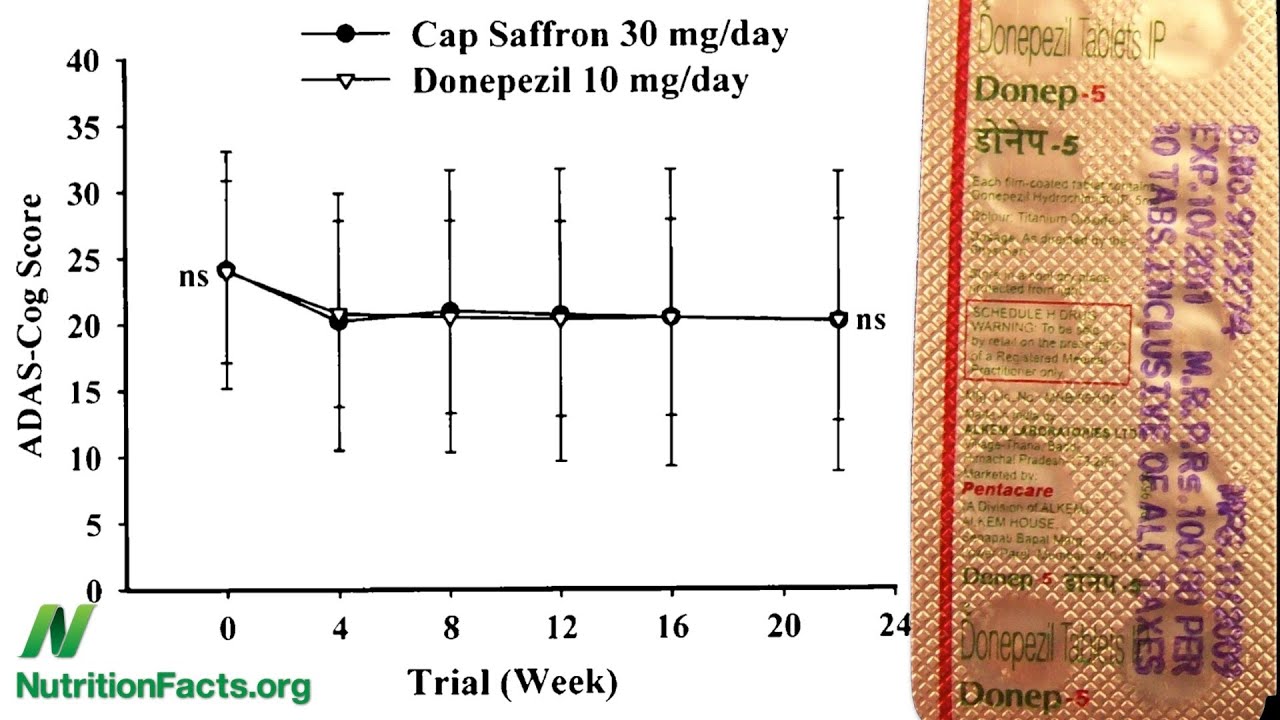
New subscribers to our e-newsletter always receive a free gift. Get yours here: https://nutritionfacts.org/subscribe/
DESCRIPTION: The spice saffron was compared to donepezil (Aricept), a leading drug treatment for slowing the progression of Alzheimer's disease cognitive impairment. Have a question about this video? Leave it in the comment section at http://nutritionfacts.org/vide....os/saffron-versus-ar and I'll try to answer it! See the prequel to this video, Saffron for the Treatment of Alzheimer's (http://nutritionfacts.org/vide....o/saffron-for-the-tr the corresponding blog post, Natural Alzheimer's treatment (http://nutritionfacts.org/blog..../2011/09/06/natural- and leave any questions you have about this exciting research below.
https://NutritionFacts.org
• Subscribe: https://nutritionfacts.org/subscribe
• Donate: https://nutritionfacts.org/donate
• Podcast : https://nutritionfacts.org/audio
• Facebook: www.facebook.com/NutritionFacts.org
• Twitter: www.twitter.com/nutrition_facts
• Instagram: www.instagram.com/nutrition_facts_org
• Books: https://nutritionfacts.org/books
• Shop: https://drgreger.org


Nubeqa (darolutamide) was FDA approved to treat the M0 stage of prostate cancer in late 2019. Now that it is available nationwide, Alex and Dr. Scholz discuss its role in the prostate cancer world as of 2021.
0:05 What is Nubeqa and how has it changed the prostate cancer world?
1:47 How do the side effects of Nubeqa compare to other second-generation anti-androgens (Zytiga, Xtandi, Erleada)?
2:11 Nubeqa was approved to treat the M0 state of prostate cancer, but could it be used in other stages?
2:57 Is there a benefit to taking Nubeqa earlier in the disease timeline?
Don’t know your stage? Take the quiz: Visit http://www.prostatecancerstaging.org
To learn more about prostate cancer visit http://www.pcri.org
Who we are:
The Prostate Cancer Research Institute (PCRI) is a 501(c)(3) not-for-profit organization that is dedicated to helping you research your treatment options. We understand that you have many questions, and we can help you find the answers that are specific to your case. All of our resources are designed by a multidisciplinary team of advocates and expert physicians, for patients. We believe that by educating yourself about the disease, you will have more productive interactions with your medical professionals and receive better-individualized care. Feel free to explore our website or call our free helpline at 1 (800) 641-7274 with any questions that you have. Our Federal Tax ID # is 95-4617875 and qualifies for maximum charitable gift deductions by individual donors.
The information on the Prostate Cancer Research Institute's YouTube channel is provided with the understanding that the Institute is not engaged in rendering medical advice or recommendation. The information provided in these videos should not replace consultations with qualified health care professionals to meet your individual medical needs.
#ProstateCancer #Prostate #MarkScholzMD




A review of the adverse event profiles of apalutamide, darolutamide, and enzalutamide for the treatment of prostate cancer.
For more resources and information regarding anticancer targeted therapies: http://targetedonc.com/

What Are The Alternatives To Flutamide? In this informative video, we will discuss various treatment options for prostate cancer, focusing on alternatives to flutamide. Flutamide is a commonly used medication in prostate cancer therapy, but there are other options available that may suit different patient needs. We will cover alternatives such as nilutamide and bicalutamide, both of which are first-generation antiandrogens. Additionally, we will explore second-generation antiandrogens like enzalutamide, apalutamide, and darolutamide, which have been developed to address some limitations of earlier treatments.
Understanding these alternatives is essential for patients and their families as they navigate treatment decisions. We will highlight the differences in dosing, side effects, and overall effectiveness of each option. It’s important to consult with a healthcare provider to determine the best course of action based on individual circumstances, including the stage of cancer and previous treatment responses.
Join us for this informative discussion and subscribe to our channel for more helpful resources on oncology and prostate cancer treatment options.
⬇️ Subscribe to our channel for more valuable insights.
🔗Subscribe: https://www.youtube.com/@Oncol....ogySupportNetwork/?s
#ProstateCancer #FlutamideAlternatives #Nilutamide #Bicalutamide #Enzalutamide #Apalutamide #Darolutamide #CancerTreatment #HormoneTherapy #Antiandrogens #ProstateHealth #PatientCare #OncologySupport #CancerAwareness #HealthInformation
About Us: Welcome to the Oncology Support Network, your trusted source for comprehensive information and support in the field of oncology. Our channel is dedicated to empowering patients, caregivers, and healthcare professionals with the latest insights on cancer treatment, research breakthroughs, and wellness strategies. The content provided is for general informational and educational purposes only. It is not intended to substitute for professional medical advice, diagnosis, or treatment. Never disregard professional medical advice or delay seeking it because of something you have seen in this content. Never rely on this information in place of consulting with qualified healthcare professionals. The creators and distributors of this content are not responsible for any adverse effects or consequences resulting from the use of any suggestions, preparations, or procedures described in this material. Always consult with your healthcare provider before starting any new health-related practice or program.

What Are The Alternatives To Nilutamide? In this informative video, we will discuss various alternatives to nilutamide for treating prostate cancer. Nilutamide is a first-generation antiandrogen that plays a role in hormone therapy by blocking male hormones that contribute to cancer growth. However, there are several other treatment options available that may provide different benefits or reduced side effects.
We will cover second-generation antiandrogens, which are designed to improve effectiveness while minimizing adverse effects. Additionally, we will explore hormone-suppressing drugs and chemotherapy options that are utilized when hormone therapy is not effective. Androgen deprivation therapy will also be examined, highlighting its role in reducing testosterone levels.
Choosing the right treatment is a personal decision that should be based on individual health factors, cancer stage, and previous treatments. By understanding the different alternatives available, patients and caregivers can make informed decisions in collaboration with healthcare professionals.
Join us for this detailed discussion on prostate cancer treatment options, and don't forget to subscribe to our channel for more helpful information on oncology and cancer care.
⬇️ Subscribe to our channel for more valuable insights.
🔗Subscribe: https://www.youtube.com/@Oncol....ogySupportNetwork/?s
#ProstateCancer #NilutamideAlternatives #Antiandrogens #HormoneTherapy #CancerTreatment #Enzalutamide #Apalutamide #Darolutamide #Abiraterone #Chemotherapy #Docetaxel #Cabazitaxel #AndrogenDeprivationTherapy #HealthDecisions #OncologyCare #CancerSupport
About Us: Welcome to the Oncology Support Network, your trusted source for comprehensive information and support in the field of oncology. Our channel is dedicated to empowering patients, caregivers, and healthcare professionals with the latest insights on cancer treatment, research breakthroughs, and wellness strategies. The content provided is for general informational and educational purposes only. It is not intended to substitute for professional medical advice, diagnosis, or treatment. Never disregard professional medical advice or delay seeking it because of something you have seen in this content. Never rely on this information in place of consulting with qualified healthcare professionals. The creators and distributors of this content are not responsible for any adverse effects or consequences resulting from the use of any suggestions, preparations, or procedures described in this material. Always consult with your healthcare provider before starting any new health-related practice or program.


Does Apalutamide Improve Outcomes in Prostate Care? In this informative video, we will explore the role of apalutamide in the treatment of prostate cancer. Apalutamide, marketed under the brand name Erleada, is an androgen receptor pathway inhibitor that has gained attention for its effectiveness in specific stages of prostate cancer. We will discuss how this medication works by blocking androgen receptors, which are crucial in the growth of prostate cancer cells.
You’ll learn about the two main conditions for which apalutamide is approved: non-metastatic castration-resistant prostate cancer and metastatic castration-sensitive prostate cancer. We will also cover the potential benefits of apalutamide in improving patient outcomes, particularly when used in conjunction with standard hormone therapy.
Additionally, we will address the side effects associated with apalutamide and the importance of managing them effectively. Personalization in treatment decisions is vital, and we will highlight the factors that may influence the effectiveness of apalutamide for individual patients.
Stay tuned for ongoing research updates and the evolving treatment guidelines related to apalutamide. Join us for this essential discussion, and subscribe to our channel for more helpful information on prostate cancer and treatment options.
⬇️ Subscribe to our channel for more valuable insights.
🔗Subscribe: https://www.youtube.com/@Prost....ateHealthNetwork/?su
#ProstateCancer #Apalutamide #Erleada #CancerTreatment #HormoneTherapy #CastrationResistant #CastrationSensitive #CancerResearch #PatientCare #HealthManagement #Oncology #ClinicalTrials #SideEffects #ProstateHealth #CancerAwareness
About Us: Welcome to Prostate Health Network! Our channel is dedicated to providing essential knowledge about prostate health, focusing on topics like prostate cancer symptoms, screening tests, PSA levels, enlarged prostate (BPH), treatment options, and health tips. Whether you are seeking information on prostatitis treatment or guidance for living with prostate conditions, you'll find our content tailored to your needs. The content provided is for general informational and educational purposes only. It is not intended to substitute for professional medical advice, diagnosis, or treatment. Never disregard professional medical advice or delay seeking it because of something you have seen in this content. Never rely on this information in place of consulting with qualified healthcare professionals. The creators and distributors of this content are not responsible for any adverse effects or consequences resulting from the use of any suggestions, preparations, or procedures described in this material. Always consult with your healthcare provider before starting any new health-related practice or program.

Fred Saad, MD, FRCS, discusses the safety profile of apalutamide in nonmetastatic castration-resistant prostate cancer.
Website: https://www.onclive.com
Twitter: https://twitter.com/OncLive
Facebook: https://www.facebook.com/OncLive/
LinkedIn: https://www.linkedin.com/company/onclive

Can Other Medications Worsen Side Effects Of Prostate Cancer Treatment? In this informative video, we will discuss the potential interactions between prostate cancer treatments and other medications. Understanding these interactions is essential for patients and caregivers navigating the complexities of cancer care. We will cover how certain treatments, particularly androgen receptor pathway inhibitors, can interact with various medications, leading to heightened side effects or introducing new challenges in managing health.
We will also highlight the importance of thorough medication reviews by healthcare professionals to ensure patient safety and treatment effectiveness. Additionally, we will explore specific medications commonly used in prostate cancer treatment and their potential side effects when combined with other drugs. This information is vital for those managing prostate cancer, as well as their loved ones, to make informed decisions regarding treatment plans and medication management.
Join us for this essential discussion, and don’t forget to subscribe to our channel for more helpful content related to oncology and patient care. Your health and well-being matter, and we are here to provide support and information to guide you through your journey.
⬇️ Subscribe to our channel for more valuable insights.
🔗Subscribe: https://www.youtube.com/@Oncol....ogySupportNetwork/?s
#ProstateCancer #CancerTreatment #Oncology #MedicationInteractions #HealthCare #PatientSafety #CancerCare #AndrogenReceptorInhibitors #Abiraterone #Enzalutamide #Apalutamide #Darolutamide #SideEffects #MedicationManagement #HealthAdvice #CancerSupport
About Us: Welcome to the Oncology Support Network, your trusted source for comprehensive information and support in the field of oncology. Our channel is dedicated to empowering patients, caregivers, and healthcare professionals with the latest insights on cancer treatment, research breakthroughs, and wellness strategies. The content provided is for general informational and educational purposes only. It is not intended to substitute for professional medical advice, diagnosis, or treatment. Never disregard professional medical advice or delay seeking it because of something you have seen in this content. Never rely on this information in place of consulting with qualified healthcare professionals. The creators and distributors of this content are not responsible for any adverse effects or consequences resulting from the use of any suggestions, preparations, or procedures described in this material. Always consult with your healthcare provider before starting any new health-related practice or program.


Edward Weber, M.D. Medical Oncologist, describes the side effects of cardiac complications when receiving Androgen Deprivation Therapy, ADT, also known as Hormone Therapy, for treatment of Prostate Cancer.
ADT is used to reduce the production of testosterone needed for the growth of prostate cancer cells. But ADT can have cardiac complications, especially on men with a history of heart disease.
Video Development: Dean Dubinsky
Video Transcript:
Prostate Cancer Free Foundation. Increasing Knowledge - Building Hope. Edward Weber, M.D. Medical Oncologist, Prostate Cancer Results Study Group.
Men with prostate cancer are much more likely to die of cardiac disease and not from prostate cancer, unless the diagnosis is made at a very late stage. For that reason, a man’s cardiac history, his cardiovascular risk factors, and the choice of which drug to use for ADT are very critical issues.
Androgen deprivation therapy, ADT, the mainstay of treatment for years, is associated with a 10-20% increased risk of cardiac complications, such as a heart attack, stroke, or sudden death. If a man has already had two important cardiac events before starting ADT the risk of another cardiac event is greatly increased. Surprisingly these serious problems can occur within the first 6 - 12 months.
Degarelix (Firmagon), the newer drug for ADT, is less toxic to the heart than leuprolide (Lupron), and, for many clinicians, is becoming the preferred agent for hormone therapy.
Every man before starting ADT needs to have a thorough evaluation for cardiac risk factors. This exam should focus on past history of cardiovascular disease, hypertension, diabetes, elevated cholesterol and triglycerides, and the life-style factors diet and exercise habits.
In some men this pre-ADT evaluation will lead to choosing Firmagon over Lupron, or receiving the shortest period of drug exposure as possible, or beginning a program for modification of cardiac risk factors — or possibly avoiding the use of these drugs entirely.
Prostate Cancer Free Foundation
https://prostatecancerfree.org

PCRI’s Executive Director, Mark Scholz, MD, announces that Erleada (apalutamide) has been FDA-approved for use in a new group of prostate cancer patients. Up until now, Erleada was only FDA-approved for the treatment of castrate-resistant prostate cancer (that is, prostate cancer that is resistant to Lupron or another first-generation hormone treatment) but now, Erleada has been approved for concurrent use with Lupron (or a Lupron type drug) in men with metastatic castrate-sensitive disease.
0:12 Erleada is a second-generation hormonal treatment that is effective at treating advanced prostate cancer. Up until now, it has only been used to treat prostate cancer that was resistant to first-generation treatments (Casodex, Lupron, etc.) known as "castrate-resistant prostate cancer."
0:27 A large 1000-person prospective trial was conducted to test Erleada's effectiveness when added to Lupron in men with metastatic castrate-sensitive prostate cancer. Researchers found improved survival and better outcomes in men when Erleada was added to Lupron. Hence, the FDA approved Erleada for the treatment of this stage of prostate cancer.
0:45 Men with metastatic castrate-sensitive prostate cancer are usually in a situation in which, for whatever reason, their PSAs were not being monitored and it rose to a very high level without treatment. Historically, they would be treated with Lupron alone, Lupron plus chemotherapy (e.g. Taxotere), or Lupron plus Zytiga (another second-generation hormonal agent).
1:39 Erleada is typically well-tolerated. Some men experience a rash, but in most cases, there are no additional side effects than when Lupron is taken alone.
Don’t know your stage? Take the quiz: Visit http://www.prostatecancerstaging.org
To learn more about prostate cancer visit http://www.pcri.org
To download the free Staging Guide visit http://www.pcri.org/prostate-cancer-s...
Who we are:
The Prostate Cancer Research Institute (PCRI) is a 501(c)(3) not-for-profit organization that is dedicated to helping you research your treatment options. We understand that you have many questions, and we can help you find the answers that are specific to your case. All of our resources are designed by a multidisciplinary team of advocates and expert physicians, for patients. We believe that by educating yourself about the disease, you will have more productive interactions with your medical professionals and receive better individualized care. Feel free to explore our website or call our free helpline at 1 (800) 641-7274 with any questions that you have. Our Federal Tax ID # is 95-4617875 and qualifies for maximum charitable gift deductions by individual donors.
The information on the Prostate Cancer Research Institute's YouTube channel is provided with the understanding that the Institute is not engaged in rendering medical advice or recommendation. The information provided in these videos should not replace consultations with qualified health care professionals to meet your individual medical needs.
#ProstateCancer #Prostate #MarkScholzMd

Medical oncologist Mark Scholz, MD answers patients' questions from our YouTube comments on the side effects of salvage radiation therapy after surgery and whether hormone therapy is advisable for men who are on medications for heart issues.
0:05 How would the side effect profile of salvage radiation compare to radiation therapy as initial therapy?
1:37 Is hormone therapy advisable if the patient has had heart disease and takes pills like Ramipril?
Don’t know your stage? Take the quiz: Visit http://www.prostatecancerstaging.org
To learn more about prostate cancer visit http://www.pcri.org
To receive the latest updates on prostate cancer and the PCRI, sign up for our online newsletter here: https://pcri.org/join
Who we are:
The Prostate Cancer Research Institute (PCRI) is a 501(c)(3) not-for-profit organization that is dedicated to helping you research your treatment options. We understand that you have many questions, and we can help you find the answers that are specific to your case. All of our resources are designed by a multidisciplinary team of advocates and expert physicians, for patients. We believe that by educating yourself about the disease, you will have more productive interactions with your medical professionals and receive better individualized care. Feel free to explore our website or call our free helpline at 1 (800) 641-7274 with any questions that you have. Our Federal Tax ID # is 95-4617875 and qualifies for maximum charitable gift deductions by individual donors.
The information on the Prostate Cancer Research Institute's YouTube channel is provided with the understanding that the Institute is not engaged in rendering medical advice or recommendation. The information provided in these videos should not replace consultations with qualified health care professionals to meet your individual medical needs.
#ProstateCancer #Prostate #MarkScholzMD

As of early 2021, the FDA has approved four second-generation anti-androgen mediations: Zytiga (abiraterone acetate), Xtandi (enzalutamide), Erleada (apalutamide), and Nubeqa (darolutamide). Here, Alex asks medical oncologist Mark Scholz, MD, how these medications work and how they compare to one another, especially regarding side effects.
0:05 How exactly do second-generation anti-androgens treat metastatic lesions?
1:33 What are the possible side effects of the four second-generation anti-androgens? How do they compare?
3:06 Are any of the four second-generation anti-androgens more appropriate than the others for men with heart problems?
3:56 What are some ways to mitigate the side effects of second-generation anti-androgen medications?
5:01 How do second-generation hormone therapies tend to affect PSA?
Don’t know your stage? Take the quiz: Visit http://www.prostatecancerstaging.org
To learn more about prostate cancer visit http://www.pcri.org
Who we are:
The Prostate Cancer Research Institute (PCRI) is a 501(c)(3) not-for-profit organization that is dedicated to helping you research your treatment options. We understand that you have many questions, and we can help you find the answers that are specific to your case. All of our resources are designed by a multidisciplinary team of advocates and expert physicians, for patients. We believe that by educating yourself about the disease, you will have more productive interactions with your medical professionals and receive better-individualized care. Feel free to explore our website or call our free helpline at 1 (800) 641-7274 with any questions that you have. Our Federal Tax ID # is 95-4617875 and qualifies for maximum charitable gift deductions by individual donors.
The information on the Prostate Cancer Research Institute's YouTube channel is provided with the understanding that the Institute is not engaged in rendering medical advice or recommendation. The information provided in these videos should not replace consultations with qualified health care professionals to meet your individual medical needs.
#ProstateCancer #Prostate #MarkScholzMD


