
- Ozempic
- Mounjaro
- Wegovy
- Semaglutide
- Retinol
- Finasteride
- Metformin
- Wellbutrin
- Melatonin
- Ashwagandha
- Lexapro
- Sertraline
- Creatine
- Prozac
- Fluoxetine
- Pregabalin
- Spironolactone
- Amlodipine
- Trazodone
- Akathisia
- Steroids
- Prednisone
- Doxycycline
- Tramadol
- Lisinopril
- Losartan
- Amoxicillin
- Androgenic
- Azithromycin
- Zoloft
- Statin
- Atorvastatin
- Acetylcysteine
- Adderall
- Alprazolam
- Amitriptyline
- Augmentin
- Cetirizine
- Cipro
- Clonazepam
- Clotrimazole
- Diazepam
- Fentanyl
- Gabapentin
- Hydroxyzine
- Ibuprofen
- Ivermectin
- Lorazepam
- Magnesium
- Meloxicam
- Metoprolol
- Metronidazole
- Mirtazapine
- Naproxen
- Omega 3
- Omeprazole
- Ondansetron
- Paracetamol
- Propranolol
- Quetiapine
- Sildenafil
- Tamsulosin
- Tirzepatide
- Tylenol
- Viagra
- Vitamin B12
- Vitamin C
- Vitamin D
- Xanax
- Acetaminophen
- Acyclovir
- Advil
- Albendazole
- Albuterol
- Alendronate
- Alfuzosin
- Allopurinol
- Amantadine
- Ambien
- Ambroxol
- Amiodarone
- Ampicillin
- Anastrozole
- Apixaban
- Aripiprazole
- Ascorbic Acid
- Aspirin
- Atarax
- Atenolol
- Ativan
- Atomoxetine
- Azelastine
- Bacitracin
- Baclofen
- Bactrim
- Bactroban
- Benadryl
- Bentyl
- Benzonatate
- Benztropine
- Betadine
- Betamethasone
- Biktarvy
- Biotin
- Bisacodyl
- Bisoprolol
- Botox
- Brilinta
- Budesonide
- Glycopyrrolate
- Bumetanide
- Buprenorphine
- Bupropion
- Buspar
- Buspirone
- Calcitriol
- Candesartan
- Captopril
- Carbamazepine
- Carvedilol
- Cefdinir
- Cefixime
- Ceftriaxone
- Cefuroxime
- Celebrex
- Celexa
- Cephalexin
- Chlorpheniramine
- Chlorthalidone
- Cholecalciferol
- Cialis
- Cilostazol
- Citalopram
- Claritin
- Clindamycin
- Clobetasol
- Clonidine
- Clopidogrel
- Clozapine
- Codeine
- Colace
- Colchicine
- Concerta
- Cosentyx
- Crestor
- Cyanocobalamin
- Cyclobenzaprine
- Cymbalta
- Dabigatran
- Dapagliflozin
- Decadron
- Denosumab
- Depakote
- Desloratadine
- Desvenlafaxine
- Dexamethasone
- Dexilant
- Dextroamphetamine
- Dextromethorphan
- Dextrose
- Dicyclomine
- Diflucan
- Digoxin
- Dilaudid
- Diltiazem
- Diphenhydramine
- Divalproex
- Docusate Sodium
- Domperidone
- Donepezil
- Dopamine
- Doxazosin
- Doxepin
- Doxycycline Hyclate
- Doxylamine
- Dulcolax
- Duloxetine
- Dupixent
- Dutasteride
- Echinacea
- Effexor
- Eliquis
- Empagliflozin
- Enalapril
- Epinephrine
- Epipen
- Erythromycin
- Escitalopram
- Esomeprazole
- Estradiol
- Euthyrox
- Excedrin
- Ezetimibe
- Famotidine
- Farxiga
- Febuxostat
- Fenofibrate
- Ferrous Sulfate
- Fexofenadine
- Fish Oil
- Flagyl
- Flecainide
- Flexeril
- Flomax
- Flonase
- Fluticasone
- Fluvoxamine
- Folic Acid
- Formoterol
- Fosamax
- Fosfomycin
- Furosemide
- Gardasil 9
- Garlic
- Gas X
- Gaviscon
- Gentamicin
- Ginkgo Biloba
- Ginseng
- Glimepiride
- Glipizide
- Glucagon
- Glucophage
- Glucosamine
- Glutathione
- Glycerin
- Griseofulvin
- Guaifenesin
- Guanfacine
- Haldol
- Haloperidol
- Heparin
- Hibiclens
- Humira
- Hydralazine
- Hydrea
- Hydrochlorothiazide
- Hydrocodone
- Hydrocortisone
- Hydromorphone
- Hydroxyurea
- Hyoscyamine
- Imiquimod
- Imodium
- Indapamide
- Inderal
- Indomethacin
- Infliximab
- Irbesartan
- Isosorbide
- Isosorbide Mononitrate
- Isotretinoin
- Itraconazole
- Ivabradine
- Janumet
- Januvia
- Japanese Knotweed
- Jardiance
- Kava
- Keflex
- Kenalog
- Keppra
- Ketoconazole
- Ketoconazole Shampoo
- Ketoprofen
- Ketorolac
- Keytruda
- Klonopin
- Labetalol
- Lacosamide
- Lactulose
- Lamictal
- Lamotrigine
- Lansoprazole
- Lantus
- Lasix
- Latanoprost
- Latuda
- Leflunomide
- Letrozole
- Levetiracetam
- Levocetirizine
- Levofloxacin
- Levothyroxine
- Lidocaine
- Linezolid
- Linzess
- Lipitor
- Liraglutide
- Lisdexamfetamine
- Lithium
- Lokelma
- Lomotil
- Loperamide
- Loratadine
- Lovenox
- Lyrica
- Macrobid
- Magnesium Citrate
- Magnesium Oxide
- Meclizine
- Medrol
- Mefenamic Acid
- Memantine
- Meropenem
- Metamucil
- Methadone
- Methimazole
- Methocarbamol
- Methotrexate
- Methylphenidate
- Methylprednisolone
- Metoclopramide
- Metoprolol Succinate
- Midazolam
- Midodrine
- Mirabegron
- Miralax
- Mobic
- Modafinil
- Montelukast
- Morphine
- Motrin
- Moxifloxacin
- Mucinex
- Mupirocin
- Nac
- Naloxone
- Naltrexone
- Narcan
- Nebivolol
- Neomycin
- Neosporin
- Neurontin
- Nexium
- Nexplanon
- Niacin
- Nifedipine
- Nitrofurantoin
- Nitroglycerin
- Norco
- Norepinephrine
- Norethindrone
- Nortriptyline
- Norvasc
- Octreotide
- Ofloxacin
- Olanzapine
- Olmesartan
- Orlistat
- Oseltamivir
- Oxazepam
- Oxcarbazepine
- Oxybutynin
- Oxycodone
- Oxycontin
- Oxygen
- Paroxetine
- Paxil
- Paxlovid
- Pepcid
- Percocet
- Phenazopyridine
- Phenergan
- Phenobarbital
- Phentermine
- Phenylephrine
- Phenytoin
- Pioglitazone
- Plan B
- Plaquenil
- Plavix
- Potassium Chloride
- Pradaxa
- Pravastatin
- Prazosin
- Prednisolone
- Prilosec
- Pristiq
- Prochlorperazine
- Progesterone
- Prolia
- Promethazine
- Propofol
- Protonix
- Pseudoephedrine
- Psyllium
- Pyridium
- Quercetin
- Quinine
- Rabeprazole
- Ramipril
- Ranitidine
- Ranolazine
- Reglan
- Remeron
- Repatha
- Rexulti
- Rifaximin
- Rinvoq
- Risperdal
- Risperidone
- Ritalin
- Rituximab
- Rivaroxaban
- Rizatriptan
- Robaxin
- Rocephin
- Rosuvastatin
- Rybelsus
- Salbutamol
- Scopolamine
- Senna
- Senokot
- Seroquel
- Simvastatin
- Singulair
- Sitagliptin
- Skyrizi
- Sodium Bicarbonate
- Sodium Chloride
- Solifenacin
- Soma
- Sotalol
- Spiriva
- Strattera
- Suboxone
- Sucralfate
- Sudafed
- Sulfasalazine
- Sumatriptan
- Symbicort
- Synthroid
- Tacrolimus
- Tadalafil
- Tamiflu
- Tamoxifen
- Tegretol
- Telmisartan
- Temazepam
- Tetracycline
- Thiamine
- Ticagrelor
- Tizanidine
- Topamax
- Topiramate
- Toradol
- Torsemide
- Tranexamic Acid
- Tremfya
- Tresiba
- Tretinoin
- Triamcinolone
- Triamcinolone Acetonide
- Trileptal
- Trimethoprim
- Trintellix
- Trulicity
- Ubrelvy
- Ultracet
- Unisom
- Urea
- Urea Cream
- Urso
- Ursodiol
- Valacyclovir
- Valium
- Valsartan
- Valtrex
- Vancomycin
- Varenicline
- Venlafaxine
- Ventolin
- Veozah
- Verapamil
- Vicodin
- Victoza
- Vistaril
- Vitamin B6
- Vitamin D3
- Vitamin E
- Vraylar
- Vyvanse
- Warfarin
- Witch Hazel
- Wormwood
- Xarelto
- Xenical
- Xifaxan
- Xolair
- Xylitol
- Xyzal
- Yarrow
- Yasmin
- Yaz
- Yellow Fever Vaccine
- Zantac
- Zepbound
- Zetia
- Zinc
- Zithromax
- Zofran
- Zoladex
- Zolpidem
- Zopiclone
- Zovirax
- Zyprexa
- Zyrtec
- Hydroxytryptophan
- Serious
- Other
Dangerous Side Effects


Onansetrone tablets ip 4mg | Ondansetron tablet
Ondem-MD 4 Tablet belongs to a group of medications called ' anti-emetics' primarily used in the prevention of vomiting (being sick) and nausea (feeling sick) that usually occur after cancer chemotherapy, radiation treatment or surgery. Nausea is an uneasy feeling in which a person feels an urge to vomit while vomiting is the natural response to the body to forcefully discharge the stomach contents.
Ondem-MD 4 Tablet contains 'Ondanestron' that works by blocking the action of a chemical in the body (serotonin) responsible for causing nausea and vomiting. As a result, Ondem-MD 4 Tablet prevents the sensation of nausea and vomiting caused due to conditions like surgery, cancer chemotherapy, pregnancy or motion sickness.
Take Ondem-MD 4 Tablet as prescribed. Your doctor will advise you on how often you take Ondem-MD 4 Tablet based on your medical condition. A person taking Ondem-MD 4 Tablet often experience side effects that include a feeling of warmth, constipation, headache, diarrhoea, headache, drowsiness, feeling of tiredness.
Like, share, subscribe
LEARN ABOUT MEDICINE with Mohit dadhich
#learnaboutmedicine #mohitdadhich #vomiting #nausea
1. Special video :- https://www.youtube.com/playli....st?list=PLIiG2TRZadO
2. Disease and their treatment :- https://www.youtube.com/playli....st?list=PLIiG2TRZadO
3. Female use video and medicine :- https://www.youtube.com/playli....st?list=PLIiG2TRZadO
4. Important video for General practice :- https://www.youtube.com/playli....st?list=PLIiG2TRZadO
5. Group of medicine :- https://www.youtube.com/playli....st?list=PLIiG2TRZadO


There's a right time and a place for anti-motion sickness medication. What are the differences between different brands?
Where to find us:
www.BalancingActRehab.com
Facebook: @BalancingActRehab
Instagram: @BalancingActRehab
Twitter: @DizzyDoctors
TikTok: @Balancingactrehab
Podcast: Talk Dizzy to Me


Hello!
Here is a short guide on how to treat using Ondansetron for patient’s condition. I highlighted some of the major side effects and concerns regarding this medication. If you have other questions regarding the medications, please be sure to click the link down below to get recommendations from a healthcare professional;
www.demirxcare.com
Thanks for watching and STAY TUNED!
Hit your like and subscribe button to support us as we provide educating content for you.
Free Recipe link:
https://docs.google.com/forms/....d/e/1FAIpQLSebDCTPZm
“God has given each of you a gift from his great variety of spiritual gifts. Use them well to serve one another.”
1 Peter 4:10 NLT
https://www.bible.com/116/1pe.4.10.nlt
This information should not be used to decide whether or not to take this medicine or any other medicine. Only a personal healthcare provider has the knowledge and training to decide which medicines are right for a specific patient. This information does not endorse any medicine as safe, effective, or approved for treating any patient or health condition. This is only a brief summary of general information about this medicine. It does NOT include all information about the possible uses, directions, warnings, precautions, interactions, adverse effects, or risks that may apply to this medicine. This information is not specific medical advice and does not replace information you receive from the healthcare provider. You must talk with your healthcare provider for complete information about the risks and benefits of using this medicine.

What Are Ampicillin's Side Effects? In this informative video, we will discuss the potential side effects of ampicillin, a commonly prescribed antibiotic for bacterial infections. Understanding these side effects is essential for first responders as it aids in making informed decisions during emergencies. We will cover both common and serious side effects that may arise from ampicillin use. From gastrointestinal issues to more severe allergic reactions, knowing what to look for can help you provide better patient care.
We will also explore the necessary steps to take if a patient exhibits signs of an allergic reaction, including anaphylaxis. Additionally, we will highlight the importance of thorough documentation and communication with hospital staff. This knowledge is not only beneficial for first responders but also crucial for ensuring patient safety in urgent situations.
Join us to learn more about how to manage the side effects of ampicillin effectively. Don't forget to subscribe to our channel for more helpful information on first responders medicine and emergency care.
⬇️ Subscribe to our channel for more valuable insights.
🔗Subscribe: https://www.youtube.com/@First....ResponseMedicine/?su
#Ampicillin #Antibiotics #FirstResponders #EmergencyMedicine #PatientCare #AllergicReactions #Anaphylaxis #MedicalProtocols #GastrointestinalIssues #Documentation #HealthcareProfessionals #EmergencyCare #BacterialInfections #MedicalAdvice #HealthSafety
About Us: First Response Medicine is your essential resource for all things related to emergency and critical care. Our channel is dedicated to providing clear and practical information on emergency medicine, covering topics such as trauma management, life-saving procedures, and the latest in critical care practices.
Please note that all content is for informational purposes only and should not be considered medical advice. Always conduct your own research and consult with professionals when necessary. The content provided is for general informational and educational purposes only. It is not intended to substitute for professional medical advice, diagnosis, or treatment. Never disregard professional medical advice or delay seeking it because of something you have seen in this content. Never rely on this information in place of consulting with qualified healthcare professionals. The creators and distributors of this content are not responsible for any adverse effects or consequences resulting from the use of any suggestions, preparations, or procedures described in this material. Always consult with your healthcare provider before starting any new health-related practice or program.

📣 You can work with Jezel in our signature program Levelheaded Mindset Coaching Program, found here:
🔗 https://www.levelheadedmind.co....m/mental-health-coac
👉🏽 Get Mental health matters gear https://www.psychlifeteeco.com/
🎥 This video was edited by:
Rahul Kanchi https://www.linkedin.com/in/rahulkanchi24/
🚑 If you are in a mental health crisis, please dial 9-8-8 from the U.S. Or text HOME to 741741 and connect to a crisis counselor.
You can find a list of international crisis lines here: https://blog.opencounseling.com/suicide-hotlines/
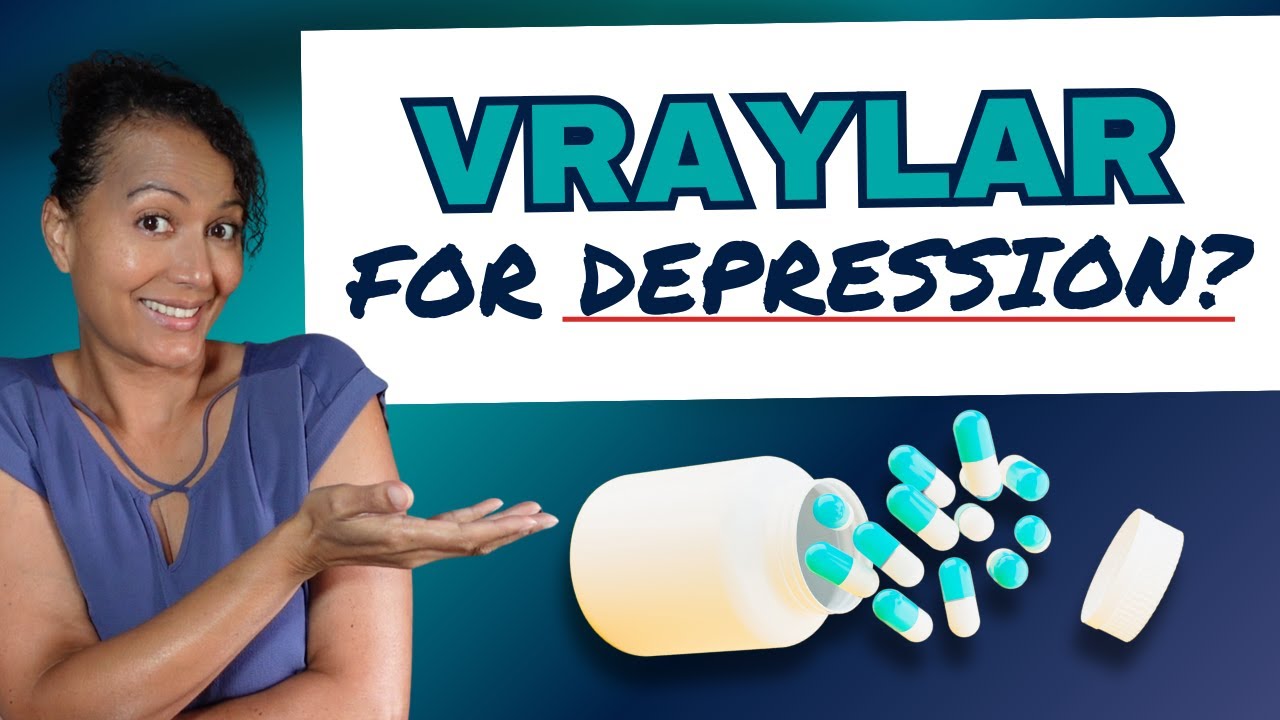
Link to Vraylar savings:
https://www.vraylar.com/cost-and-savings?cid=ppc_ppd_ggl_vraylar_dtc_franchise-exact_vraylar_savings_card_exact_usvra220335&gclid=Cj0KCQjwm66pBhDQARIsALIR2zD5mZQerkxBThEkQCgCmVYswWrH6O3EonQ4_cFIM9vILZ28-_Q1THEaAi0jEALw_wcB&gclsrc=aw.ds
References:
FDA Label (2022). Vraylar. Retrieved from https://www.accessdata.fda.gov..../drugsatfda_docs/lab
Grunze, H., Csehi, R., Born, C., & Barabássy, Á. (2021). Reducing Addiction in Bipolar Disorder via Hacking the Dopaminergic System. Frontiers in psychiatry, 12, 803208. https://doi.org/10.3389/fpsyt.2021.803208
Sanders, L.O., Miller, J. J. (2019). Cariprazine may decrease substance abuse in patients with Bipolar I Disorder. Psychiatric Times. Retrieved from https://www.psychiatrictimes.c....om/view/cariprazine-
Stahl, S. M., Grady, M. M., & Muntner, N. (2021). Stahl's essential psychopharmacology: Neuroscientific basis and practical applications. Cambridge University Press.
Stahl,S. (2021). Stahl’s Essential Psychopharmacology: Prescriber’s Guide, 7th Ed. Cambridge University Press.
Tarzian, M., Ndrio, M., Kaja, S., Beason, E., & Fakoya, A. O. (2023). Cariprazine for Treating Schizophrenia, Mania, Bipolar Depression, and Unipolar Depression: A Review of Its Efficacy. Cureus, 15(5), e39309. https://doi.org/10.7759/cureus.39309
Disclaimer: All of the information on this channel is for educational purposes only and not intended to be specific/personal medical advice or substitute for diagnosis and treatment of any conditions discussed herein. Furthermore, watching these videos or getting answers to comments/questions, does not establish a provider-patient relationship. Please consult with your own healthcare provider for proper diagnosis and treatment.

PCRI’s Executive Director, Mark Scholz, MD, discusses the use of hormone therapy for men with Azure (High-Risk) prostate cancer. He covers why it is necessary for men with high-risk disease and talks about the three categories of hormone therapy.
0:28 Men with Azure are generally given hormone therapy because there is a higher risk of spread outside the prostate. Hormone therapy is a systemic treatment that acts on the entire body, not just the prostate. It is effective, and its side effects are reversible. Compared to chemotherapy, another systemic treatment, it is more effective and has far fewer side effects.
1:23 The three categories of hormone therapy. Hormone therapy, also known as testosterone inactivating pharmaceuticals (TIP) comes in three different strengths. The first and least potent category of hormone therapy is the “anti-androgens.” Common examples of these drugs are Casodex and Nilutamide. The second category and the most commonly used type of hormone therapy are the “LHRH Agonists” drugs such as Lupron, Eligard, and Trelstar. The last category is the second generation hormonal agents that operate differently than the previous categories. Examples of these are Erleada, Xtandi, and Zytiga. You don’t want more hormone therapy than what is necessary because of added side effects.
2:43 Hormone therapy for the different subtypes of Azure. Each subtype of azure requires different amounts of hormone therapy. High-risk prostate cancer should be treated with a combination of radiation, seed implants, and hormone therapy, but the amount of hormone therapy can differ depending on the subtype. Low-Azure only requires 4-6 months of Lupron and Casodex. Basic-Azure needs between 18-24 months for optimal cure rates. And High azure needs 18-24 months possibly with the addition of a second generation TIP such as Erleada, Xtandi, or Zytiga.
4:12 Summary. The amount of hormone therapy depends on the subtype of prostate cancer. Many studies have shown that Low-Azure only requires a short course of hormone therapy and High-Azure can benefit from adding second generation hormone therapy.
Don’t know your stage? Take the quiz: Visit http://www.prostatecancerstaging.org
To learn more about prostate cancer visit http://www.pcri.org
To download the free Staging Guide visit http://www.pcri.org/prostate-cancer-staging
Who we are:
The Prostate Cancer Research Institute (PCRI) is a 501(c)(3) not-for-profit organization that is dedicated to helping you research your treatment options. We understand that you have many questions, and we can help you find the answers that are specific to your case. All of our resources are designed by a multidisciplinary team of advocates and expert physicians, for patients. We believe that by educating yourself about the disease, you will have more productive interactions with your medical professionals and receive better-individualized care. Feel free to explore our website or call our free helpline at 1 (800) 641-7274 with any questions that you have. Our Federal Tax ID # is 95-4617875 and qualifies for maximum charitable gift deductions by individual donors.
The information on the Prostate Cancer Research Institute's YouTube channel is provided with the understanding that the Institute is not engaged in rendering medical advice or recommendation. The information provided in these videos should not replace consultations with qualified health care professionals to meet your individual medical needs.
#ProstateCancer #Prostate #MarkScholzMD

Overview of ondansetron (Zofran) 4 mg and 8 mg ODT tablets, discuss uses dosage and side effects.
Visit my website:
http://pharmacisttips.com/
Disclaimer:
All information in this video is for informational purposes only and is not intended to serve as a substitute for the consultation, diagnosis, and/or medical treatment of a qualified physician or healthcare provider.


Fexofenadine and Montelukast Tablet, Syrup and Suspension : Therapeutic Uses, Warning and Precautions, Interactions, Directions for Use, Side Effects and Storage. Find out which brands carry Fexofenadine and Montelukast Tablet, Syrup and Suspension here -https://www.netmeds.com/generi....cs/fexofenadine-mont


