
- Ozempic
- Mounjaro
- Wegovy
- Semaglutide
- Retinol
- Finasteride
- Metformin
- Wellbutrin
- Melatonin
- Ashwagandha
- Lexapro
- Sertraline
- Creatine
- Prozac
- Fluoxetine
- Pregabalin
- Spironolactone
- Amlodipine
- Trazodone
- Akathisia
- Steroids
- Prednisone
- Doxycycline
- Tramadol
- Lisinopril
- Losartan
- Amoxicillin
- Androgenic
- Azithromycin
- Zoloft
- Statin
- Atorvastatin
- Acetylcysteine
- Adderall
- Alprazolam
- Amitriptyline
- Augmentin
- Cetirizine
- Cipro
- Clonazepam
- Clotrimazole
- Diazepam
- Fentanyl
- Gabapentin
- Hydroxyzine
- Ibuprofen
- Ivermectin
- Lorazepam
- Magnesium
- Meloxicam
- Metoprolol
- Metronidazole
- Mirtazapine
- Naproxen
- Omega 3
- Omeprazole
- Ondansetron
- Paracetamol
- Propranolol
- Quetiapine
- Sildenafil
- Tamsulosin
- Tirzepatide
- Tylenol
- Viagra
- Vitamin B12
- Vitamin C
- Vitamin D
- Xanax
- Acetaminophen
- Acyclovir
- Advil
- Albendazole
- Albuterol
- Alendronate
- Alfuzosin
- Allopurinol
- Amantadine
- Ambien
- Ambroxol
- Amiodarone
- Ampicillin
- Anastrozole
- Apixaban
- Aripiprazole
- Ascorbic Acid
- Aspirin
- Atarax
- Atenolol
- Ativan
- Atomoxetine
- Azelastine
- Bacitracin
- Baclofen
- Bactrim
- Bactroban
- Benadryl
- Bentyl
- Benzonatate
- Benztropine
- Betadine
- Betamethasone
- Biktarvy
- Biotin
- Bisacodyl
- Bisoprolol
- Botox
- Brilinta
- Budesonide
- Glycopyrrolate
- Bumetanide
- Buprenorphine
- Bupropion
- Buspar
- Buspirone
- Calcitriol
- Candesartan
- Captopril
- Carbamazepine
- Carvedilol
- Cefdinir
- Cefixime
- Ceftriaxone
- Cefuroxime
- Celebrex
- Celexa
- Cephalexin
- Chlorpheniramine
- Chlorthalidone
- Cholecalciferol
- Cialis
- Cilostazol
- Citalopram
- Claritin
- Clindamycin
- Clobetasol
- Clonidine
- Clopidogrel
- Clozapine
- Codeine
- Colace
- Colchicine
- Concerta
- Cosentyx
- Crestor
- Cyanocobalamin
- Cyclobenzaprine
- Cymbalta
- Dabigatran
- Dapagliflozin
- Decadron
- Denosumab
- Depakote
- Desloratadine
- Desvenlafaxine
- Dexamethasone
- Dexilant
- Dextroamphetamine
- Dextromethorphan
- Dextrose
- Dicyclomine
- Diflucan
- Digoxin
- Dilaudid
- Diltiazem
- Diphenhydramine
- Divalproex
- Docusate Sodium
- Domperidone
- Donepezil
- Dopamine
- Doxazosin
- Doxepin
- Doxycycline Hyclate
- Doxylamine
- Dulcolax
- Duloxetine
- Dupixent
- Dutasteride
- Echinacea
- Effexor
- Eliquis
- Empagliflozin
- Enalapril
- Epinephrine
- Epipen
- Erythromycin
- Escitalopram
- Esomeprazole
- Estradiol
- Euthyrox
- Excedrin
- Ezetimibe
- Famotidine
- Farxiga
- Febuxostat
- Fenofibrate
- Ferrous Sulfate
- Fexofenadine
- Fish Oil
- Flagyl
- Flecainide
- Flexeril
- Flomax
- Flonase
- Fluticasone
- Fluvoxamine
- Folic Acid
- Formoterol
- Fosamax
- Fosfomycin
- Furosemide
- Gardasil 9
- Garlic
- Gas X
- Gaviscon
- Gentamicin
- Ginkgo Biloba
- Ginseng
- Glimepiride
- Glipizide
- Glucagon
- Glucophage
- Glucosamine
- Glutathione
- Glycerin
- Griseofulvin
- Guaifenesin
- Guanfacine
- Haldol
- Haloperidol
- Heparin
- Hibiclens
- Humira
- Hydralazine
- Hydrea
- Hydrochlorothiazide
- Hydrocodone
- Hydrocortisone
- Hydromorphone
- Hydroxyurea
- Hyoscyamine
- Imiquimod
- Imodium
- Indapamide
- Inderal
- Indomethacin
- Infliximab
- Irbesartan
- Isosorbide
- Isosorbide Mononitrate
- Isotretinoin
- Itraconazole
- Ivabradine
- Janumet
- Januvia
- Japanese Knotweed
- Jardiance
- Kava
- Keflex
- Kenalog
- Keppra
- Ketoconazole
- Ketoconazole Shampoo
- Ketoprofen
- Ketorolac
- Keytruda
- Klonopin
- Labetalol
- Lacosamide
- Lactulose
- Lamictal
- Lamotrigine
- Lansoprazole
- Lantus
- Lasix
- Latanoprost
- Latuda
- Leflunomide
- Letrozole
- Levetiracetam
- Levocetirizine
- Levofloxacin
- Levothyroxine
- Lidocaine
- Linezolid
- Linzess
- Lipitor
- Liraglutide
- Lisdexamfetamine
- Lithium
- Lokelma
- Lomotil
- Loperamide
- Loratadine
- Lovenox
- Lyrica
- Macrobid
- Magnesium Citrate
- Magnesium Oxide
- Meclizine
- Medrol
- Mefenamic Acid
- Memantine
- Meropenem
- Metamucil
- Methadone
- Methimazole
- Methocarbamol
- Methotrexate
- Methylphenidate
- Methylprednisolone
- Metoclopramide
- Metoprolol Succinate
- Midazolam
- Midodrine
- Mirabegron
- Miralax
- Mobic
- Modafinil
- Montelukast
- Morphine
- Motrin
- Moxifloxacin
- Mucinex
- Mupirocin
- Nac
- Naloxone
- Naltrexone
- Narcan
- Nebivolol
- Neomycin
- Neosporin
- Neurontin
- Nexium
- Nexplanon
- Niacin
- Nifedipine
- Nitrofurantoin
- Nitroglycerin
- Norco
- Norepinephrine
- Norethindrone
- Nortriptyline
- Norvasc
- Octreotide
- Ofloxacin
- Olanzapine
- Olmesartan
- Orlistat
- Oseltamivir
- Oxazepam
- Oxcarbazepine
- Oxybutynin
- Oxycodone
- Oxycontin
- Oxygen
- Paroxetine
- Paxil
- Paxlovid
- Pepcid
- Percocet
- Phenazopyridine
- Phenergan
- Phenobarbital
- Phentermine
- Phenylephrine
- Phenytoin
- Pioglitazone
- Plan B
- Plaquenil
- Plavix
- Potassium Chloride
- Pradaxa
- Pravastatin
- Prazosin
- Prednisolone
- Prilosec
- Pristiq
- Prochlorperazine
- Progesterone
- Prolia
- Promethazine
- Propofol
- Protonix
- Pseudoephedrine
- Psyllium
- Pyridium
- Quercetin
- Quinine
- Rabeprazole
- Ramipril
- Ranitidine
- Ranolazine
- Reglan
- Remeron
- Repatha
- Rexulti
- Rifaximin
- Rinvoq
- Risperdal
- Risperidone
- Ritalin
- Rituximab
- Rivaroxaban
- Rizatriptan
- Robaxin
- Rocephin
- Rosuvastatin
- Rybelsus
- Salbutamol
- Scopolamine
- Senna
- Senokot
- Seroquel
- Simvastatin
- Singulair
- Sitagliptin
- Skyrizi
- Sodium Bicarbonate
- Sodium Chloride
- Solifenacin
- Soma
- Sotalol
- Spiriva
- Strattera
- Suboxone
- Sucralfate
- Sudafed
- Sulfasalazine
- Sumatriptan
- Symbicort
- Synthroid
- Tacrolimus
- Tadalafil
- Tamiflu
- Tamoxifen
- Tegretol
- Telmisartan
- Temazepam
- Tetracycline
- Thiamine
- Ticagrelor
- Tizanidine
- Topamax
- Topiramate
- Toradol
- Torsemide
- Tranexamic Acid
- Tremfya
- Tresiba
- Tretinoin
- Triamcinolone
- Triamcinolone Acetonide
- Trileptal
- Trimethoprim
- Trintellix
- Trulicity
- Ubrelvy
- Ultracet
- Unisom
- Urea
- Urea Cream
- Urso
- Ursodiol
- Valacyclovir
- Valium
- Valsartan
- Valtrex
- Vancomycin
- Varenicline
- Venlafaxine
- Ventolin
- Veozah
- Verapamil
- Vicodin
- Victoza
- Vistaril
- Vitamin B6
- Vitamin D3
- Vitamin E
- Vraylar
- Vyvanse
- Warfarin
- Witch Hazel
- Wormwood
- Xarelto
- Xenical
- Xifaxan
- Xolair
- Xylitol
- Xyzal
- Yarrow
- Yasmin
- Yaz
- Yellow Fever Vaccine
- Zantac
- Zepbound
- Zetia
- Zinc
- Zithromax
- Zofran
- Zoladex
- Zolpidem
- Zopiclone
- Zovirax
- Zyprexa
- Zyrtec
- Hydroxytryptophan
- Serious
- Other
Dangerous Side Effects


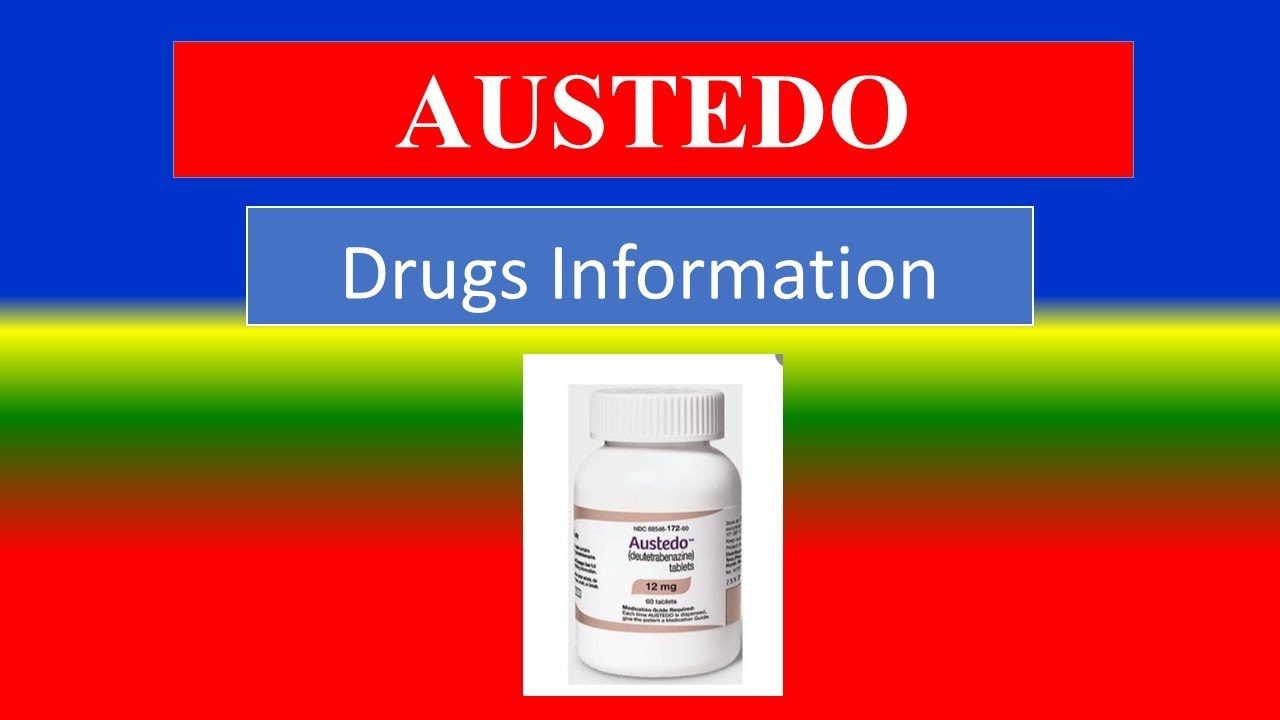
Austedo is an oral medication used to treat two movement disorders in adults: Huntington’s disease and tardive dyskinesia. It comes in immediate-release tablets that are taken twice per day, and once-daily extended-release tablets. Austedo was first approved by the FDA in 2017.
00:08 Dosage
00:26 How It Works
00:41 Side Effects
Learn more: https://www.drugs.com/austedo.html
Austedo belongs to a class of medications called vesicular monoamine transporter 2 (VMAT2) inhibitors. It works by changin g the activity of chemicals in the brain that affect nerves and muscles, which reduces the unwanted body movements. This medication isn’t a cure, but it can improve quality of life for those living with Huntington’s disease or tardive dyskinesia.
The most common side effects of Austedo may include drowsiness, tiredness, dry mouth, runny or stuffy nose, sore throat, sleep problems, and diarrhea.
This material is provided for educational purposes only and is not intended for medical advice, diagnosis or treatment. Always consult with your healthcare provider.
To learn more about any medication, or medical treatment, visit https://www.drugs.com
——
Follow Drugs.com:
Facebook: https://www.facebook.com/Drugscom
Twitter (X): https://twitter.com/drugscom
Instagram: https://www.instagram.com/drugs.com_official/
TikTok: https://www.tiktok.com/@drugs.com_official
Pinterest: https://www.pinterest.com/drugscom/
Subscribe to our newsletter: https://www.drugs.com/newsletters/
——
About Drugs.com:
Drugs.com is the most popular, comprehensive and up-to-date source of drug information online. Providing free, peer-reviewed, accurate and independent data on more than 24,000 prescription drugs, over-the-counter medicines & natural products. Find helpful tools, wallet size personal medication records, mobile applications and more.

What Are The Side Effects Of Deutetrabenazine (Austedo)? Understanding the side effects of medications like Deutetrabenazine is vital for anyone managing movement disorders, especially in individuals dealing with schizophrenia. In this informative video, we’ll discuss the various side effects associated with Deutetrabenazine, also known as Austedo. We’ll cover both common and less common side effects, providing you with a comprehensive overview of what to expect when taking this medication.
We’ll highlight the importance of monitoring for symptoms that may arise and how they can impact daily life. Additionally, we’ll touch on the significance of communicating with healthcare providers to ensure that treatment is effective and safe. This video aims to equip you with the knowledge needed to manage potential side effects effectively.
If you or someone you know is considering or currently taking Deutetrabenazine, this video is a must-watch. Stay informed and proactive about your health. Don’t forget to subscribe to our channel for more helpful discussions and resources related to mental health and treatment options.
⬇️ Subscribe to our channel for more valuable insights.
🔗Subscribe: https://www.youtube.com/@Schiz....ophreniaSupportNetwo
#Deutetrabenazine #Austedo #MentalHealth #Schizophrenia #MovementDisorders #MedicationSideEffects #MentalHealthAwareness #PatientEducation #Healthcare #MentalWellness #SchizophreniaTreatment #PsychiatricMedications #MentalHealthSupport #MedicationManagement #SideEffects
About Us: Welcome to the Schizophrenia Support Network, your resource for understanding schizophrenia and its impact on daily life. This channel focuses on key topics including schizophrenia symptoms, treatment options, living with schizophrenia, early signs of the condition, and how to manage it effectively. We aim to provide accurate information to help demystify schizophrenia and tackle common myths surrounding it, promoting a better understanding of schizophrenia and psychosis. The content provided is for general informational and educational purposes only. It is not intended to substitute for professional medical advice, diagnosis, or treatment. Never disregard professional medical advice or delay seeking it because of something you have seen in this content. Never rely on this information in place of consulting with qualified healthcare professionals. The creators and distributors of this content are not responsible for any adverse effects or consequences resulting from the use of any suggestions, preparations, or procedures described in this material. Always consult with your healthcare provider before starting any new health-related practice or program.

See Important Safety Information below, & Medication Guide here: https://bit.ly/4ivEe2k. AUSTEDO XR®/AUSTEDO® can cause depression, suicidal thoughts, or actions in patients with HD. Don’t use if you have liver problems; are taking reserpine, tetrabenazine, or valbenazine.
APPROVED USES
AUSTEDO XR is a prescription medicine that is used to treat:
• the involuntary movements (chorea) of Huntington’s disease (HD). AUSTEDO XR/AUSTEDO does not cure the cause of the involuntary movements, & it does not treat other symptoms of HD, such as problems with thinking or emotions.
• movements in the face, tongue, or other body parts that cannot be controlled TD (tardive dyskinesia).
It is not known if AUSTEDO XR/AUSTEDO is safe & effective in children.
IMPORTANT SAFETY INFORMATION
AUSTEDO XR/AUSTEDO can cause serious side effects in people with HD, including: depression, suicidal thoughts, or suicidal actions. Do not start taking AUSTEDO XR/AUSTEDO if you are depressed (have untreated depression or depression that is not well controlled by medicine) or have suicidal thoughts. Pay close attention to any changes, especially sudden changes, in mood, behaviors, thoughts or feelings. This is especially important when AUSTEDO XR/AUSTEDO is started & when the dose is changed. Call your doctor right away if you become depressed, have unusual changes in mood or behavior, or have thoughts of suicide.
Do not take AUSTEDO XR/AUSTEDO if you:
• have HD & are depressed or have thoughts of suicide.
• have liver problems.
• are taking reserpine. Do not take medicines that contain reserpine with AUSTEDO XR/AUSTEDO. If your doctor plans to switch you from taking reserpine to AUSTEDO XR/AUSTEDO, you must wait at least 20 days after your last dose of reserpine before you start taking AUSTEDO XR/AUSTEDO.
• are taking a monoamine oxidase inhibitor (MAOI) medicine. Do not take an MAOI within 14 days after you stop taking AUSTEDO XR/ AUSTEDO. Do not start AUSTEDO XR/AUSTEDO if you stopped taking an MAOI in the last 14 days. Ask your doctor or pharmacist if you are not sure.
• are taking tetrabenazine. If your doctor plans to switch you from tetrabenazine to AUSTEDO XR/AUSTEDO, take your first dose of AUSTEDO XR/AUSTEDO on the day after your last dose of tetrabenazine.
• are taking valbenazine.
Other possible serious side effects include:
• Irregular heartbeat (QT prolongation). AUSTEDO XR/AUSTEDO increases your chance of having certain changes in the electrical activity in your heart. These changes can lead to a dangerous abnormal heartbeat. Taking AUSTEDO XR/AUSTEDO with certain medicines may increase this chance.
• Neuroleptic Malignant Syndrome. Call your doctor right away & go to the nearest emergency room if you develop these signs & symptoms that do not have another obvious cause: high fever, stiff muscles, problems thinking, very fast or uneven heartbeat, or increased sweating.
• Restlessness. You may get a condition where you feel a strong urge to move. This is called akathisia.
• Parkinsonism. Symptoms include: slight shaking, body stiffness, trouble moving, trouble keeping your balance, or falls.
Sleepiness (sedation) is a common side effect of AUSTEDO XR/AUSTEDO. While taking AUSTEDO XR/AUSTEDO, do not drive a car or operate dangerous machinery until you know how AUSTEDO XR/AUSTEDO affects you. Drinking alcohol & taking other drugs that may also cause sleepiness while you are taking AUSTEDO XR/AUSTEDO may increase any sleepiness caused by AUSTEDO XR/AUSTEDO.
The most common side effects of AUSTEDO in people with HD include sleepiness (sedation), diarrhea, tiredness, & dry mouth.
The most common side effects of AUSTEDO in people with TD include inflammation of the nose & throat (nasopharyngitis) & problems sleeping (insomnia).
The most common side effects of AUSTEDO XR are expected to be similar to AUSTEDO in people with HD or TD. These are not all the possible side effects of AUSTEDO XR/AUSTEDO. Call your doctor for advice about side effects. You are encouraged to report side effects of prescription drugs to the FDA. Visit https://www.fda.gov/medwatch or call 1-800-FDA-1088.

See Important Safety Information below; Prescribing Information including Boxed Warning: https://bit.ly/3YhB0s9. AUSTEDO XR®/AUSTEDO® can cause depression, suicidal thoughts, or actions in patients with HD. Don’t use if you have liver problems; are taking reserpine, tetrabenazine, or valbenazine.
INDICATIONS & USAGE
AUSTEDO XR is indicated in adults for the treatment of chorea associated with Huntington's disease (HD) & for the treatment of tardive dyskinesia (TD).
IMPORTANT SAFETY INFORMATION
Depression & Suicidality in HD Patients: AUSTEDO XR can increase the risk of depression & suicidal thoughts & behavior (suicidality) in HD Patients. Balance the risks of depression & suicidality with the clinical need for treatment of chorea. Closely monitor patients for the emergence or worsening of depression, suicidality, or unusual changes in behavior. Inform patients, their caregivers, & families of the risk of depression & suicidality & instruct them to report behaviors of concern promptly to the treating physician. Exercise caution when treating patients with a history of depression or prior suicide attempts or ideation. AUSTEDO XR is contraindicated in patients who are suicidal, & in patients with untreated or inadequately treated depression.
Contraindications: AUSTEDO XR is contraindicated in HD patients who are suicidal, or have untreated or inadequately treated depression. AUSTEDO XR is also contraindicated in: patients with hepatic impairment; patients taking reserpine or within 20 days of discontinuing reserpine; patients taking monoamine oxidase inhibitors (MAOIs), or within 14 days of discontinuing MAOI therapy; & patients taking tetrabenazine or valbenazine.
Clinical Worsening & Adverse Events in HD Patients: AUSTEDO XR may cause a worsening in mood, cognition, rigidity, & functional capacity. Prescribers should periodically re-evaluate the need for AUSTEDO XR in their patients by assessing the effect on chorea & possible adverse effects.
QTc Prolongation: AUSTEDO XR may prolong the QT interval, but the degree of QT prolongation is not clinically significant when AUSTEDO XR is administered within the recommended dosage range. AUSTEDO XR should be avoided in patients with congenital long QT syndrome & in patients with a history of cardiac arrhythmias.
Neuroleptic Malignant Syndrome (NMS), a potentially fatal symptom complex reported in association with drugs that reduce dopaminergic transmission, has been observed in patients receiving tetrabenazine. The risk may be increased by concomitant use of dopamine antagonists or antipsychotics. The management of NMS should include immediate discontinuation of AUSTEDO XR; intensive symptomatic treatment & medical monitoring; & treatment of any concomitant serious medical problems.
Akathisia, Agitation, & Restlessness: AUSTEDO XR may increase the risk of akathisia, agitation, & restlessness. The risk of akathisia may be increased by concomitant use of dopamine antagonists or antipsychotics. If a patient develops akathisia, the AUSTEDO XR dose should be reduced; some patients may require discontinuation of therapy.
Parkinsonism: AUSTEDO XR may cause parkinsonism in TD or HD patients. The risk of parkinsonism may be increased by concomitant use of dopamine antagonists or antipsychotics. If a patient develops parkinsonism, the AUSTEDO XR dose should be reduced; some patients may require discontinuation of therapy.
Sedation & Somnolence: Sedation is a common dose-limiting adverse reaction of AUSTEDO XR. Patients should not perform activities requiring mental alertness, such as operating a motor vehicle or hazardous machinery, until they are on a maintenance dose of AUSTEDO XR & know how the drug affects them. Concomitant use of alcohol or other sedating drugs may have additive effects & worsen sedation & somnolence.
Hyperprolactinemia: Tetrabenazine elevates serum prolactin concentrations in humans. If there is a clinical suspicion of symptomatic hyperprolactinemia, appropriate laboratory testing should be done & consideration should be given to discontinuation of AUSTEDO XR.
Binding to Melanin-Containing Tissues: Deutetrabenazine or its metabolites bind to melanin-containing tissues & could accumulate in these tissues over time. Prescribers should be aware of the possibility of long-term ophthalmologic effects.
Common Adverse Reactions: The most common adverse reactions for AUSTEDO (greater than 8% & greater than placebo) in a controlled clinical study in HD patients were somnolence, diarrhea, dry mouth, & fatigue. The most common adverse reactions for AUSTEDO (4% & greater than placebo) in controlled clinical studies in TD patients were nasopharyngitis & insomnia. Adverse reactions with AUSTEDO XR are expected to be similar to AUSTEDO.
#medicalknowledgeonline
Generic Name, Brand Names, What is ?, Vital information, Dosage info,
Before taking this medicine (Precautions ), How to use ,
Miss a dose, Overdose , Stop or Avoid Taking ,
Side Effects, Other Drugs Will Affect,
#medicalknowledgeonline
TOPICS
1. ANATOMY – Topics
https://www.youtube.com/playli....st?list=PLpHbgG-0bk1
2. PHYSIOLOGY – Topics
https://www.youtube.com/playli....st?list=PLpHbgG-0bk1
3. DISEASES – Topics
https://www.youtube.com/playli....st?list=PLpHbgG-0bk1
4. PUBLIC HEALTH- Topics
https://www.youtube.com/playli....st?list=PLpHbgG-0bk1
5. Rx – Topics
https://www.youtube.com/playli....st?list=PLpHbgG-0bk1
6. LABORATORY TEST – Topics
https://www.youtube.com/playli....st?list=PLpHbgG-0bk1
7. MEDICAL IMAGING – Topics
https://www.youtube.com/playli....st?list=PLpHbgG-0bk1
8. SURGICAL AND MEDICAL PROCEDURES – topics
https://www.youtube.com/playli....st?list=PLpHbgG-0bk1
9. MICROBIOLOGY – Topics
https://www.youtube.com/playli....st?list=PLpHbgG-0bk1
10. BIOCHEMISTRY – Topics
https://www.youtube.com/playli....st?list=PLpHbgG-0bk1
11. NUTRITION – Topics
https://www.youtube.com/playli....st?list=PLpHbgG-0bk1
12. HEALTH TOPICS
https://www.youtube.com/playli....st?list=PLpHbgG-0bk1
13. MEDICAL & SURGICAL – Topics
https://www.youtube.com/playli....st?list=PLpHbgG-0bk1
14. PAEDIATRICS / CHILD HEALTH – Topics
https://www.youtube.com/playli....st?list=PLpHbgG-0bk1
15. MENTAL HEALTH – Topics
https://www.youtube.com/playli....st?list=PLpHbgG-0bk1
16. MATERNAL HEALTH – Topics
https://www.youtube.com/playli....st?list=PLpHbgG-0bk1
17. COMMUNITY HEALTH – Topics
https://www.youtube.com/playli....st?list=PLpHbgG-0bk1
18. NURSING FOUNDATION – Topics
https://www.youtube.com/playli....st?list=PLpHbgG-0bk1
19. BIOSTATISTICS – Topics
https://www.youtube.com/playli....st?list=PLpHbgG-0bk1
20. PATHOLOGY – TOPICS
https://www.youtube.com/playli....st?list=PLpHbgG-0bk1
21. NURSING EDUCATION – Topics
https://www.youtube.com/playli....st?list=PLpHbgG-0bk1
22. HOSPITAL MANAGEMENT AND HEALTH CARE ADMINISTRATION – Topics
https://www.youtube.com/playli....st?list=PLpHbgG-0bk1
23. NURSING RESEARCH – TOPICS
https://www.youtube.com/playli....st?list=PLpHbgG-0bk1
24. NURSING FOUNDATION – Topics
https://www.youtube.com/playli....st?list=PLpHbgG-0bk1
25. PHARMACOLOGY – TOPICS
https://www.youtube.com/playli....st?list=PLpHbgG-0bk1
26. PUBLIC HEALTH – Topics
https://www.youtube.com/playli....st?list=PLpHbgG-0bk1
27. INTERNATIONAL DAYS
https://www.youtube.com/playli....st?list=PLpHbgG-0bk1
28. NURSING - TOPICS
https://www.youtube.com/playli....st?list=PLpHbgG-0bk1
#medicalknowledgeonline

In a significant advancement for those suffering from tardive dyskinesia (TD), the U.S. Food and Drug Administration (FDA) recently approved Austedo XR (extended-release deutetrabenazine). This approval brings a new, convenient treatment option for patients grappling with this often debilitating condition.
The most notable advantage of Austedo XR is its once-daily dosing regimen. This is a significant improvement over the immediate-release form, which requires twice-daily dosing. A once-daily pill is easier for patients to adhere to, improving overall treatment compliance.
Read blog post here: https://psychiatryeducationforum.com/Austedo-XR

Is Deutetrabenazine (Austedo) Addictive? In this informative video, we will discuss Deutetrabenazine, commonly known by its brand name Austedo, and its role in treating movement disorders associated with serious conditions. We will cover how this medication functions in the brain and its potential effects on mood and cognitive abilities. Understanding the difference between psychological and physical dependence is essential when considering the safety of any medication, including Deutetrabenazine.
We will also address the important side effects that can arise from its use, particularly in patients with Huntington's disease, and the significance of monitoring during treatment. Additionally, we will highlight the necessity of regular consultations with healthcare providers to ensure the medication is effective and safe.
If you or someone you know is considering Deutetrabenazine as a treatment option, this video will provide essential information to help navigate the potential risks and benefits. Remember, staying informed and communicating with healthcare professionals is key to managing treatment effectively.
Join us for this important discussion, and subscribe to our channel for more helpful content on mental health and treatment options.
⬇️ Subscribe to our channel for more valuable insights.
🔗Subscribe: https://www.youtube.com/@Schiz....ophreniaSupportNetwo
#Deutetrabenazine #Austedo #MentalHealth #Schizophrenia #HuntingtonsDisease #MovementDisorders #MentalHealthAwareness #MedicationSafety #PsychiatricMedications #PatientEducation #Healthcare #SideEffects #MentalHealthTreatment #MentalHealthSupport #MedicationManagement
About Us: Welcome to the Schizophrenia Support Network, your resource for understanding schizophrenia and its impact on daily life. This channel focuses on key topics including schizophrenia symptoms, treatment options, living with schizophrenia, early signs of the condition, and how to manage it effectively. We aim to provide accurate information to help demystify schizophrenia and tackle common myths surrounding it, promoting a better understanding of schizophrenia and psychosis. The content provided is for general informational and educational purposes only. It is not intended to substitute for professional medical advice, diagnosis, or treatment. Never disregard professional medical advice or delay seeking it because of something you have seen in this content. Never rely on this information in place of consulting with qualified healthcare professionals. The creators and distributors of this content are not responsible for any adverse effects or consequences resulting from the use of any suggestions, preparations, or procedures described in this material. Always consult with your healthcare provider before starting any new health-related practice or program.


Auvelity (dextromethorphan/ buproprion) is an NMDA Antagonist and a newer type of medication used in the treatment of Depression (Major Depressive Disorder) at our Philadelphia office. This medication's primary effective agent is dextromethorphan (which is commonly used in cough medications / antitussives). The buproprion (also known as Wellbutrin) in this combination pill works to decrease the effectiveness of a liver enzyme that breaks down dextromethorphan (CYP2D6) thereby increasing the dextromethorphan blood concentration and allowing it to have a longer duration of action, than when it's used for colds (dextromethorphan breaks down relatively quickly). Wellbutrin is an antidepressant, but trials indicate that the dextromethorphan is the medication in this pill, the predominantly is resulting in improved mood. Dextromethorphan works as an N-Methyl-D-Aspartate (NMDA) antagonist increasing Glutamate levels (again, this is a relatively novel pathway to treat depression). If an individual has failed several anti-depressants, utilizing a different method of treatment (or pathway for treatment) may be a good option. Side effects can include dizziness, nausea and headache (among others). Severe side effects can include elevated blood pressure, severe rash or others. However, most tolerate it well, with per manufacturer, less than a 15% discontinuation rate, due to side effects.
Please talk to your provider about all risks and benefits of this medication before starting, stopping or changing doses. This information is meant to educate providers and give patients more information to discuss with them about their options.
Dr. Pagnani is the Medical Director of Rittenhouse Psychiatric Associates in Philadelphia, PA and surrounding areas. Their practice has 25 Academically oriented provides and is now scheduling in-office and telemedicine visits.
For additional informative mental health videos:
youtube.com/@rittenhousepsych
www.RittenhousePA.com
www.ChrisPagnaniMD.com
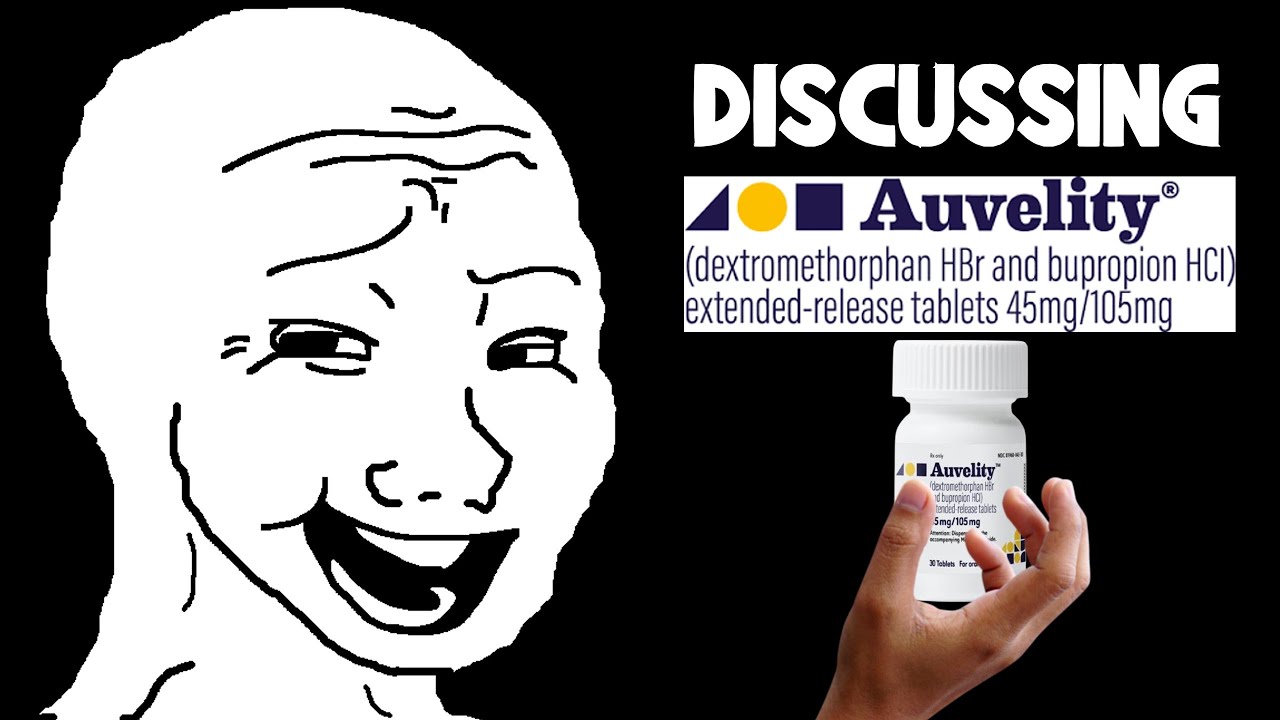
"Discussing Auvelity: The New Dextroantidepressant"
In this video, I read experience reports and talk about the new antidepresant that contains Bupropion and Dextreomethorphan...
MAIN CHANNEL: https://www.youtube.com/@talesfromthetrip


Parents and caregivers of children with life-threatening allergies are tasked with preparing their child to maneuver safely through day-to-day life. In this video, Daniella shares her experience with finding out how her son has a life-threatening allergy and how she makes sure he will always be prepared in case of an allergic emergency.
Epinephrine should always be administered at the first sign of anaphylaxis
symptoms. Symptoms can include the following:
• Skin rash or irritation
• Trouble breathing
• Throat tightening
• Dizziness
• Stomach pain
AUVI-Q® (epinephrine injection, USP) is a prescription medicine used to treat life-threatening allergic reactions. See video for full Indication and Important Safety Information or visit auvi-q.com/important-safety-information. Talk to your doctor about possible side effects of epinephrine including headache, dizziness, palpitations, sweating, or shakiness. Seek emergency medical care after use.
For more information on AUVI-Q visit: https://www.auvi-q.com/
Follow our social channels to learn more about AUVI-Q:
Facebook: https://www.facebook.com/AUVIQResponse/
X: https://twitter.com/AUVIQ
Instagram: https://www.instagram.com/auvi_q/
TikTok: https://www.tiktok.com/@auvi_q
YouTube: https://www.youtube.com/@AUVIQ

Worried about severe allergic reactions? Auvi-Q auto injectors can be a lifesaver. This video explains what Auvi-Q is and how it works to deliver epinephrine in case of anaphylaxis. We'll cover different dosages, who can use Auvi-Q, and its easy-to-use voice-guided instructions. But Auvi-Q goes beyond use! We'll discuss important information like side effects and when to seek medical attention after injection. Empower yourself with knowledge about Auvi-Q and be prepared for potential emergencies.
🔔 SUBSCRIBE TO ALLERGIA HEALTH ► https://www.youtube.com/@AllergiaHealth
Read the full article here: https://allergiahealth.com/auv....i-q-or-auvi-q-auto-i

For many families, taking care of children with life threatening allergies is part of their daily lives. This family takes you through their AUVI-Q® (epinephrine injection, USP) journey with multiple children with severe allergies. Anaphylaxis is a severe and life-threatening allergic reaction that can happen within minutes of exposure to an allergen and requires immediate treatment with epinephrine.
AUVI-Q is a prescription medication used to treat life-threatening allergic reactions, including anaphylaxis, in people who are at risk for or have a history of serious allergic reactions. AUVI-Q comes in three dosages designed to go with you as you grow:
• AUVI-q® 0.1 mg (for babies and toddlers weighing 16.5-33 lbs)
• AUVI-Q® 0.15 mg (for children weighing 33-66 lbs)
• AUVI-Q® 0.3 mg (for anyone weighing 66 lbs or more)
AUVI-Q provides Trainers with the auto-injectors to help caregivers, guardians, friends, and those with life-threatening allergies so they can be prepared when an allergic reaction takes place.
AUVI-Q is a prescription medicine used to treat life-threatening allergic reactions. See video for full Indication and Important Safety Information or visit auvi-q.com/important-safety-information. Talk to your doctor about possible side effects of epinephrine including headache, dizziness, palpitations, sweating, or shakiness. Seek emergency medical care after use.
For more information on AUVI-Q® (epinephrine injection, USP) visit:
www.auvi-q.com
Follow our social channels to learn more about AUVI-Q:
Facebook: https://www.facebook.com/AUVIQResponse
X: https://x.com/AUVIQ
Instagram: https://www.instagram.com/auvi_q/
TikTok: https://www.tiktok.com/@auvi_q
YouTube: https://www.youtube.com/@AUVIQ

If you have children with life-threatening allergies, having an epinephrine auto-injector available is always a must. Learn more about how Valerie navigates multiple life-threatening allergies with her children and how they always have an AUVI-Q® (epinephrine injection, USP), on hand in case of an allergic emergency.
Epinephrine should always be administered at the first sign of anaphylaxis
symptoms. Symptoms can include the following:
• Skin rash or irritation
• Trouble breathing
• Throat tightening
• Dizziness
• Stomach pain
AUVI-Q is a prescription medicine used to treat life-threatening allergic reactions. See video for full Indication and Important Safety Information or visit auvi-q.com/important-safety-information. Talk to your doctor about possible side effects of epinephrine including headache, dizziness, palpitations, sweating, or shakiness. Seek emergency medical care after use.
For more information on AUVI-Q visit: https://www.auvi-q.com/anaphylaxis
Follow our social channels to learn more about AUVI-Q:
Facebook: https://www.facebook.com/AUVIQResponse
X: https://twitter.com/AUVIQ
Instagram: https://www.instagram.com/auvi_q
TikTok: https://www.tiktok.com/@auvi_q
YouTube: https://www.youtube.com/@AUVIQ

Learn how to administer AUVI-Q® (epinephrine injection, USP) for anyone weighing 33 lbs or more in 3 steps.
STEP 1
Pull AUVI-Q up from the outer case.
Do not go to step 2 until you are ready to use AUVI-Q. If you are not ready to use AUVI-Q, put it back in the outer case.
STEP 2
Pull red safety guard down and off of AUVI-Q.
To reduce the chance of an accidental injection, do not touch the black base of the auto-injector, which is where the needle comes out. If an accidental injection happens, get medical help right away.
Note: The red safety guard is made to fit tightly. Pull firmly to remove.
STEP 3
Place black end of AUVI-Q against the middle of the outer thigh, then push firmly until you hear a click and hiss sound and hold in place for 2 seconds.
AUVI-Q can inject through clothing if necessary. ONLY inject into the middle of the outer thigh. To minimize the risk of injection-related injury, hold a young child's or infant's leg firmly in place when administering AUVI-Q. Seek emergency medical care immediately after using AUVI-q.
AUVI-Q is a prescription medicine used to treat life-threatening allergic reactions. See video for full Indication and Important Safety Information or visit auvi-q.com/important-safety-information. Talk to your doctor about possible side effects of epinephrine including headache, dizziness, palpitations, sweating, or shakiness. Seek emergency medical care after use.
For more information on AUVI-Q visit:
www.auvi-q.com/about-auvi-q or www.auvi-q.com/
AUVI-q is the first and only FDA-approved epinephrine auto-injector designed for infants and toddlers 16.5 lbs-33 lbs.
To see instructions on how to use AUVI-q for infants and toddlers weighing 16.5 lbs-33 lbs, please watch: https://www.youtube.com/watch?v=7cP5Mj5COdM
Follow our social channels to learn more about AUVI-Q:
Facebook: https://www.facebook.com/AUVIQResponse
X: https://x.com/AUVIQ
Instagram: https://www.instagram.com/auvi_q/
TikTok: https://www.tiktok.com/@auvi_q
YouTube: https://www.youtube.com/@AUVIQ

AUVI-Q® (epinephrine injection, USP) is an epinephrine auto-injector option for patients with life-threatening allergies. Every AUVI-Q is manufactured according to the highest standards.
In order to help produce a consistent, high-quality product, Kaléo has created a 100% fully automated, high-tech, robotic production line. This manufacturing process includes calibrated sensors and vision systems to ensure the components of AUVI-Q meet rigorous standards, so they can be placed precisely in the devices
Through a manufacturing process validation, flawed components are purposely introduced to ensure the inspection systems are picking them out and immediately removing them from the lineup.
To learn more about the AUVI-Q manufacturing process, please visit the AUVI-Q Resources page: auvi-q.com/manufacturing
AUVI-Q is a prescription medicine used to treat life-threatening allergic reactions. See video for full Indication and Important Safety Information or visit auvi-q.com/important-safety-information. Talk to your doctor about possible side effects of epinephrine including headache, dizziness, palpitations, sweating, or shakiness. Seek emergency medical care after use.
Follow our social channels to learn more about AUVI-Q:
Facebook: https://www.facebook.com/AUVIQResponse
X: https://x.com/AUVIQ
Instagram: https://www.instagram.com/auvi_q/
TikTok: https://www.tiktok.com/@auvi_q
YouTube: https://www.youtube.com/@AUVIQ

As a parent, it can be hard to imagine that your child could have a life-threatening allergy. Meet Scarlett and Anna, and learn how this family dealt with the realization that a life-threatening allergy was present.
Anaphylaxis can be difficult to recognize in infants and toddlers compared to older children. It is important to look for the following signs and symptoms in babies, particularly following exposure to a potential allergen:
• Rash, hives, itching, or facial swelling
• Inconsolable crying
• Vomiting
• Difficult breathing, wheezing, or coughing
AUVI-q® (epinephrine injection, USP 0.1 mg is the only FDA-approved auto-injector for use on infants and toddlers (16.5-33 lbs). Anaphylaxis requires immediate treatment with an epinephrine auto-injector as soon as symptoms are recognized. For more information on anaphylaxis in children and babies visit: https://www.auvi-q.com/anaphylaxis-in-children.
AUVI-Q is a prescription medicine used to treat life-threatening allergic reactions. See video for full Indication and Important Safety Information or visit auvi-q.com/important-safety-information. Talk to your doctor about possible side effects of epinephrine including headache, dizziness, palpitations, sweating, or shakiness. Seek emergency medical care after use.
For more information on AUVI-Q visit: https://www.auvi-q.com/
Follow our social channels to learn more about AUVI-Q:
Facebook: https://www.facebook.com/AUVIQResponse/
X: https://www.twitter.com/auviq
Instagram: https://instagram.com/auvi_q
TikTok: https://tiktok.com/@auvi_q
YouTube: https://youtube.com/@AUVIQ

____________________________________________________________________________________________________
Board certified allergist, Dr. Megan Stauffer, explains how epinephrine injectors called EpiPen and Auvi-Q are used in treating anaphylaxis in patients with severe food allergies.
Allergy, Asthma & Sinus Center (AASC) Website - www.allergyasc.com
____________________________________________________________________________________________________

This video features Mark Skeen, MD, Associate Professor of Neurology at Duke University School of Medicine and was created in 2016. Please visit www.nationalMSsociety.org/meds for the most updated information. To learn more about Interferon Beta and other disease modifying therapy options, download the Consensus on Disease Modifying Therapies online at www.nationalmssociety.org/DMTconsensus.
-



Once diagnosed with relapsing MS, Connie was very concerned about what that would mean for her future. Hear Connie discuss why she chose her multiple sclerosis treatment.
• Learn more about a treatment for relapsing MS at:
http://bit.ly/135klZR
• Find out about a First Month Free Trial Offer:
http://bit.ly/172sDTw
• Get a Free Information Kit
http://bit.ly/14wEJAo
• The $10 Copay Program
http://bit.ly/14gZ0bl
• Sign up for email updates:
http://bit.ly/17k9Tiy
Indication
AVONEX (interferon beta-1a) is approved by FDA to treat relapsing forms of multiple sclerosis (MS) to decrease the number of flare-ups and slow the occurrence of some of the physical disability that is common in people with MS. AVONEX is approved for use in people who have experienced a first attack and have lesions consistent with MS on their MRI.
Important Safety Information
Before beginning treatment, you should discuss with your healthcare provider the potential benefits and risks associated with AVONEX® (interferon beta-1a). AVONEX can cause serious side effects including behavioral health problems (including depression, suicide or suicidal thoughts and hallucinations), liver problems (including liver failure and death), serious allergic reactions and skin reactions, heart problems (including heart failure), blood problems, seizures, infections, and thyroid problems. Let your healthcare provider know if you have a history of or are currently experiencing behavioral health problems, seizures, liver, thyroid, heart, or bleeding problems, autoimmune disease, low blood cell count, or if you have had previous allergic reactions to interferon beta. Tell your healthcare provider if you drink alcohol, are pregnant or plan to become pregnant, or if you are breastfeeding or plan to breastfeed, and all the medicines you currently take or have taken. You should not breastfeed while taking AVONEX. The most common side effects of AVONEX are flu-like symptoms (fever, chills, muscle aches, and tiredness) early during the course of therapy. Usually, these symptoms last for a day after the injection.
For additional important safety information,
http://bit.ly/14gZ0Ic
full Prescribing Information,
http://bit.ly/17k9Wuw
and Medication Guide,
http://bit.ly/17k9WuC
please see visit our site at
http://bit.ly/129uzAy
In this episode, I discuss a medication known as rasagiline (Azilect).
My book is now available! It discusses my experience with Bipolar Disorder.
The Fifth Episode - Inside The Manic Mind.
Find it here:
BookBaby (best way to support this project):
https://store.bookbaby.com/book/the-fifth-episode
Amazon:
https://www.amazon.com/Fifth-Episode-Inside-Manic-Mind/dp/1667843451/ref=sr_1_12?crid=26PVK90TTXRBO&keywords=the+fifth+episode+paperback&qid=1654191898&sprefix=the+fifth+episode+paperback%2Caps%2C61&sr=8-12
Barnes & Noble:
https://www.barnesandnoble.com..../w/the-fifth-episode
Support the channel on Patreon:
https://www.patreon.com/DrugTalk
Twitter: @talkaboutdrugs
Instagram: @garrett.campb
Connect on Facebook:
https://www.facebook.com/talkaboutdrugs
For information purposes only!

Does Azilect Cause Headaches? In this informative video, we will discuss Azilect, a medication commonly prescribed for managing Parkinson's disease symptoms. Azilect, known generically as rasagiline, is a monoamine oxidase B inhibitor that helps enhance certain neurotransmitter levels in the brain. While this medication can be effective for many individuals, it is essential to be aware of the potential side effects that may arise during treatment.
One of the side effects that some users report is headaches, which can vary in intensity and may accompany other symptoms. Understanding the factors that influence these side effects, such as dosage and individual health, is important for anyone considering or currently using Azilect.
We will also address the significance of consulting with healthcare providers if you experience headaches while taking this medication. They can assist in managing symptoms and may recommend changes to your treatment plan when necessary. Additionally, dietary considerations are crucial when on Azilect, especially regarding foods high in tyramine.
Join us as we navigate the complexities of using Azilect for Parkinson's management and provide essential tips for maintaining your health. Don’t forget to subscribe to our channel for more helpful discussions on Parkinson's disease and its treatments.
⬇️ Subscribe to our channel for more valuable insights.
🔗Subscribe: https://www.youtube.com/@Every....dayParkinsonsHelp/?s
#Azilect #ParkinsonsDisease #Rasagiline #Headaches #MedicationSideEffects #Neurotransmitters #HealthManagement #ParkinsonsTreatment #DietaryRestrictions #HealthcareAdvice #PatientCare #ChronicIllness #ParkinsonsSupport #MedicationAwareness #WellnessJourney #SymptomManagement
About Us: Welcome to Everyday Parkinsons Help! This channel is dedicated to providing support for individuals and families affected by Parkinson's Disease. Our mission is to share information on key topics such as Parkinson’s disease symptoms, early signs of Parkinson’s, Parkinson’s diagnosis, tremors and movement disorders, and living with Parkinson’s. We also discuss Parkinson’s medications, stages of the disease, physical therapy options, and advances like deep brain stimulation. The content provided is for general informational and educational purposes only. It is not intended to substitute for professional medical advice, diagnosis, or treatment. Never disregard professional medical advice or delay seeking it because of something you have seen in this content. Never rely on this information in place of consulting with qualified healthcare professionals. The creators and distributors of this content are not responsible for any adverse effects or consequences resulting from the use of any suggestions, preparations, or procedures described in this material. Always consult with your healthcare provider before starting any new health-related practice or program.


Does Azilect Cause Nausea? In this informative video, we will discuss the medication Azilect, also known as rasagiline, which is commonly prescribed for individuals living with Parkinson’s disease. Understanding the potential side effects of any medication is important for managing health effectively. This video will focus specifically on nausea, a side effect that some patients may experience while taking Azilect. We will cover the nature of this side effect, how it can vary from person to person, and what steps should be taken if nausea becomes severe or persistent.
Additionally, we will touch on other gastrointestinal symptoms that may accompany Azilect use and the importance of monitoring these effects. Open communication with healthcare providers is essential for anyone using this medication, as it allows for adjustments and ensures the treatment remains effective.
Whether you are a patient, caregiver, or simply seeking information about Parkinson’s disease treatments, this video aims to provide clarity and guidance. Join us as we navigate the topic of Azilect and its effects, and make sure to subscribe for more helpful discussions on managing Parkinson’s disease and related treatments.
⬇️ Subscribe to our channel for more valuable insights.
🔗Subscribe: https://www.youtube.com/@Every....dayParkinsonsHelp/?s
#Azilect #Rasagiline #ParkinsonsDisease #Nausea #MedicationSideEffects #Healthcare #PatientCare #GastrointestinalHealth #ParkinsonsTreatment #HealthManagement #MedicationMonitoring #ParkinsonsSupport #ChronicIllness #CaregiverSupport #HealthAwareness
About Us: Welcome to Everyday Parkinsons Help! This channel is dedicated to providing support for individuals and families affected by Parkinson's Disease. Our mission is to share information on key topics such as Parkinson’s disease symptoms, early signs of Parkinson’s, Parkinson’s diagnosis, tremors and movement disorders, and living with Parkinson’s. We also discuss Parkinson’s medications, stages of the disease, physical therapy options, and advances like deep brain stimulation. The content provided is for general informational and educational purposes only. It is not intended to substitute for professional medical advice, diagnosis, or treatment. Never disregard professional medical advice or delay seeking it because of something you have seen in this content. Never rely on this information in place of consulting with qualified healthcare professionals. The creators and distributors of this content are not responsible for any adverse effects or consequences resulting from the use of any suggestions, preparations, or procedures described in this material. Always consult with your healthcare provider before starting any new health-related practice or program.

Check this Amazon link for the current price: https://amzn.to/3uL3ePV
- - - - - - - - - - - - - - - - - - - - - - - - - - - - - - - - - - - - - - - - - - - - - - - - - - - - - - - - - -
Note: the above link is an affiliate link, and I may earn a commission for purchases.
Check out my Amazon store for some of my recommended products: https://www.amazon.com/shop/reviewsofcoolstuff
YouTube channel: https://www.youtube.com/c/ReviewsofCoolStuff
Website: https://reviewsofcoolstuff.com/
Twitter: https://twitter.com/reviewsofcool
Instagram: https://www.instagram.com/reviewsofcoolstuff/
Facebook: https://www.facebook.com/reviewsofcool/
- - - - - - - - - - - - - - - - - - - - - - - - - - - - - - - - - - - - - - - - - - - - - - - - - - - - - - - - - -

Is Bacitracin Topical Safe For Dogs? In this informative video, we’ll discuss the use of Bacitracin topical ointment for dogs and what pet owners should consider before applying it. Bacitracin is a common topical antibiotic found in many over-the-counter products. While it can be effective for treating minor skin wounds, it’s essential to understand its safety and potential risks when used on your furry friend. We’ll cover how Bacitracin works to prevent bacterial infections and the importance of consulting with a veterinarian before using any human medication on pets.
Additionally, we’ll highlight the possibility of allergic reactions and the need for caution when applying ointments, especially since dogs may lick the treated areas. If your dog experiences a more serious injury or infection, we’ll explain why seeking veterinary care is vital. This video aims to equip you with the knowledge to make informed decisions about your dog's health and well-being. Join us as we navigate the topic of Bacitracin and its application in canine care. Don’t forget to subscribe for more helpful discussions on pet health and safety!
⬇️ Subscribe to our channel for more valuable insights.
🔗Subscribe: https://www.youtube.com/@Pharm....aceutical-Insights/?
#Bacitracin #DogHealth #PetCare #TopicalAntibiotics #DogWounds #VeterinaryAdvice #DogOwners #PetSafety #SkinInfections #CanineCare #DogAllergies #DogInjuries #PetHealthTips #DogMedicine #VeterinaryCare
About Us: Welcome to Pharmaceutical Insights! Our channel is dedicated to providing clear and informative content on a variety of topics related to pharmaceutical drugs, prescription medications, over-the-counter medicines, drug side effects, and medication safety. We also discuss medical treatments, alternative medicine, and pain management drugs, ensuring you have access to the information you need to make informed health decisions. The content provided is for general informational and educational purposes only. It is not intended to substitute for professional medical advice, diagnosis, or treatment. Never disregard professional medical advice or delay seeking it because of something you have seen in this content. Never rely on this information in place of consulting with qualified healthcare professionals. The creators and distributors of this content are not responsible for any adverse effects or consequences resulting from the use of any suggestions, preparations, or procedures described in this material. Always consult with your healthcare provider before starting any new health-related practice or program.


In this episode, we dive deep into the evolving realm of antibiotic use in dermatology. Our expert guest Dr. James Del Rosso shares insights on the challenges of compliance, the pros and cons of alternative treatments like spironolactone, and the pressing concern of antibiotic resistance. Tune in to explore the steps dermatologists can take for a more effective and responsible approach to treatment.
To learn more about antibiotic resistance in dermatology: https://www.hannahkopelman.com..../blog/antibiotic-res
Connect with me across Social:
Twitter: https://twitter.com/drhankopelman
Instagram: https://www.instagram.com/drhannahkopelman/
TikTok: https://www.tiktok.com/@drhankopelman
Blog: https://www.hannahkopelman.com/blog/
0:00 Intro
1:39 Antibiotic resistance
11:32 Anti-inflammatory effects
15:29 Acne
21:46 How long should you be on antibiotics
3102: Oral antibiotics
39:55 Acne & Rosacea
#dermatology #antibiotics
The content of this channel is for entertainment and educational purposes only. This content is not meant to be a substitute for medical advice or treatment for any medical condition.


In this video, Dr. Ahmet Ergin( SugarMD) talks about how to stop taking insulin.
Insulin used to be to go to medicine for most doctors. Today, astute endocrinologists recommend staying away from insulin as long as possible.
Latest Video: https://www.tubebuddy.com/quic....knav/latest/UCGGc50e
𝐕𝐈𝐒𝐈𝐓 https://sugarmds.com/ 𝐅𝐎𝐑 𝐔𝐒𝐀 𝐂𝐔𝐒𝐓𝐎𝐌𝐄𝐑𝐒 𝐀𝐍𝐃
https://www.etsy.com/shop/sugarmd/ 𝐅𝐎𝐑 𝐍𝐎𝐍-𝐔𝐒𝐀 𝐂𝐔𝐒𝐓𝐎𝐌𝐄𝐑𝐒 𝐓𝐎 𝐏𝐔𝐑𝐂𝐇𝐀𝐒𝐄 𝐓𝐇𝐄 𝐅𝐎𝐋𝐋𝐎𝐖𝐈𝐍𝐆 𝐎𝐑𝐈𝐆𝐈𝐍𝐀𝐋 𝐀𝐔𝐓𝐇𝐄𝐍𝐓𝐈𝐂 𝐒𝐔𝐆𝐀𝐑𝐌𝐃 𝐏𝐑𝐎𝐃𝐔𝐂𝐓𝐒:
𝐃𝐫.𝐄𝐫𝐠𝐢𝐧'𝐬 SugarMD GlucoDefense Glucose Support
https://sugarmds.com/product/glucose-defense/
𝐒𝐮𝐠𝐚𝐫𝐌𝐃 𝐒𝐮𝐩𝐞𝐫 𝐁𝐞𝐫𝐛𝐞𝐫𝐢𝐧𝐞 Dihydro-berberine (5x more effective than berberine) & Ceylon Cinnamon
https://sugarmds.com/product/sugarmd-super-berberine-dhb-and-ceylon-cinnamon-60-capsules/
𝐒𝐮𝐠𝐚𝐫𝐌𝐃 𝐍𝐞𝐮𝐫𝐨𝐩𝐚𝐭𝐡𝐲 𝐒𝐮𝐩𝐩𝐨𝐫𝐭 Stop Neuropathy & Other Diabetic Complications
https://sugarmds.com/product/sugarmd-neuropathy-support-60-capsules/
𝐒𝐮𝐠𝐚𝐫𝐌𝐃 𝐃𝐢𝐚𝐯𝐢𝐭𝐚𝐦𝐢𝐧 Vitamin Complex For Diabetics
https://sugarmds.com/product/sugarmd-dia-vitamin/
𝐒𝐮𝐠𝐚𝐫𝐌𝐃 𝐁𝐥𝐨𝐨𝐝 𝐏𝐫𝐞𝐬𝐬𝐮𝐫𝐞 𝐒𝐮𝐩𝐩𝐨𝐫𝐭 Lower Blood Pressure and Heart Disease Risk
https://sugarmds.com/product/sugarmd-blood-pressure-support/
SugarMD Weight Loss Formula - Fat Burner - New and Improved
https://sugarmds.com/product/weight-l...
Apple Cider Vinegar - Improve Your Blood Glucose With ACV
https://sugarmds.com/product/apple-ci...
𝐃𝐫. 𝐄𝐫𝐠𝐢𝐧'𝐬 𝐓𝐡𝐞 𝐔𝐥𝐭𝐢𝐦𝐚𝐭𝐞 𝐃𝐢𝐚𝐛𝐞𝐭𝐞𝐬 𝐁𝐨𝐨𝐤
https://sugarmds.com/product/the-ulti...
𝐒𝐮𝐛𝐬𝐜𝐫𝐢𝐛𝐞 𝐭𝐨 𝐒𝐮𝐠𝐚𝐫𝐌𝐃 𝐞𝐦𝐚𝐢𝐥 𝐥𝐢𝐬𝐭 𝐟𝐨𝐫 𝐝𝐢𝐬𝐜𝐨𝐮𝐧𝐭𝐬, 𝐩𝐫𝐨𝐦𝐨𝐭𝐢𝐨𝐧𝐬 𝐚𝐧𝐝 𝐧𝐞𝐰𝐬𝐥𝐞𝐭𝐭𝐞𝐫𝐬:
https://sugarmds.com/
𝐕𝐈𝐒𝐈𝐓 𝐎𝐔𝐑 𝐅𝐀𝐂𝐄𝐁𝐎𝐎𝐊 𝐏𝐀𝐆𝐄 𝐅𝐎𝐑 𝐒𝐇𝐎𝐑𝐓 𝐀𝐍𝐃 𝐒𝐖𝐄𝐄𝐓 𝐕𝐈𝐃𝐄𝐎𝐒
https://www.facebook.com/sugarmdsonline/
𝐉𝐎𝐈𝐍 𝐎𝐔𝐑 𝐆𝐑𝐄𝐀𝐓 𝐅𝐀𝐂𝐄𝐁𝐎𝐎𝐊 𝐒𝐔𝐏𝐏𝐎𝐑𝐓 𝐆𝐑𝐎𝐔𝐏 𝐇𝐄𝐑𝐄
https://www.facebook.com/groups/sugar...
For collaboration requests, please email me: [email protected] - 𝐏𝐥𝐞𝐚𝐬𝐞 𝐝𝐨 𝐧𝐨𝐭 𝐬𝐞𝐧𝐝 𝐩𝐞𝐫𝐬𝐨𝐧𝐚𝐥 𝐦𝐞𝐝𝐢𝐜𝐚𝐥 𝐪𝐮𝐞𝐬𝐭𝐢𝐨𝐧𝐬.
Who is Dr. Ergin? Dr. Ahmet Ergin is an endocrinologist with a particular interest and passion for diabetes care. Dr. Ergin earned his medical degree with honors at Marmara University School of Medicine in Istanbul, Turkey. Then, he completed his internal medicine residency and endocrinology fellowship at Cleveland Clinic in Cleveland, Ohio. He is a board-certified physician in Internal Medicine and Endocrinology, diabetes, and metabolism. He is also a certified diabetes education specialist.
Disclaimer: Any information on diseases and treatments available at this channel is intended for general guidance only and must never be considered a substitute for the advice provided by your doctor or other qualified healthcare professionals. Always seek the advice of your physician or other qualified healthcare professionals with questions you may have regarding your medical condition.
#diabeticmellitus #diabetes #diabetic
#type2diabetes #type1diabetes #diabeticmealplan
Are you about to inject insulin? Keep in mind that this medicin holds some nasty and dangerous side effect. If you want to free yourself from insulin (and diabetes type 2) completely, download our Diabetes-Free Secret for free: https://www.illnessfreelife.com/about-us/
These are the 10 most common side-effects from insulin:
#1: Weight gain 0:52
#2: Hungry 1:20
#3: Shaking & Trembling 1:55
#4: Fatigue 2:18
#5: Dizziniss 2:37
#6: Changing mood 3:00
#7: Hyperglycemia 3:28
#8: Hypersensitivity 3:53
#9: Injection Marks 4:24
#10: Blurred Vision 4:51
Download our Diabetes-Free Secret for free, so you'll NEVER have to inject insulin again: https://www.illnessfreelife.com/about-us/

How to inject and put ultra fine pen needles on this works for basaglar or Lantus insulin pen💉💉💉💉💉Hey guys thanks for watching this video 😊 but here's me injecting it into the skin💉💉💉💉click on link below... https://youtu.be/8JrTGWMLVaM
**Business Email *** [email protected]
YouTube Channel
https://www.youtube.com/@EricaChristy
Tiktok
https://vm.tiktok.com/ZTRDV5FpG/
@ericachristy6
Instagram
@ericachristy6
Thanks for Watching
Don't Forget To Subscribe 💋
affiliate Store https://www.amazon.com/shop/er....icachristy?ref_=cm_s mm
👍 Store help support the channel thanks.👍
https://www.ebay.com/sh/lst/active?action=summary&status=WATCHERS

Buprenorphine has become increasingly popular among experts in restless legs syndrome (RLS) for the treatment of moderate-to-severe RLS when opioid treatment is required. @andyberkowskimd of ReLACS Health describes the three main forms of buprenorphine that can be prescribed for RLS in this week's video.
To understand why buprenorphine may be a good choice among opioids, watch this video on buprenorphine treatment for RLS:
https://youtu.be/nCoKMINDiwk
Opioids are a mainstay of treatment for moderate-to-severe restless legs syndrome (RLS) when first-line medications have not worked. Buprenorphine is a unique opioid as it is a partial agonist at the mu-opioid receptor unlike most other opioids. The effect of this chemical difference is the reason buprenorphine has little risk of causing breathing problems that could lead to death in the event of a poisoning/overdose. This long-acting drug is also less likely to be abused, which is the reason it has become the go-to medication for treatment of opioid use disorder (OUD). However, the same benefits for OUD can be seen in its use for restless legs syndrome.
For RLS, there is a lot of confusion over forms and dosing for RLS, which will be substantially lower than for OUD and generally lower than for pain conditions. The three prime forms of buprenorphine for RLS are under the tongue (sublingual), through a patch against the skin (transdermal), and against the cheek and gum (buccal). They each have their pros and cons and Dr. Berkowski discusses each.
The sublingual film or tablet (e.g. Suboxone®, Subutex®) dissolves under the tongue to enter the bloodstream. Some forms like Suboxone come with naloxone added, which is an opioid blocker that can deter abuse from illicit injection, but it is almost completely inactive when absorbed under the tongue. The benefit to this form is the generally low out-of-pocket cost, but the downside is that it has a much higher strength, as intended for opioid use disorder originally. Thus, for RLS, the Suboxone film is often cut into smaller portions, such as 1/8 or 1/4 of 2 mg buprenorphine as a starting dose, which also makes it more cumbersome to administer. Another downside is the lack of awareness among clinicians that Suboxone can be prescribed by any provider with a DEA license for indications of RLS and pain; no special XDEA license is needed. In fact, it is a Schedule III drug, so less highly regulated than others like hydrocodone (e.g. Norco®), oxycodone, or methadone.
The transdermal patch (Butrans®) comes in increments of 5 mcg/hr/week up to 20 mcg/hr/week. It is much less potent than Suboxone so ideal for starting at 5 mcg/hr/week for RLS. The benefit is also a consistent level of medicine in the body 24/7 (in theory) so no, even minor, ups and downs from taking it. The downside is the patch lasts 7 days and then switched so it makes dosing and a day-to-day changes less flexible. Also, it can occasionally cause skin irritation that the other preparations lack. It is more expensive out-of-pocket than Suboxone and other sublingual preparations.
The final form is the buccal film (Belbuca®) that is placed and dissolves between the cheek and gum. It comes in lower doses more appropriate for RLS but is probably the most expensive if not covered by insurance. It starts at 75 mcg and there are doses as high as 900 mcg, usually well beyond what is needed even for severe RLS.
Unfortunately, there are no good ways to compare the strength of each relative to each other. Even micrograms of one cannot be compare to micrograms of another so switching among forms may be challenging. Based on experience in RLS, a starting dose may be 1/8 Suboxone 2 mg film once daily, Belbuca 75 mcg once daily, or Butrans 5 mcg/hr/week, but the Suboxone may be stronger even at this dosage.
It is important to note that though buprenorphine has significantly lower risk of breathing problems, addiction, dependence, and other side effects than standard opioids, it is a DEA schedule III controlled substance. Misuse, overdose, abuse, and/or poisoning, particularly in combination with other drugs and substances can cause severe and potentially life-threatening effects not limited to severe impairment, shallow breathing, coma, and death. Buprenorphine can be used inappropriately for non-medical purposes, and there is a non-zero risk for dependence, even with appropriate use, though it has a significantly lower risk for dependence or abuse than standard opioids. Opioids like buprenorphine require strict supervision and management by a licensed medical practitioner.
Why are doctors afraid to prescribe opioids for RLS? Read here:
https://www.relacshealth.com/b....log/why-are-doctors-
If videos aren't enough. Those living in or near MI, OH, or FL may hire @andyberkowskimd for personalized medical treatment for RLS and other sleep conditions by going to https://www.relacshealth.com.


Season Two - Episode 2: The search for the perfect hypnotic continues. In this podcast, Dr. Bhanu Kolla discusses the new dual orexin receptor antagonists, antidepressants and other agents used to treat insomnia.
00:38 Introduction
01:42 Orexin antagonists: Do they work? And how effective are they?
04:48 Lemborexant and daridorexant: How effective are they?
06:16 Suvorexant, lemborexant and daridorexant: Are they safer?
09:51 Doxepin, trazodone, and mirtazapine: Are these appropriate?
14:03 Over the counter antihistamines widely used
16:00 Melatonin
18:34 Quetiapine
19:43 End
From Mayo Clinic to your inbox, sign-up for free: https://mayocl.in/3e71zfi
Visit Mayo Clinic: https://www.mayoclinic.org/appointments?mc_id=us&utm_source=youtube&utm_medium=sm&utm_content=cCLjXBaJdj0&utm_campaign=mayoclinic&geo=national&placementsite=enterprise&cauid=100504
Like Mayo Clinic on Facebook: https://www.facebook.com/mayoclinic/
Follow Mayo Clinic on Instagram: https://www.instagram.com/mayoclinic/
Follow Mayo Clinic on X, formerly Twitter: https://x.com/MayoClinic
Follow Mayo Clinic on Threads: https://www.threads.net/@mayoclinic


In this episode, I discuss a medication known as benazepril (Lotensin).
My book is now available! It discusses my experience with Bipolar Disorder.
The Fifth Episode - Inside The Manic Mind.
Find it here:
BookBaby (best way to support this project):
https://store.bookbaby.com/book/the-fifth-episode
Amazon:
https://www.amazon.com/Fifth-Episode-Inside-Manic-Mind/dp/1667843451/ref=sr_1_12?crid=26PVK90TTXRBO&keywords=the+fifth+episode+paperback&qid=1654191898&sprefix=the+fifth+episode+paperback%2Caps%2C61&sr=8-12
Barnes & Noble:
https://www.barnesandnoble.com..../w/the-fifth-episode
Support the channel on Patreon:
https://www.patreon.com/DrugTalk
Twitter: @talkaboutdrugs
Instagram: @garrett.campb
Connect on Facebook:
https://www.facebook.com/talkaboutdrugs
Intro Created by Leah Leblanc - leahleblanc.com
For information purposes only!

What Are Benazepril's Side Effects? In this informative video, we will discuss the side effects associated with Benazepril, a medication commonly prescribed for managing high blood pressure. We will cover both common and serious side effects that users may encounter while taking this medication. Understanding these effects is important for anyone considering or currently using Benazepril. We will also highlight the importance of monitoring interactions with other medications to ensure safety and effectiveness.
If you or someone you know is using Benazepril, it’s essential to be aware of what to look out for and when to seek medical advice. Our discussion will provide you with the necessary information to make informed decisions regarding your health and medication management. Remember, consulting with your healthcare provider is key to addressing any concerns you may have about side effects or interactions with other treatments.
Join us for this essential conversation, and don’t forget to subscribe to our channel for more informative content on hypertension and related health topics.
⬇️ Subscribe to our channel for more valuable insights.
🔗Subscribe: https://www.youtube.com/@Hyper....tensionHelpHub/?sub_
#Benazepril #Hypertension #HighBloodPressure #BloodPressureMedications #SideEffects #HealthAwareness #MedicationSafety #AngiotensinInhibitors #KidneyHealth #LowBloodPressure #Dizziness #Nausea #Healthcare #PatientEducation #MedicationManagement
About Us: Welcome to Hypertension Help Hub, your go-to channel for everything related to high blood pressure. Here, we provide clear and concise information on High Blood Pressure Basics, Causes of Hypertension, Symptoms, Blood Pressure Monitoring, and Lifestyle Changes for Hypertension. We cover essential topics such as the DASH Diet, Medications for High Blood Pressure, and effective strategies for managing stress to support heart health. Our goal is to equip you with practical tips for Hypertension Prevention and ways to take control of your well-being. The content provided is for general informational and educational purposes only. It is not intended to substitute for professional medical advice, diagnosis, or treatment. Never disregard professional medical advice or delay seeking it because of something you have seen in this content. Never rely on this information in place of consulting with qualified healthcare professionals. The creators and distributors of this content are not responsible for any adverse effects or consequences resulting from the use of any suggestions, preparations, or procedures described in this material. Always consult with your healthcare provider before starting any new health-related practice or program.

✅ Pharmacology review Benazepril hcl (lotensin): Side effects, uses, indications, dosage (benazepril 5 mg, benazepril 10 mg, benazepril 20 mg), warnings, mechanism of action (moa), brand name (Lotensin 5 mg, Lotensin 10 mg, lotensin 20 mg)) and answers to questions like: what is Benazepril?, What is Benazepril used for?.❤️ Suscribe: https://www.youtube.com/c/Medi....cinesDiseases?sub_co
What is Benazepril hcl?
Benazepril is a medication used in the treatment of diabetic kidney disease, heart failure, high blood pressure and left ventricular dysfunction.
Benazepril's brand name is Lotensin.
More information about active ingredients here: https://activeingredients.online




What Are The Long-term Effects Of Taking Benicar? In this informative video, we’ll discuss the long-term effects of taking Benicar, a medication commonly prescribed for managing high blood pressure. Understanding the implications of long-term use is essential for anyone considering or currently taking this medication. We will cover various aspects of Benicar, including its mechanism of action and its potential side effects.
We’ll also highlight the importance of monitoring your health while on this medication, particularly regarding gastrointestinal symptoms and kidney function. Knowing the risks can help you make informed decisions about your treatment plan. If you are pregnant or planning to become pregnant, we will provide crucial information regarding the use of Benicar during pregnancy.
Join us as we navigate through the potential long-term effects of Benicar and emphasize the importance of regular consultations with your healthcare provider. This video aims to equip you with the knowledge you need to manage your hypertension effectively and safely. Don’t forget to subscribe to our channel for more helpful discussions on hypertension and related health topics.
⬇️ Subscribe to our channel for more valuable insights.
🔗Subscribe: https://www.youtube.com/@Hyper....tensionHelpHub/?sub_
#Benicar #Hypertension #HighBloodPressure #Olmesartan #HeartHealth #BloodPressureMedication #CardiovascularHealth #KidneyHealth #PregnancySafety #MedicationSideEffects #HealthMonitoring #ChronicConditions #DiabetesManagement #PotassiumLevels #HealthcareAdvice
About Us: Welcome to Hypertension Help Hub, your go-to channel for everything related to high blood pressure. Here, we provide clear and concise information on High Blood Pressure Basics, Causes of Hypertension, Symptoms, Blood Pressure Monitoring, and Lifestyle Changes for Hypertension. We cover essential topics such as the DASH Diet, Medications for High Blood Pressure, and effective strategies for managing stress to support heart health. Our goal is to equip you with practical tips for Hypertension Prevention and ways to take control of your well-being. The content provided is for general informational and educational purposes only. It is not intended to substitute for professional medical advice, diagnosis, or treatment. Never disregard professional medical advice or delay seeking it because of something you have seen in this content. Never rely on this information in place of consulting with qualified healthcare professionals. The creators and distributors of this content are not responsible for any adverse effects or consequences resulting from the use of any suggestions, preparations, or procedures described in this material. Always consult with your healthcare provider before starting any new health-related practice or program.
