
- Ozempic
- Mounjaro
- Wegovy
- Semaglutide
- Retinol
- Finasteride
- Metformin
- Wellbutrin
- Melatonin
- Ashwagandha
- Lexapro
- Sertraline
- Creatine
- Prozac
- Fluoxetine
- Pregabalin
- Spironolactone
- Amlodipine
- Trazodone
- Akathisia
- Steroids
- Prednisone
- Doxycycline
- Tramadol
- Lisinopril
- Losartan
- Amoxicillin
- Androgenic
- Azithromycin
- Zoloft
- Statin
- Atorvastatin
- Acetylcysteine
- Adderall
- Alprazolam
- Amitriptyline
- Augmentin
- Cetirizine
- Cipro
- Clonazepam
- Clotrimazole
- Diazepam
- Fentanyl
- Gabapentin
- Hydroxyzine
- Ibuprofen
- Ivermectin
- Lorazepam
- Magnesium
- Meloxicam
- Metoprolol
- Metronidazole
- Mirtazapine
- Naproxen
- Omega 3
- Omeprazole
- Ondansetron
- Paracetamol
- Propranolol
- Quetiapine
- Sildenafil
- Tamsulosin
- Tirzepatide
- Tylenol
- Viagra
- Vitamin B12
- Vitamin C
- Vitamin D
- Xanax
- Acetaminophen
- Acyclovir
- Advil
- Albendazole
- Albuterol
- Alendronate
- Alfuzosin
- Allopurinol
- Amantadine
- Ambien
- Ambroxol
- Amiodarone
- Ampicillin
- Anastrozole
- Apixaban
- Aripiprazole
- Ascorbic Acid
- Aspirin
- Atarax
- Atenolol
- Ativan
- Atomoxetine
- Azelastine
- Bacitracin
- Baclofen
- Bactrim
- Bactroban
- Benadryl
- Bentyl
- Benzonatate
- Benztropine
- Betadine
- Betamethasone
- Biktarvy
- Biotin
- Bisacodyl
- Bisoprolol
- Botox
- Brilinta
- Budesonide
- Glycopyrrolate
- Bumetanide
- Buprenorphine
- Bupropion
- Buspar
- Buspirone
- Calcitriol
- Candesartan
- Captopril
- Carbamazepine
- Carvedilol
- Cefdinir
- Cefixime
- Ceftriaxone
- Cefuroxime
- Celebrex
- Celexa
- Cephalexin
- Chlorpheniramine
- Chlorthalidone
- Cholecalciferol
- Cialis
- Cilostazol
- Citalopram
- Claritin
- Clindamycin
- Clobetasol
- Clonidine
- Clopidogrel
- Clozapine
- Codeine
- Colace
- Colchicine
- Concerta
- Cosentyx
- Crestor
- Cyanocobalamin
- Cyclobenzaprine
- Cymbalta
- Dabigatran
- Dapagliflozin
- Decadron
- Denosumab
- Depakote
- Desloratadine
- Desvenlafaxine
- Dexamethasone
- Dexilant
- Dextroamphetamine
- Dextromethorphan
- Dextrose
- Dicyclomine
- Diflucan
- Digoxin
- Dilaudid
- Diltiazem
- Diphenhydramine
- Divalproex
- Docusate Sodium
- Domperidone
- Donepezil
- Dopamine
- Doxazosin
- Doxepin
- Doxycycline Hyclate
- Doxylamine
- Dulcolax
- Duloxetine
- Dupixent
- Dutasteride
- Echinacea
- Effexor
- Eliquis
- Empagliflozin
- Enalapril
- Epinephrine
- Epipen
- Erythromycin
- Escitalopram
- Esomeprazole
- Estradiol
- Euthyrox
- Excedrin
- Ezetimibe
- Famotidine
- Farxiga
- Febuxostat
- Fenofibrate
- Ferrous Sulfate
- Fexofenadine
- Fish Oil
- Flagyl
- Flecainide
- Flexeril
- Flomax
- Flonase
- Fluticasone
- Fluvoxamine
- Folic Acid
- Formoterol
- Fosamax
- Fosfomycin
- Furosemide
- Gardasil 9
- Garlic
- Gas X
- Gaviscon
- Gentamicin
- Ginkgo Biloba
- Ginseng
- Glimepiride
- Glipizide
- Glucagon
- Glucophage
- Glucosamine
- Glutathione
- Glycerin
- Griseofulvin
- Guaifenesin
- Guanfacine
- Haldol
- Haloperidol
- Heparin
- Hibiclens
- Humira
- Hydralazine
- Hydrea
- Hydrochlorothiazide
- Hydrocodone
- Hydrocortisone
- Hydromorphone
- Hydroxyurea
- Hyoscyamine
- Imiquimod
- Imodium
- Indapamide
- Inderal
- Indomethacin
- Infliximab
- Irbesartan
- Isosorbide
- Isosorbide Mononitrate
- Isotretinoin
- Itraconazole
- Ivabradine
- Janumet
- Januvia
- Japanese Knotweed
- Jardiance
- Kava
- Keflex
- Kenalog
- Keppra
- Ketoconazole
- Ketoconazole Shampoo
- Ketoprofen
- Ketorolac
- Keytruda
- Klonopin
- Labetalol
- Lacosamide
- Lactulose
- Lamictal
- Lamotrigine
- Lansoprazole
- Lantus
- Lasix
- Latanoprost
- Latuda
- Leflunomide
- Letrozole
- Levetiracetam
- Levocetirizine
- Levofloxacin
- Levothyroxine
- Lidocaine
- Linezolid
- Linzess
- Lipitor
- Liraglutide
- Lisdexamfetamine
- Lithium
- Lokelma
- Lomotil
- Loperamide
- Loratadine
- Lovenox
- Lyrica
- Macrobid
- Magnesium Citrate
- Magnesium Oxide
- Meclizine
- Medrol
- Mefenamic Acid
- Memantine
- Meropenem
- Metamucil
- Methadone
- Methimazole
- Methocarbamol
- Methotrexate
- Methylphenidate
- Methylprednisolone
- Metoclopramide
- Metoprolol Succinate
- Midazolam
- Midodrine
- Mirabegron
- Miralax
- Mobic
- Modafinil
- Montelukast
- Morphine
- Motrin
- Moxifloxacin
- Mucinex
- Mupirocin
- Nac
- Naloxone
- Naltrexone
- Narcan
- Nebivolol
- Neomycin
- Neosporin
- Neurontin
- Nexium
- Nexplanon
- Niacin
- Nifedipine
- Nitrofurantoin
- Nitroglycerin
- Norco
- Norepinephrine
- Norethindrone
- Nortriptyline
- Norvasc
- Octreotide
- Ofloxacin
- Olanzapine
- Olmesartan
- Orlistat
- Oseltamivir
- Oxazepam
- Oxcarbazepine
- Oxybutynin
- Oxycodone
- Oxycontin
- Oxygen
- Paroxetine
- Paxil
- Paxlovid
- Pepcid
- Percocet
- Phenazopyridine
- Phenergan
- Phenobarbital
- Phentermine
- Phenylephrine
- Phenytoin
- Pioglitazone
- Plan B
- Plaquenil
- Plavix
- Potassium Chloride
- Pradaxa
- Pravastatin
- Prazosin
- Prednisolone
- Prilosec
- Pristiq
- Prochlorperazine
- Progesterone
- Prolia
- Promethazine
- Propofol
- Protonix
- Pseudoephedrine
- Psyllium
- Pyridium
- Quercetin
- Quinine
- Rabeprazole
- Ramipril
- Ranitidine
- Ranolazine
- Reglan
- Remeron
- Repatha
- Rexulti
- Rifaximin
- Rinvoq
- Risperdal
- Risperidone
- Ritalin
- Rituximab
- Rivaroxaban
- Rizatriptan
- Robaxin
- Rocephin
- Rosuvastatin
- Rybelsus
- Salbutamol
- Scopolamine
- Senna
- Senokot
- Seroquel
- Simvastatin
- Singulair
- Sitagliptin
- Skyrizi
- Sodium Bicarbonate
- Sodium Chloride
- Solifenacin
- Soma
- Sotalol
- Spiriva
- Strattera
- Suboxone
- Sucralfate
- Sudafed
- Sulfasalazine
- Sumatriptan
- Symbicort
- Synthroid
- Tacrolimus
- Tadalafil
- Tamiflu
- Tamoxifen
- Tegretol
- Telmisartan
- Temazepam
- Tetracycline
- Thiamine
- Ticagrelor
- Tizanidine
- Topamax
- Topiramate
- Toradol
- Torsemide
- Tranexamic Acid
- Tremfya
- Tresiba
- Tretinoin
- Triamcinolone
- Triamcinolone Acetonide
- Trileptal
- Trimethoprim
- Trintellix
- Trulicity
- Ubrelvy
- Ultracet
- Unisom
- Urea
- Urea Cream
- Urso
- Ursodiol
- Valacyclovir
- Valium
- Valsartan
- Valtrex
- Vancomycin
- Varenicline
- Venlafaxine
- Ventolin
- Veozah
- Verapamil
- Vicodin
- Victoza
- Vistaril
- Vitamin B6
- Vitamin D3
- Vitamin E
- Vraylar
- Vyvanse
- Warfarin
- Witch Hazel
- Wormwood
- Xarelto
- Xenical
- Xifaxan
- Xolair
- Xylitol
- Xyzal
- Yarrow
- Yasmin
- Yaz
- Yellow Fever Vaccine
- Zantac
- Zepbound
- Zetia
- Zinc
- Zithromax
- Zofran
- Zoladex
- Zolpidem
- Zopiclone
- Zovirax
- Zyprexa
- Zyrtec
- Hydroxytryptophan
- Serious
- Other
Dangerous Side Effects


Farxiga (dapagliflozin) is used together with diet and exercise to maintain and lower blood sugar levels in people with Type 2 diabetes. This medication can also help lower the risk of serious complications, hospitalization, and death in certain people with heart failure or chronic kidney disease (CKD). Farxiga (dapagliflozin) might make you urinate more often and raise your risk of dehydration.
Save on this medication: https://goodrx.co/FarxigaCoupon
Save on Dapagliflozin (Generic Farxiga): https://goodrx.co/DapagliflozinCoupon
Learn more: https://goodrx.co/FarxigaRxGuide
Go to https://goodrx.co/health for the answers you need from doctors, pharmacists, and journalists you can trust.
Follow Us On Social:
TikTok - https://goodrx.co/TikTok
Instagram - https://goodrx.co/instagram
Facebook - https://goodrx.co/Facebook
Twitter - https://goodrx.co/Twitter
#prescriptions #diabetestreatment #type2diabetes




Hello!
Here is a short guide on how to manage and trea diabetes symptoms using Farxiga (Dapagliflozin) . I highlighted some of its side effects and pointers for effective use of Farxiga. If you have other questions regarding the medications, please be sure to click the link down below to get recommendations from a healthcare professional;
www.demirxcare.com
Thanks for watching and STAY TUNED!
Hit your like and subscribe button to support us as we provide educating content for you.
“God has given each of you a gift from his great variety of spiritual gifts. Use them well to serve one another.”
1 Peter 4:10 NLT
https://www.bible.com/116/1pe.4.10.nlt
This information should not be used to decide whether or not to take this medicine or any other medicine. Only a personal healthcare provider has the knowledge and training to decide which medicines are right for a specific patient. This information does not endorse any medicine as safe, effective, or approved for treating any patient or health condition. This is only a brief summary of general information about this medicine. It does NOT include all information about the possible uses, directions, warnings, precautions, interactions, adverse effects, or risks that may apply to this medicine. This information is not specific medical advice and does not replace information you receive from the healthcare provider. You must talk with your healthcare provider for complete information about the risks and benefits of using this medicine.


Dexamethasone is a glucocorticoid available in various modes of administration that is used for the treatment of various inflammatory conditions, including bronchial asthma, as well as endocrine and rheumatic disorders.
In this video, let’s find found:
What is Dexamethasone? What class of drug is Dexamethasone?
What is Dexamethasone used to treat?
Who cannot use Dexamethasone?
What are the side effects of taking Dexamethasone?
How does Dexamethasone make you feel?
How to use Dexamethasone?
▶ Share this video with others: https://youtu.be/D3bnU9A_nNg
▶ Subscribe to learn more about @HeInFo123
#dexamethasone #Decadron #glucocorticoid
_____________________________________________________
Do not forget to like, share and subscribe #He-info
Youtube: He-Info Channel
Facebook: https://www.facebook.com/Heinfoworld
Tags: Dexamethasone, Dexamethasone uses, Dexamethasone dosage, Dexamethasone mechanism of action, Dexamethasone indication, Dexamethasone contraindications, Dexamethasone side effect, glucocorticoid, corticosteroid, inflammation treatments,
Baycadron, Ciprodex, Decadron, neoplastic diseases, immune-mediated reactions, anti-inflammatory, immunosuppressive, Dexamethasone 2mg, Dexamethasone 4mg, Dexamethasone 6mg, Dexamethasone 10mg, Dexamethasone 20mg




When Jane was diagnosed with osteoporosis, her physician recommended she take Prolia (Denosumab). Unfortunately, the management of her Prolia was not as good as it should have been and Jane experienced a number of problems. Here is her Prolia management story.
There are two major lessons from her experience:
1./ You should not assume that exercises you find online labelled for "osteoporosis" or for "seniors" are safe for you to do. This applies to all social media sources, even those presented by Physical Therapists. Individuals with osteoporosis need an exercise program targeted at their fracture risk; this is particularly true for individuals with compression fractures.
2./ If you are receiving Prolia injections, it is due to the fact that you are at an elevated risk of fracture. I have many clients who need to be on Prolia because their bone density and bone quality is so poor that a fall could lead to a catastrophic fracture. The problem is not the medication. Prolia is very effective. Problems occur when the administration of the drug is not managed as well as it should be. This is particularly true when it comes to the termination of the use of Prolia.
Here is Jane's story.
RECOMMENDED READINGS
How to Discontinue Prolia
https://melioguide.com/medicat....ions/how-to-disconti
How Long Can You Take Prolia Injections
https://melioguide.com/medicat....ions/how-long-can-yo
EXERCISE FOR BETTER BONES & ACTIVITIES OF DAILY LIVING
--------------------------------------------------------------------------------------------------------
https://bit.ly/3vU2XWA
--------------------------------------------------------------------------------------------------------
PERFECT POSTURE COURSE
--------------------------------------------------------------------------------------------------------
https://bit.ly/2SZx7t9
--------------------------------------------------------------------------------------------------------
BALANCE TRAINING
--------------------------------------------------------------------------------------------------------
https://bit.ly/34SCIUx
--------------------------------------------------------------------------------------------------------
FLEXIBILITY TRAINING
--------------------------------------------------------------------------------------------------------
https://bit.ly/3wZN6pH
--------------------------------------------------------------------------------------------------------
SUBSCRIBE TO THIS CHANNEL
--------------------------------------------------------------------------------------------------------
https://bit.ly/2ygFcPA
-----------------------------------------
FREE COURSE on OSTEOPOROSIS and EXERCISE
-----------------------------------------
https://bit.ly/38MzUbG
-----------------------------------------
BOOKS
-----------------------------------------
https://melioguide.com/products/books/
Exercise for Better Bones - Osteoporosis Exercise Program (Book)
https://amzn.to/38K37UI
Yoga for Better Bones - Safe Yoga for Individuals with Osteoporosis (Book)
https://amzn.to/2TZVk0L
Strengthen Your Core (Book)
https://amzn.to/36xDvc1
----------------------------------------
VIDEO HOME WORKOUTS and TRAINING
----------------------------------------
https://melioguide.com/products/videos/
-----------------------------------------
FOLLOW MARGARET
-----------------------------------------
Website: https://melioguide.com
Facebook: https://www.facebook.com/melioguide
Medical Disclaimer
All the information, content, and material presented in this video is for informational purposes only. It is not intended to serve as a substitute for the consultation, diagnosis, and/or medical treatment of a qualified physician or healthcare provider.

Watch the full course and our most up-to-date content here: https://linktr.ee/HealthTreeUniversity
Create a free account to track your progress, bookmark lessons, and keep up-to-date on the latest advancements in treating cancer!
Patients have the key to find cures for cancer. Learn more about HealthTree Cure Hub here: https://healthtree.org/curehub?utm_source=social+media&utm_medium=htu+youtube&utm_campaign=htu-curehub&utm_content=general
Educated and empowered patients have better outcomes. We've partnered with hundreds of medical experts and doctors to help you learn more about your disease.


In this session, our volunteer Kath shares her experience of having a denosumab injection and why it suits her. This session includes her story, what’s involved and our specialist nurse Julia explains how the drug works. Thank you for Kath for sharing your experience with us and supporting the Royal Osteoporosis Society.
If you’ve recently started an osteoporosis medicine, our new service BoneMed Online . Get tailored information about your osteoporosis medicine, complete a short survey to get your plan today - https://theros.org.uk/startbonemed
Medication support bone matters: https://youtu.be/aeOODwYX_Rs?si=LTstQgTauxZbFa-Y
Denosumab further information: https://theros.org.uk/informat....ion-and-support/oste
#denosumab #medication #fracture #bone #drugtreatment #osteoporosismedicine #prolia
We hope you enjoy this session, please like and comment below.
Timestamps
00.00 How do I take denosumab?
00.26 How does denosumab work?
01.32 How does the denosumab injection process work
02.02 Kath shares her experience
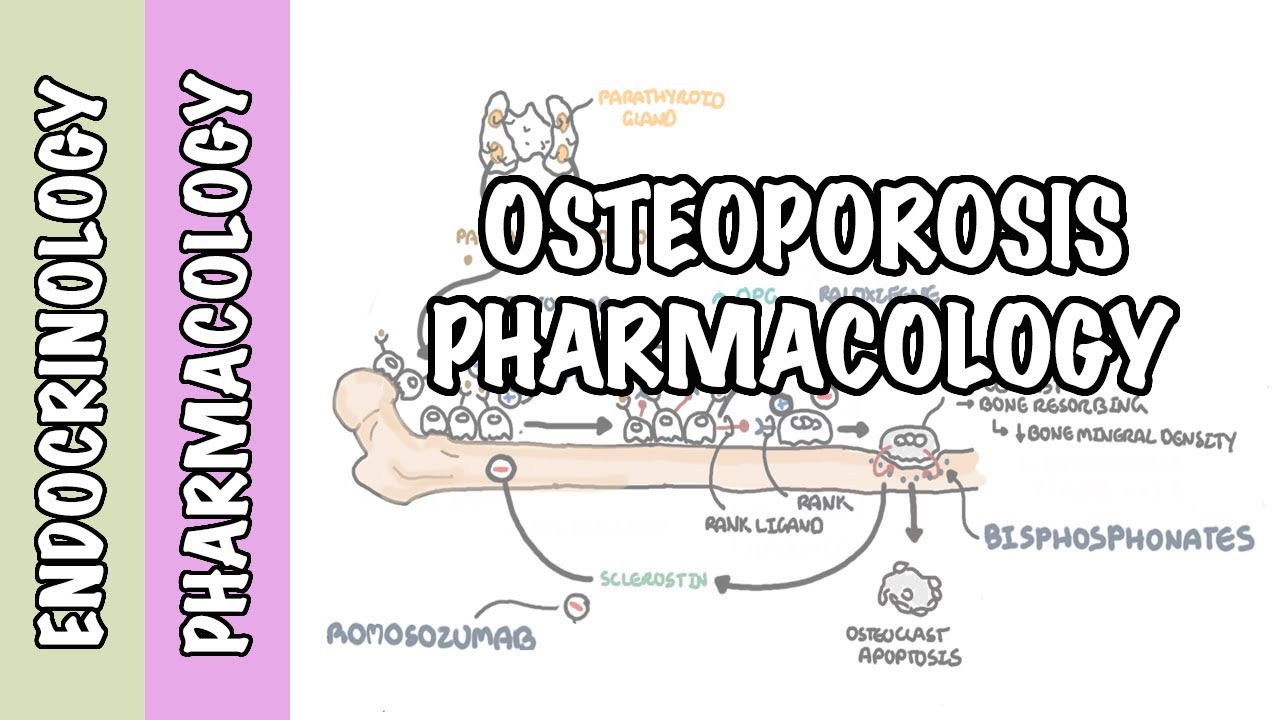
There are medications available to prevent and treat osteoporosis. Medications to prevent osteoporosis are only for those at high risk of osteoporosis, this includes those taking high dose of steroids for a long duration. If someone old has a fracture then usually they are started on medications for osteoporosis regardless of T score. Or if they are diagnosed with osteoporosis on with a T score less than 2.5.
Medications include: bisphosphonates, denosumab, SERMS, PTH analogs and sclerosting inhibitors
#osteoporosis #bonehealth #bisphosphonates #denosumab #osteoporosistreatment
🎥 DON'T JUST WATCH, LEARN ACTIVELY! TRY THE QUIZ! 🤓
https://youmakr.ai/test-playgr....ound/questionnaire/6
👆Hit this quiz and show of your main character aura!
Join the community:
Create an account on our website: https://armandoh.org/
YouTube membership: https://www.youtube.com/channe....l/UCesNt4_Z-Pm41RzpA
Support me:
🖼️ Buy PDFs: http://armandoh.org/shop
💵 Patreon: http://www.patreon.com/armando
Social media:
📷 Instagram: http://instagram.com/armandohasudungan
🐦 Twitter: https://twitter.com/armandohasudung
📔 Facebook: https://www.facebook.com/ArmandoHasudungan
Resources:
📕 Books: http://armandoh.org/resource
🎞️ Equipment: armandoh.org/armando-faigl

Watch the full course and our most up-to-date content here: https://linktr.ee/HealthTreeUniversity
Create a free account to track your progress, bookmark lessons, and keep up-to-date on the latest advancements in treating cancer!
Patients have the key to find cures for cancer. Learn more about HealthTree Cure Hub here: https://healthtree.org/curehub?utm_source=social+media&utm_medium=htu+youtube&utm_campaign=htu-curehub&utm_content=general
Educated and empowered patients have better outcomes. We've partnered with hundreds of medical experts and doctors to help you learn more about your disease.

In this video, we explore the hidden risks and side effects of Depakote, a commonly prescribed medication for conditions like bipolar disorder, epilepsy, and migraines. Lyle Murphy, founder of Alternative to Meds Center, breaks down what you need to know beyond the basic information, from severe side effects to potential dangers when stopping Depakote too quickly.
Whether you’re currently taking Depakote, considering it, or seeking alternative treatments, this video provides valuable insights that you won’t hear from the standard drug label.
Some of the potential side effects of Depakote include:
- Life-threatening pancreatitis
- Liver failure and fatal hepatotoxicity
- Suicidal thoughts and behavior
- Severe skin reactions like Stevens-Johnson syndrome
- Weight changes, headaches, and more
It's important to understand how this medication could impact you or a loved one and what to expect if you need to stop taking it. Learn about the rebound symptoms that can occur if Depakote is reduced too quickly, including the return of seizures, migraines, mania, and other serious withdrawal reactions.
This video is for informational purposes only and should not be taken as medical advice. Always consult with your healthcare provider before making any changes to your medication.
Learn more about Depakote Tapering on our website: https://www.alternativetomeds.....com/blog/depakote-ta
Stay Connected:
TikTok: @alternativetomeds
Facebook: Alternative to Meds Center
Instagram: @alternativetomedscenter
Twitter: @atmcwebsite
Yelp!: Alternative to Meds Center
LinkedIn: Alternative to Meds Center
Pinterest: Alternative2Med
Want More from ATMC?
Sign up for our Podcast: https://www.alternativetomeds.com/podcasts/
Questions About Our Treatment Center?
Call Us: (888) 984-9667
Email Us: Contact Us
Valproate was incidentally discovered in 1963 and now one of the best medications for epilepsy, headache and bipolar disorder. We will discuss its use, side effects and mechanism of action and more.
To learn about all the antiseizure medications and how they work:
AntiSeizure drugs, easy and interactive way to learn them all with Epileptologist Dr. Omar Danoun
https://youtu.be/TzjmXWBVKTM
Time Codes:
0:00 Valproic acide/Valproate for epilepsy
0:23 Interesting history of Valproate
2:09 Types of Epilepsy Valproate treats
2:40 Conditions treated by Valproate
3:24 Valproate Mechanism of action
4:03 Valproate dosing
5:12 If Valproate does not work
6:10 Valproate Side effects
7:30 Alcohol and driving with Valproate
7:54 Valproate and sleep
8:06 How to stop Valproate
8:29 Is Valproate safe in Pregnancy
9:20 Best cases for Valproate
10:03 How antiseizure drugs work
👇 Dr. Omar Danoun's research :
➥ https://pubmed.ncbi.nlm.nih.gov/?term=omar+danoun
▬▬▬▬▬▬▬▬▬▬▬▬▬
👇 Join us on Social media
✅ Facebook ➥ https://www.facebook.com/DanounNeurology
✅ LinkedIn ➥ https://www.linkedin.com/in/om....ar-danoun-md-2079086
✅ Twitter ➥ https://twitter.com/omar_danoun
✅ Instagram ➥ www.instagram.com/dromardanoun
▬▬▬▬▬▬▬▬▬▬▬▬▬
💼 Gears I Use On My Videos :
📷 NEW Camera: Panasonic Lumix GH5 4K: https://amzn.to/2UVDSNy
My camera: Samsung Galaxy S21 Ultra- https://amzn.to/3i0TCIm
Sound: USB mic Blue Yeti USB Mic- https://amzn.to/3p04WG8
Clip on mic, BOYA by M1 Lavalier Microphone- https://amzn.to/3p3i90Q
Mount - Camera tripod: MACTREM 80" Camera Tripod- https://amzn.to/3wJZtpU
Lightening: Neewer 2 Pieces Bi-color 660 LED- https://amzn.to/3fRInzv
GVM Great Video Maker RGB LED- https://amzn.to/3bYWMso
MOUNTDOG Softbox Lighting Kit (Budget kit)- https://amzn.to/3c0Cyyk
Background: Savage Seamless Paper Photography Backdrop- https://amzn.to/3p05sE4
Neewer Photo Studio Backdrop- https://amzn.to/2SIqoDO
Doodly whiteboard animation- https://paykstrt.com/2073/89515
⛔ Disclaimer: some of the links provided in the description are Amazon affiliate links so I will earn from qualifying purchases to support the channel at no cost to you.
▬▬▬▬▬▬▬▬▬▬▬▬▬
Thank You!
MEDICAL ADVICE DISCLAIMER:
The content on this video and this channel including information, content, references, and opinions are for informational purposes only. The Author does not provide any medical advice on this platform. By viewing and accessing or reading these content that does not establish any doctor-patient relationship and providing your medical information on the site or answering any comments does not establish any doctor-patient relationship. The information provided on this video and channel do not replace the services and opinions of qualified medical professionals and if you have any questions of medical nature, please refer to your doctor and qualified medical personnel for evaluation and management.
The content provided in this video and channel represents the Author’s own opinion and do not represent any other third party or entities.
#DrOmardanoun #Depakote #Valproate

In this Q&A session with Alternative to Meds Center founder Lyle Murphy, Depakote is discussed. Questions covered include:
"If you are on medications such as antipsychotics it is a personal choice as to when you stop them, however it would be a bad choice to try to stop them when you are not in a stable position...not around stable people and don't have a lot of help...Trying to stop the abruptly..is almost guaranteed to be another trip to the hospital." - Lyle Murphy (ATMC Founder).
00:00 - Intro
00:08 - Is Depakote better tolerated than an atypical antipsychotic?
00:50 - What are some reasons people get put on Depakote?
02:10 - How often does someone experience psychosis....?
05:18 - What challenges does one face when tapering Depakote?
06:07 - How do you know when it's to stop antipsychotics?
07:40 - Dr. Whittaker agrees long term meds may turn long term episodes into...?
11:24 - Has anyone used CBD oil to treat psychosis or taper antipsychotics?
13:16 - Do Antipsychotics cause extrapyramidal side effects and why?
15:43 - Is Depakote a good bridge to get off Antispychotics?
17:56 - Do some people need drugs like Depakote?
19:06 - Would I taper my Depakote or Antipsychotic first?
20:50 - Outro
To learn more visit:
https://www.alternativetomeds.....com/antipsychotics/d
Depakote is often administered as an adjunctive medication, for instance with antipsychotics, SSRI’s, SNRI’s, or other mood stabilizing drugs. It may be difficult to ascertain in such circumstances exactly what drug is causing what side effect; therefore each patient should be monitored carefully in this regard for reactions needing medical attention. Side effects should never be ignored; feel something, say something.
There are some known severe side effects that require careful monitoring while on Depakote listed below.
HEPATOTOXICITY: liver failure, leading to fatality, which may follow symptoms such as weakness, lethargy, vomiting, anorexia, and facial edema. Especially if a person has a prior history of liver disease, regular physical examinations as well as serum liver tests should be done to monitor the person closely for signs of liver toxicity.
BIRTH DEFECTS: are linked to taking Depakote during pregnancy, where the infant may develop deformities of the limbs, heart, craniofacial and neural tube defects leading to spina bifida, and others. Birth defects where epileptic mothers took Depakote occur 4 times higher than in babies born to epileptic mothers who took other medications.
LOWERED COGNITIVE SCORES AFTER in utero EXPOSURE to DEPAKOTE: has been studied and shown as significantly lower in children born to epileptic mothers taking Depakote compared to children born to mothers taking some other AED or no AED. Since it has not been established if there is a specific period of risk during pregnancy for such birth defects including lowered IQ, the consensus is that women of child-bearing age should not be prescribed Depakote. However, should pregnancy occur while on a prescription of Depakote, the drug should not be withdrawn abruptly due to risk of seizure and other reactions, and possible fatality to the fetus.
FATAL PANCREATITIS: in both adult and children are linked to Depakote. Where this condition presents, it can progress rapidly or slowly, but is life-threatening. Some warning signs of pancreatitis can include nausea, vomiting, pain in the abdomen, anorexia, and the patient should be immediately evaluated for hemorrhages and other symptoms of pancreatitis.
SUICIDALITY: a two-fold increase in suicidal ideation and behavior in both adults and children. Four suicides occurred within a twelve-week trial.
ABNORMAL BLEEDING
HYPOTHERMIA
OTHER : side effects include rash, somnolence in the elderly, dizziness, indigestion.
Of prime importance is not to abruptly stop using Depakote. Always get medical advice and guidance before stopping an AED.
The most commonly reported Depakote withdrawal symptoms are:
Dizziness
Tremors
Anxiety
Return of prior symptoms, i.e., mania, psychoses, seizures
Discontinuing/Quitting Depakote:
It may become necessary or desired to stop Depakote. How to quit Depakote and Depakote alternatives are what we specialize in at Alternative to Meds Center. We have protocols for tapering Depakote and bridging in natural alternatives to Depakote that can make the withdrawal from Depakote gentle and sustainable. Except in certain circumstances where continuing the drug is not possible, i.e., life-threatening, Depakote, as with all similar medications, should be gently tapered off with proper monitoring, support, and guidance.
https://www.alternativetomeds.....com/blog/depakote-al
https://www.alternativetomeds.....com/depakote-taperin
If tapering is done correctly it can be a mild procedure. Done too fast, it can be extremely difficult and can introduce undesirable risks to health.


In this episode, I discuss a medication known as divalproex (Epival, Depakote).
My book is now available! It discusses my experience with Bipolar Disorder.
The Fifth Episode - Inside The Manic Mind.
Find it here:
BookBaby (best way to support this project):
https://store.bookbaby.com/book/the-fifth-episode
Amazon:
https://www.amazon.com/Fifth-Episode-Inside-Manic-Mind/dp/1667843451/ref=sr_1_12?crid=26PVK90TTXRBO&keywords=the+fifth+episode+paperback&qid=1654191898&sprefix=the+fifth+episode+paperback%2Caps%2C61&sr=8-12
Barnes & Noble:
https://www.barnesandnoble.com..../w/the-fifth-episode
Support the channel on Patreon:
https://www.patreon.com/DrugTalk
Twitter: @talkaboutdrugs
Instagram: @garrett.campb
Connect on Facebook:
https://www.facebook.com/talkaboutdrugs
For information purposes only!

Watch more Epilepsy & Seizure Disorders videos: http://www.howcast.com/videos/....502050-What-Is-Depak
Depakote or Valproic Acid has been around since the 1970's and used for the treatment of epilepsy. It is also known by other names including: Depakene, its generic name is Valproic Acid, there’s also a brand called Stavzor and it’s called other names in other countries. It’s a great anti-seizure medication because it’s indicated for both generalized seizures, where the brain starts firing at both sides at the same time. Focal seizures that start in one area and spread. It works in an interesting mechanism more on gaba receptors to help prevent the brain from having seizures. And again, as Pat has mentioned, it’s been around for a long time with very good response rates. Side effects with Depakote include things like weight gain, some people can have an increased appetite and gain weight on it. There can be some hair thinning or hair loss, there can be liver issues, so we check liver function when we’re checking the levels of the Depakote. That’s one of the medications that you really do need to check blood levels every once and a while. So, basically, liver, hair and increased appetite are the main side effects. It does have an FDA black box warning, so you can have basically, an allergic reaction to it. Where it can affect your liver enzymes, it can affect your red cell count, your white cell count. So as Patty mentioned, it needs to be checked, but that shouldn’t stop you from using it. It’s a strong, effective medication with a good response. As far as the side effects, a lot of them can be monitored, such as hair loss. You can use certain shampoos like, Selsun Blue, take vitamins such as zinc to prevent some of the cosmetic issues that can happen. And again, the side effects don’t occur in everybody. Depakote is a really well-tolerated medication for both generalized and focal epilepsy. Side effects include: increased appetite, liver issues and hair loss or hair thinning. That can be monitored with blood tests.

Divalproex Medication Information | uses, side effects | Divalproex precautions | medicine bank
Hi
Welcome to our youtube channel medicine bank.
We are team of medical professionals we made videos
about medicines to spread knowledge among
peoples.
About this video-
Divalproex sodium is a stable coordination compound comprised of sodium valproate and valproic acid used to treat manic episodes associated with bipolar disorder, epilepsy, and migraine headaches. Divalproex sodium is available under the following different brand names: Depakote, Depakote ER, and Depakote Sprinkles
Playlist-
About anxiety medicines- https://www.youtube.com/playli....st?list=PLmA-zfm35Qe
About anti-depresent medicines- https://www.youtube.com/playli....st?list=PLmA-zfm35Qe
About blood pressure medicines- https://www.youtube.com/playli....st?list=PLmA-zfm35Qe
About seizure medicines- https://www.youtube.com/playli....st?list=PLmA-zfm35Qe
...............................................................................................................................................................................................................
Email us at - [email protected]
#depakote
#medicinebank

In this video we will cover everything you need to know about Valproic Acid, also known as Depakine. This video is part of a video series on mental health problems. So for more mental health related videos check out this playlist:
https://www.youtube.com/playli....st?list=PLaG3Bo3L0gX
Generic name: Valproic Acid.
Brand names: Depakine and Valproate Sodium.
Available as a tablet, drink, drops, suppository and injection.
How to use it?
- Tablet: make sure to swallow it whole with half a glass of water. Don’t chew on it, as this might decrease its effectivity.
- Drink/Drops: measure the correct amount with the dosing syringe or measuring cup. Mix the dose with half a glass of water or lemonade and take it.
- Suppository: insert the suppository into the anus. You can moisten the suppository with a little water. This makes inserting it a little easier.
- Injection: your doctor or nurse will prepare and insert the injection.
When to use it?
Valproic Acid is part of a group of drugs called anti-epileptic drugs. However it can be used to treat several medical conditions, like:
- Epilepsy
- Bipolar disorder
- Migraine
What is the correct dosage?
The precise dose will depend on your specific indication of use, the side effect you might experience and the severity of your symptoms.Therefore always use the precise amount and frequency your doctor prescribed you.
- Most commonly your doctor will slowly increase your dose, up to a maintenance dose. When treating epilepsy in adults a common maintenance dose is between 900-2500 mg per day. For manic episodes in bipolar disorder it is 1000-2000 mg per day and when treating migraine it is 300–500 mg 2×/dag
What are common the side-effects?
- Very common (10%): tremor and nausea.
- Common (1-10%): anemia, hypersensitivity, confusion, aggression, agitation, disturbance in attention, hallucinations, dizziness, somnolence, impaired memory, headache, deafness, haemorrhage, vomiting, abdominal pain, diarrhoea, liver damage, nail abnormality, urinary incontinence and increased weight.
- Uncommon (0.1-1%): blood count abnormalities, reversible Parkinson-like symptoms, reversible coma, sensory loss, inflammation of blood vessels, inflammation of the pancreas, rash, renal failure, edema and low temperature.
- Rare (0.1%): other serious, partly reversible, adverse reactions.
Safety:
First of all be careful to combine Valproic Acid with alcohol. As this might increase it’s side effects.
In addition, it can be dangerous to drive while using this drug. As it can cause you to become drowsy, sleepy and/or dizzy. If you experiencing any of these side effects than please do not drive.
Furthermore, Valproic Acid can have interactions with other drugs your are taking. always discuss this with your prescribing doctor.
Lastly, the usage of Valproic Acid can be dangerous when pregnant or when breastfeeding. However there are some exceptions where its usage could be continued. This should be discussed with your prescribing doctor.
- Disclaimer: this video and the comments are meant purely informational! This is not medical advice! If you are looking for medical advice always contact your own doctor. -
I want to give special thanks to my sponsors on Patreon:
- Sebastian Houwing: Investor
Literature:
1: Farmacotherapeutisch Kompas. (2021). Valproïnezuur.
2: Apotheek.nl (2021). Valproïnezuur.
* The images in this video are used for educational purposes only. Most of the images and videos in this video come from https://www.canva.com/.
Music:
1. Verified Picasso, Fish Room
2. Patrick Patrikos, Good Times
3: Patrick Patrikios, Rockville
4: Patrick Patrikios, Grut
Follow me on instagram: @HOWTOMEDICATE
Follow me on twitter: @HOWTOMEDICATE
Support me on Patreon: https://www.patreon.com/howtomedicate


Desloratidine is a second generation antihistamine used to treat allergic rhinitis and chronic hives.
It selectively blocks H1 receptors and reduces few symptoms like runny nose, itchy nose and watery eyes. It can also be used to treat bumps on the skin.
Disclaimer: The content in this video is intended for educational purposes only. Always seek professional medical advice in case of any medical queries, and the videos on this platform do not provide any such suggestions or professional advice. All the information provided here should not be treated as a substitute for medical advice. The content in this channel is intended to provide educational information to students and to educate the general public. However, it should never be taken as a recommendation for a specific diagnosis or treatment. All efforts are made to provide accurate and error-free information. Due to the advances in medical research, the content may be variable from time to time.
Join this channel to get access to perks:
https://www.youtube.com/channe....l/UCH-06vejHsRuOoG1O

Desloratadine Tablet in hindi | Uses,Dose,Side-effects,Drug class | Deslor tablet |
Hello everyone, my self Rohit Kumar Khanna, I'm a Registered Pharmacist(Mrsptu)
Subscribe @DrxRohitKhanna and click on bell icon 🔔🔔
English medicinal channel- @learnaboutdrug
**For any inquiry- [email protected]
**Instagram- https://instagram.com/rohitkumarhealth
**Facebook- www.facebook.com/ThePharmacistrohit/
*this video is only for education purposes please don't use any medicine/drug/supplements without proper guidance 🙏
#deslor #medicine #pharmacy


Are you taking Desloratadine (Clarinex®)?
Desloratadine is a prescription medication used to relieve allergy symptoms like runny nose, itchy nose, itchy eyes or watery eyes.
This medication is also used to treat hives and itching in those with chronic skin reactions.
Monica, a pharmacist who works with Marley Drug, answers some of the most common questions about this medicine:
1. (0:00) What is Desloratadine and how does it work?
2. (1:56) What if you miss a dose?
3. (2:10) What are some common side effects of Desloratadine?
4. (2:56) What are some serious adverse effects of taking Desloratadine?
5. (3:50) Can Desloratadine interact with other medications?
If there’s anything else you’d like us to cover, or if you’ve any thoughts on our video or questions for Monica, please don’t hesitate to leave your comment below. We’ll get right back to you.
Subscribe to our channel for more videos like this to learn more.
-
-
How to get Desloratadine through Marley Drug?
With a valid prescription, you can order Desloratadine from Marley Drug and have it delivered to your door. Click the link below to check out our fantastic price:
https://www.marleydrug.com/checkout/desloratadine?utm_source=YouTube&utm_medium=Ask+Marley+Drug&utm_campaign=Desloratadine_Video
-
-
Follow us on social media:
Instagram: https://www.instagram.com/marleydrug/
LinkedIn: https://www.linkedin.com/company/marley-drug
Facebook: https://www.facebook.com/MarleyDrugPharmacy
Pinterest: https://www.pinterest.ca/askmarleydrug/
-
-
Why choose Marley Drug as your pharmacy?
We are a pharmacy built with the patient in mind. Customers can conveniently order medications from us in-store, over the phone, or online.
Don’t worry; we won’t miss you as we ship to all 50 states. We have a unique pricing model that bypasses supply chain middlemen and can save you up to 95% on your prescriptions.
Learn more at: https://www.marleydrug.com/?utm_source=YouTube&utm_medium=Social&utm_campaign=Ask+Marley+Drug


In this episode, I discuss a medication known as desvenlafaxine (Pristiq).
My book is now available! It discusses my experience with Bipolar Disorder.
The Fifth Episode - Inside The Manic Mind.
Find it here:
BookBaby (best way to support this project):
https://store.bookbaby.com/book/the-fifth-episode
Amazon:
https://www.amazon.com/Fifth-Episode-Inside-Manic-Mind/dp/1667843451/ref=sr_1_12?crid=26PVK90TTXRBO&keywords=the+fifth+episode+paperback&qid=1654191898&sprefix=the+fifth+episode+paperback%2Caps%2C61&sr=8-12
Barnes & Noble:
https://www.barnesandnoble.com..../w/the-fifth-episode
Support the channel on Patreon:
https://www.patreon.com/DrugTalk
Twitter: @talkaboutdrugs
Instagram: @garrett.campb
Connect on Facebook:
https://www.facebook.com/talkaboutdrugs
For information purposes only!

In this video, we compare two serotonin norepinephrine reuptake inhibitors, Effexor (venlafaxine) and Pristiq (desvenlafaxine).
Intro: 0:00
How do Effexor and Pristiq work 0:33
What are Effexor and Pristiq used for 2:23
Common Side Effects of Effexor and Pristiq 2:53
Considerations of Effexor and Pristiq 4:53
Final thoughts 7:44
Resources:
Deprescribing Guide: https://amzn.to/4dZEUMk
Stahl's Prescribing Guide: https://amzn.to/3UXj8QL
🎥 This video was edited by:
Rahul Kanchi https://www.linkedin.com/in/rahulkanchi24/
🚑 If you are in a mental health crisis, please dial 9-8-8 from the U.S. Or text HOME to 741741 and connect to a crisis counselor.
You can find a list of international crisis lines here: https://blog.opencounseling.com/suicide-hotlines/
References:
Effexor ER (venlafaxine ER) FDA Label (2017). Retrieved from https://www.accessdata.fda.gov..../drugsatfda_docs/lab
Pristiq (2018) FDA Drug Label. Retrieved from https://www.accessdata.fda.gov..../drugsatfda_docs/lab
Rege, S. (2022). Venlafaxine (Effexor) and Desvenlafaxine (Pristiq)- Mechanism of action, differences, psychopharmacology and clinical application. Psyc Scene Hub, https://psychscenehub.com/psyc....hinsights/venlafaxin
Stahl, S. M., Grady, M. M., & Muntner, N. (2021). Stahl's essential psychopharmacology: Neuroscientific basis and practical applications. Cambridge University Press.
Stahl,S. (2017). Stahl’s Essential Psychopharmacology: Prescriber’s Guide, 6th Ed. Cambridge University Press.
UpToDate (2023). Desvenlafaxine: Drug Information. Retrieved from https://www-uptodate-com.libproxy.eku.edu/contents/desvenlafaxine-drug-information?search=desvenlafaxine&source=panel_search_result&selectedTitle=1~23&usage_type=panel&kp_tab=drug_general&display_rank=1#F6107525
UpToDate (2023). Venlafaxine: Drug Information. Retrieved from https://www-uptodate-com.libproxy.eku.edu/contents/venlafaxine-drug-information?search=venlafaxine&source=panel_search_result&selectedTitle=1~148&usage_type=panel&kp_tab=drug_general&display_rank=1
Disclaimer: All of the information on this channel is for educational purposes only and not intended to be specific/personal medical advice or substitute for diagnosis and treatment of any conditions discussed herein. Furthermore, watching these videos or getting answers to comments/questions, does not establish a provider-patient relationship. Please consult with your own healthcare provider for proper diagnosis and treatment.

In this episode, I discuss a medication known as Pristiq (desvenlafaxine) and go over three things that you should know before using it:
1. How long does it take to work?
2. Black Box Warning
3. When do you take a dose?
My book is now available! It discusses my experience with Bipolar Disorder.
The Fifth Episode - Inside The Manic Mind.
Find it here:
BookBaby (best way to support this project):
https://store.bookbaby.com/book/the-fifth-episode
Amazon:
https://www.amazon.com/Fifth-Episode-Inside-Manic-Mind/dp/1667843451/ref=sr_1_12?crid=26PVK90TTXRBO&keywords=the+fifth+episode+paperback&qid=1654191898&sprefix=the+fifth+episode+paperback%2Caps%2C61&sr=8-12
Barnes & Noble:
https://www.barnesandnoble.com..../w/the-fifth-episode
Support the channel on Patreon:
https://www.patreon.com/DrugTalk
Twitter: https://mobile.twitter.com/talkaboutdrugs
Instagram: https://www.instagram.com/garrett.campb/
Connect on Facebook: https://www.facebook.com/talkaboutdrugs
For information purposes only!


Desvenlafaxine is an antidepressant and SNRI used for the treatment of major depressive disorders in adults.
In this video, let’s find found:
What is desvenlafaxine?
What is desvenlafaxine used for?
Contraindication
What are the side effects of taking desvenlafaxine?
How does desvenlafaxine work?
How to use desvenlafaxine?
▶ Share this video with others: https://youtu.be/f077t5Q8Dvg
▶ Subscribe to learn more about @HeInFo123
#desvenlafaxine #antidepressant #Pristiq
_____________________________________________________
Do not forget to like, share and subscribe #He-info
Youtube: He-Info Channel
Facebook: https://www.facebook.com/Heinfoworld
Tags: he-info, desvenlafaxine, Pristiq, desvenlafaxine uses, desvenlafaxine dosage, desvenlafaxine side effects, desvenlafaxine mechanism, desvenlafaxine indication, desvenlafaxine contraindications, desvenlafaxine mechanism of action, antidepressant, desvenlafaxine 50 mg, desvenlafaxine reviews, desvenlafaxine succinate, pristiq desvenlafaxine, desvenlafaxine succinate er, desvenlafaxine er, desvenlafaxine anxiety, desvenlafaxine adhd

Venlafaxine (EFFEXOR) is a serotonin and noradrenaline reuptake inhibitor (SNRI) that is indicated for major depressive disorder (MDD), generalized anxiety disorder, social anxiety disorder, and panic disorder with or without agoraphobia.
Desvenlafaxine (PRISTIQ) meanwhile is a synthetic succinate version of venlafaxine’s major active metabolite, although its approval is limited to MDD.
#venlafaxine #desvenlafaxine #effexor #pristiq #antidepressants
Dr Sanil Rege explains the difference between the two.
1. Venlafaxine sequentially inhibits Serotonin transporter (SERT) and Noradrenaline Transporter (NAT).
2. Venlafaxine has a 30-fold higher affinity for the reuptake of serotonin over noradrenaline whilst desvenlafaxine has a 10-fold affinity
3. Venlafaxine at its minimal effective dose in depression (75 mg/d), venlafaxine acts as a selective 5-HT reuptake inhibitor. In contrast, when administered at higher doses (225 and 375 mg/d), it acts as a dual 5-HT and NE reuptake inhibitor exhibiting dose-dependent pharmacology in relation to efficacy and tolerability.
4. The sequential inhibition of serotonin and NA is reflected in its side effect profile—that initial side effects are predominantly related to serotonin (e.g., headaches, nausea, fatigue, sexual dysfunction). In contrast, subsequent side effects with higher dosing are related to serotonin and norepinephrine (e.g., activation effects, dry mouth, night sweats).
5. Desvenlafaxine, on the other hand, blocks the serotonin and norepinephrine reuptake at starting doses.
Both Venlafaxine and desvenlafaxine have applications in a range of disorders beyond depression and anxiety.
Music by :
Song: Clarx - Shakedown [NCS Release]
Music provided by NoCopyrightSounds
Free Download/Stream: http://ncs.io/Shakedown
Watch: http://youtu.be/qJT0mc3q6Lg

Kristina Lynn Catague
Student Pharmacist
Class of 2024
Ben and Maytee Fisch College of Pharmacy
University of Texas at Tyler
Time Stamps
Intro: 00:00-00:12
Why am I taking this medication? 00:12-00:15
How should I take this medication? 00:16-1:07
What if I miss a dose? 1:08-1:16
What are the side effects? 1:17-1:50
What should I tell my HCP before taking this medication? 1:51-2:31
Where should I store my medicine? 2:32-2:38
Outro- 2:39-2:42
https://drive.google.com/file/....d/1s1Je5k8bcNJM13jON

This is an answer to a common question about the ratios of serotonin to norepinephrine blockade for the SNRIs. In this video I cover the ratios for Venlafaxine (I think I even pronounced it correctly), desvenlafaxine, duloxetine, milnacipran, and levomilnacipran. The winner of this contest may surprise you.
Find additional content see our other social media accounts:
https://www.Shrinksinsneakers.com
Instagram: @Shrinks_In_Sneakers
Facebook: @ShrinksInSneakers
Twitter: @AndPsychiatry
Disclaimer: This is not medical advice, and the information is provided for educational purposes only. Please consult your doctor for any specific medical questions.
All content is created for informational purposes only. The Content is not intended to be a substitute for professional medical advice, diagnosis, or treatment. Always seek the advice of your physician or other qualified health provider. If you think you have a medical emergency, call your doctor, go to the emergency department, or call 911. We do not endorse any specific treatment, tests, or procedures. Reliance on this information is solely at your own risk.



Corticosteroids are fast-acting medications used to reduce inflammation during IBD flare-ups.
In this short video, learn when corticosteroids like prednisone are prescribed for Crohn’s disease or ulcerative colitis, how they work, and what side effects patients should monitor.
🔗 Learn more about corticosteroids for IBD: https://www.crohnscolitisfound....ation.org/medication
💡 Support more educational videos like this: https://crohnscolitisfoundatio....n.donorsupport.co/pa
📺 Explore more: Understanding Treatment Options in IBD playlist:
https://www.youtube.com/playli....st?list=PL9VB_aQJyeP
📬 Stay informed on IBD care, treatments, and research breakthroughs.
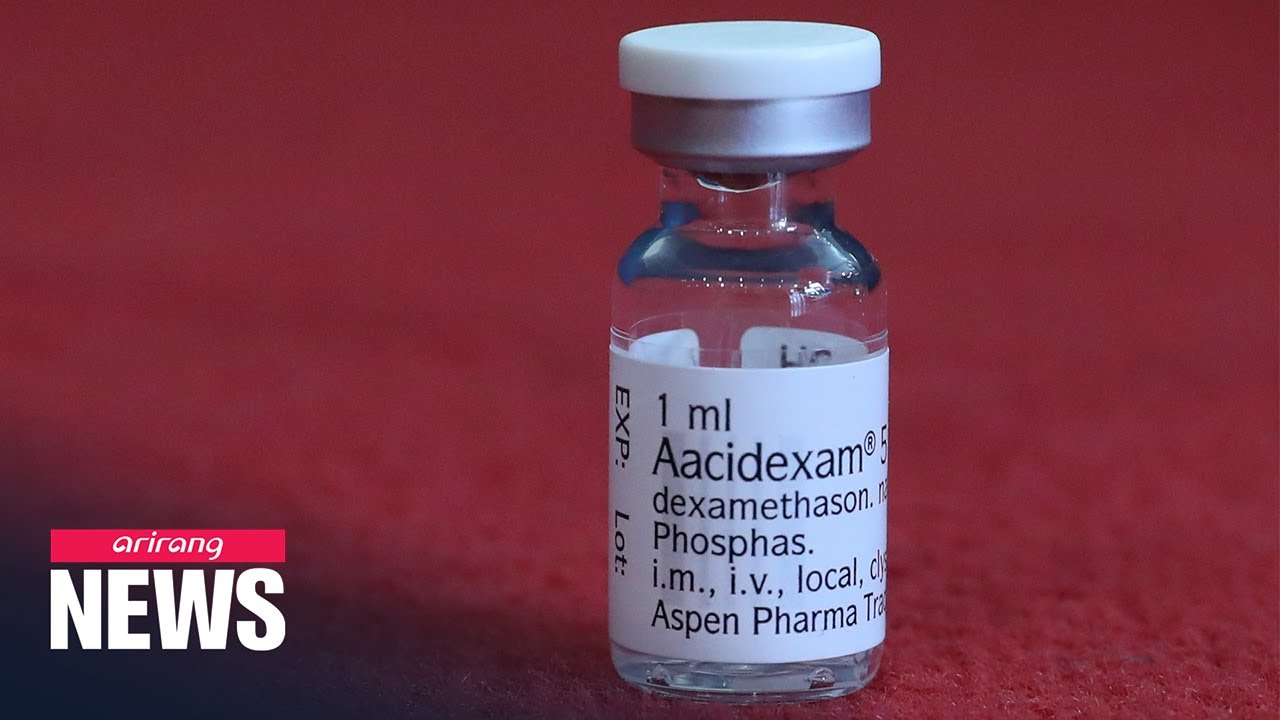
WHO "덱사메타손, 반가운 소식…중증환자에 사용해야"
An initial clinical trial out of the U.K. has shown that a cheap and affordable steroid can be lifesaving for patients who are critically ill with COVID-19.
The World Health Organization has welcomed the news,... but stressed the need for further tests and for it only to be administered under close medical supervision.
Lee Seung-jae has more.
Used since the 1960s to reduce inflammation caused by diseases such as arthritis,... dexamethasone,... is a corticosteroid that has been found to be lifesaving for patients who are critically ill with COVID-19.
Especially for patients on ventilators,... the treatment was shown to reduce mortality by about one-third,... and for patients requiring only oxygen,... mortality was cut by about one-fifth.
According to the latest preliminary findings shared with the WHO,... the benefit was only seen in patients who were seriously ill with COVID-19,... and was not observed in patients with milder cases.
While the latest finding is being seen as a breakthrough in the fight against COVID-19,... the WHO stressed that it's only based on preliminary data.
"It is one of the many breakthroughs we're going to need in order to effectively deal with COVID-19 and as such, we should celebrate that today but it's still just preliminary data. It's from one study. It's very significant, but we also have to see the real data, the full data."
The head of the WHO also stressed the need for caution,... adding that more treatments are needed for those with milder symptoms.
"These drugs should only be used under close medical supervision. We need more therapeutics that can be used to tackle the virus, including those with milder symptoms."
The drug has also been used in the treatment of some cancers,... and has been listed on the WHO's Model List of Essential Medicines since 1977.
It's also currently off-patent and affordable in most countries.
Lee Seung-jae, Arirang News.
#WHO #dexamethasone #COVID19
📣 Arirang News(Facebook) : https://www.facebook.com/arirangtvnews
📣 Arirang News(Twitter) : https://twitter.com/arirangtvnews
📣 News Center(YouTube) : https://www.youtube.com/c/NEWSCENTER_ARIRANGTV

Dexamethasone is the first drug to be shown to improve survival of Coronavirus.
The low-dose steroid treatment reduces death by one third in ventilated patients and by one fifth in other patients receiving oxygen only.
The results come from the UK’s Recovery Trial, led by Oxford University, which was established to find potential treatments for Covid 19.
#Dexamethasone #Coronavirus #LBC
LBC is the home of live debate around news and current affairs. We let you join the conversation and hold politicians to account.
Subscribe for more: https://l-bc.co/subscribe
Watch More Here:
The Latest Coronavirus Videos: https://l-bc.co/Covid19Latest
The Latest Brexit Videos: https://l-bc.co/BrexitLatest
The Best Of James O’Brien: https://l-bc.co/JamesObrien
The Best Of Iain Dale: https://l-bc.co/IainDale
The Latest Donald Trump Videos: https://l-bc.co/DonaldTrump
Join in the conversation and listen at https://www.lbc.co.uk/
Sign up to LBC’s weekly newsletter here: https://l-bc.co/signup
Like, follow and subscribe to LBC!
Website: https://lbc.co.uk
Facebook: https://fb.me/lbc
Twitter: https://Twitter.com/lbc
Instagram: https://instagram.com/lbc
This is not your ordinary talk radio stream. LBC is the leading YouTube channel for live debate around the news and current affairs. We have live interviews and debates and you can even phone in to join in the conversation.

Les responsables de l'essai clinique britannique Recovery ont découvert qu'un médicament de la famille des stéroïdes, le dexamethasone, réduisait d'un tiers la mortalité chez les malades les plus gravement atteints.
Abonnez-vous à notre chaîne sur YouTube : http://f24.my/youtube
En DIRECT - Suivez FRANCE 24 ici : http://f24.my/YTliveFR
Notre site : http://www.france24.com/fr/
Rejoignez nous sur Facebook : https://www.facebook.com/FRANCE24.videos
Suivez nous sur Twitter : https://twitter.com/F24videos

The Journal of Emergency Medicine released an article discussing the use of corticosteroids in severe asthma and COPD.
Original Article : https://www.jems.com/2017/05/0....1/appropriate-select
Dexamethasone or Methylprednisone, Is one better than the other?
*This video was made to supplement the original JEMS article https://www.jems.com/2017/05/0....1/appropriate-select , all scientific references are available in the article*

According to a new study, patients with breast, pancreatic and certain other types of cancer may survive longer if given an anti-nausea drug during surgery.
The findings of the study were presented at the ANESTHESIOLOGY 2021 annual meeting.
Three months after their cancer surgery, more than three times as many patients who did not receive dexamethasone died, compared to those who received the drug, researchers found.
For more information:
https://medicaldialogues.in/on....cology/news/anti-nau
Get the latest medical and heath news at medicaldialogues.in
A cheap and widely available steroid can help save the lives of patients seriously ill with coronavirus, a trial has found.
The discovery about dexamethasone is a major breakthrough in the fight against the virus, UK experts say.
Read the full story here: https://www.independent.co.uk/....news/health/dexameth
Like us on Facebook: https://www.facebook.com/TheIndependentOnline
Follow us on Twitter: https://twitter.com/Independent
Follow us on Instagram: https://www.instagram.com/the.independent
Subscribe to Independent Premium for exclusive content and live events: https://bit.ly/2MiOONB

Videoconsejo sanitario sobre Dexametasona, cuándo y cómo debemos administrar este principio activo. Videoconsejo impartido por el farmacéutico Eduardo Ramírez, elaborado por el Consejo General de Colegios Farmacéuticos y producido por Medicina TV.
Dexametasona es un glucocorticoide altamente potente y de larga duración, con una intensa actividad antiinflamatoria y con propiedades antialérgicas, antipiréticas e inmunosupresoras.
Se encuentra disponible en forma de colirio en solución o suspensión, pomada oftálmica, gotas óticas, implante intravítreo, comprimidos, solución inyectable, bucal y laringofaríngea y gel oftálmico.
La concentración más habitual de los formatos vía oftálmica es de 1 mg/ml en colirios y gel y 0,5 mg/g en pomada. Para los comprimidos, existen comercializadas dosis de 1, 4, 8 y hasta 20 mg. En el caso de las soluciones inyectables la dosis más habitual es la de 4 mg/ml.
A nivel oftálmico, dexametasona en colirio se administra habitualmente con 1 gota de 3-6 veces al día, y en pomada de 2-3 veces al día.
o Dexametasona oftálmica está indicada para el tratamiento de las inflamaciones de la conjuntiva bulbar y palpebral, córnea, y enfermedades inflamatorias del segmento anterior del ojo. También para el tratamiento de lesiones de la córnea por cuerpo extraño, químicas o térmicas.
o Además, tiene indicación para tratar determinados tipos de queratitis y queratoconjuntivitis, y en el caso de inflamación postoperatoria ocular.
En el caso de los comprimidos, las dosis habituales son de 0,5 a 10 mg al día, dependiendo de la enfermedad que esté siendo tratada, las características individuales y usando la menor dosis efectiva posible.
Para la administración parenteral, se suelen administrar dosis iniciales relativamente altas, siendo mayores en las formas agudas graves que en las enfermedades crónicas.
Entre sus indicaciones en tratamientos sistémicos, se encuentran el tratamiento de procesos endocrinológicos como en la enfermedad de Addison, o para el tratamiento de procesos alérgicos graves resistentes a los tratamientos convencionales, como en el asma.
También para el tratamiento sistémico de brotes en la enfermedad de Crohn o la colitis ulcerosa.
A nivel dermatológico, se usa como tratamiento inicial de enfermedades graves, como la dermatitis exfoliativa o la psoriasis severa.
También se utiliza en algunos cuadros hematológicos por vía intravenosa, y como coadyuvante para el tratamiento de patologías reumáticas en cuadros agudos y exacerbaciones, como artritis o artrosis.
Mediante inyección local, está indicada en crisis agudas de epicondilitis, artritis gotosa, o lesiones de naturaleza inflamatoria e hipertrófica, como la psoriasis.
Debido a que atraviesa la barrera hematoencefálica, también cuenta con indicación para el tratamiento del edema cerebral secundario a determinadas patologías.
Recientemente, se ha autorizado el uso en el tratamiento de la COVID-19 en asociado a oxigenoterapia.
Dexametasona está contraindicado en pacientes que tengan una infección sistémica a, menos que se emplee un tratamiento antiinfeccioso específico, en la úlcera de estómago o úlcera duodenal y en vacunación con vacunas vivas.
En el caso de embarazo y lactancia, la decisión de prescribirla debe evaluarse cuidadosamente por el profesional sanitario, valorando beneficios y riesgos.
En la población pediátrica en tratamiento prolongado con dexametasona, habrá que monitorizar la tasa de crecimiento regularmente, ya que los corticosteroides pueden afectar al crecimiento.
Los efectos adversos dependen en mayor grado de la duración del tratamiento que de la dosis empleada.
Los más habituales son, a corto plazo, el aumento de peso, trastornos psicológicos, intolerancia a la glucosa e insuficiencia suprarrenal transitoria. Si el tratamiento se mantiene durante meses o años, puede provocar obesidad central, fragilidad de la piel, atrofia muscular, osteoporosis, retraso del crecimiento e insuficiencia suprarrenal.
Las dosis se deben reducir gradualmente para finalizar el tratamiento, por riesgo de síndrome de retirada o recurrencia de la enfermedad subyacente.
Y recuerda, pregunta siempre a tu farmacéutico de confianza. Te informaremos sobre los efectos y el modo de uso de dexametasona y sobre cualquier otra duda que tengas.
Accede a más videoconsejos #TuFarmacéuticoInforma en nuestro canal:
https://www.youtube.com/c/farm....aceuticosConsejoGene
Y síguenos en nuestras redes sociales para más información
Instagram: https://www.instagram.com/farmaceuticos__/
Facebook: https://www.facebook.com/Conse....joGeneralColegiosFar
Whatsapp: https://whatsapp.com/channel/0....029VaEJViS3AzNTFG8xo
Telegram: https://t.me/Farmaceuticos_es
Twitter: https://www.twitter.com/Farmaceuticos_
LinKedIn: https://www.linkedin.com/compa....ny/consejo-general-d
TikTok https://www.tiktok.com/@farmaceuticos
#Medicamentos #Videoconsejos #TuFarmacéuticoInforma

*in the beginning of the video at 1.14 min, there is slip of tongue, it's adrenal gland NOT kidney from where corticosteroids are secreted.
Onset of action (missed in the video)
Hydrocortisone Onset of action: IV: 1 hour.
Methylprednisolone Onset of action: IV (succinate): Within 1 hour; Intra-articular (acetate): 1 week
Dexamethasone Onset of action: IV: Rapid.
Difference between various corticosteroids in ICU specifically Hydrocortisone, Methylprednisolone, Dexamethasone
#steroids_in_icu
This above video has tried to address and explain the following things:
Why we use difference steroids in icu,
difference between Hydrocortisone Methylprednisolone Dexamethasone,
when to use which corticosteroid in icu,
glucocorticoid and mineralocorticoid activity of corticosteroid,
duration of action of different corticosteroids,
orticosteroids explained in a simple way,
The ICU Channel is a project by Educational Society of Bedside Intensive Care Medicine (ESBICM) for providing forever free bedside intensive care education to doctors and nurses working in ICU & ED.
Other than this channel, we provide the following streams of learning; have a look below, we would love to see you there.
1. ESBICM forums for detailed discussions: https://esbicm.com/forums
2. Telegram grp for Dr Ankur’s voice clips, explanation and reference articles: https://t.me/theicuchannel
3. Instagram for behind the scenes and light moments from ICU: https://instagram.com/theicuchannel
4. Online critical care classes https://esbicm.com/esbicm-onli....ne-critical-care-cla
Free ESBICM membership for healthcare professionals https://esbicm.com/become-an-esbicm-member/
Apply for becoming ESBICM Academic Volunteer https://esbicm.com/become-an-e....sbicm-academic-volun
Collaborate with ESBICM https://esbicm.com/collaborate....-with-educational-so
If you feel that there is some update on the above video topic, do post in the comments section or you can contact us at https://esbicm.com/contact-us-esbicm/
Playlists on The ICU Channel by ESBICM channel:
1. ICU Core topics https://www.youtube.com/playli....st?list=PLhE2jJ_7mdB
2. Theory lectures and clinical case discussions for and from ICU https://www.youtube.com/playli....st?list=PLhE2jJ_7mdB
3. ICU investigations, imaging, drugs, equipment(s) and procedures https://www.youtube.com/playli....st?list=PLhE2jJ_7mdB
4. Mechanical Ventilation and ABGs https://www.youtube.com/playli....st?list=PLhE2jJ_7mdB
5. Practical tips, interesting observations and experiences from ICU https://www.youtube.com/playli....st?list=PLhE2jJ_7mdB
6. Intensive Care Nursing (both for ICU and emergency department) https://www.youtube.com/playli....st?list=PLhE2jJ_7mdB
7. ICU livestreams and uncut online/offline classes https://www.youtube.com/playli....st?list=PLhE2jJ_7mdB
8. Nightmares in ICU https://www.youtube.com/playli....st?list=PLhE2jJ_7mdB
9. Miscellaneous topics https://www.youtube.com/playli....st?list=PLhE2jJ_7mdB
10. ESBICM members exclusive ICU content https://www.youtube.com/playli....st?list=PLhE2jJ_7mdB
We hope that this small effort of ours will be of help to healthcare professionals working in ICU and emergency department and ultimately will improve the care of critically ill patients. #theicuchannel
Thank you.
Dr. Ankur, Intensivist.
Founder President, ESBICM
Keep learning!
drankur [at] esbicm.org
Disclaimer: https://esbicm.com/disclaimer/


🔥 *Want to BURN off some fat? Click here!* 🔥 https://www.burnmyfats.com
- This is lesson n# 116 in "A DRUG IN BRIEF" Series. In this video I'm gonna discuss almost all you need to know about Dexlansoprazole 30 mg (Dexilant): What is Dexlansoprazole? Dexilant Uses, Dose, Side Effects, Precautions and Mechanism of Action
Thanks for watching and don't forget to SUBSCRIBE, hit the LIKE button👍 and click the BELL button🔔 for future notifications 👌
👉 For more Medical Videos: https://bit.ly/2KF7OFe
- In 2 minutes you'll learn about:
- What is Dexlansoprazole 30 mg (Dexilant)?
- Dexlansoprazole belongs to a category of medication called proton pump inhibitors, it suppresses the secretion of gastric acid, by combining with an enzyme located on the gastric parietal cells, called hydrogen potassium ATPase, which is the final pathway for acid secretion. And this decreases hydrogen ion transport into gastric lumen, leading to reduction of the secretion of gastric acid.
- Dexlansoprazole is available as 30 mg and 60 mg delayed-release capsules.
- It is used in the treatment of heartburn caused by gastroesophageal reflux disease (GERD), and to heal erosive esophagitis (damage to the esophagus from stomach acid).
- Learn more about Dexlansoprazole 30 mg (Dexilant) mechanism of action, uses, dosage, side effects, and precautions in this video...
- Video Chapters:
00:12 - Dexlansoprazole Mechanism of Action
00:37 - Dexlansoprazole Dosage Forms
00:45 - Dexlansoprazole Uses
00:55 - Dexlansoprazole Dosage (Dexilant dose)
01:19 - Dexlansoprazole Side Effects
01:25 - Dexlansoprazole Precautions
- MORE "DRUG IN BRIEF" VIDEOS HERE:
https://www.youtube.com/watch?v=BM5dg5f2daE&t=2s&list=PLL3y4VLBMQfgmQqcppCvUdJvlsoQVlCvI&index=2
------------
Thanks for watching and don't forget to SUBSCRIBE, hit the LIKE button👍 and click the BELL button🔔 for future notifications 👌
**** LET'S CONNECT ****
- " Medical Videos " Android application on Google Play store:
https://play.google.com/store/....apps/details?id=com.
https://healthusher.com
https://www.facebook.com/MedicalVideosAnimated
https://www.instagram.com/medical_videos1
👉 Support Us to Help Us Continue Making Videos.. Thanks in Advance :)
- Via PayPal: https://www.paypal.me/medicalvideos
- Via Patreon: https://www.patreon.com/medicalvideosanimated
- The creator:
Pharmacist. Alaa Nasr
#MedicalVideosAnimated #aDrugInBrief
▬▬▬▬▬▬▬▬▬▬▬▬▬▬▬▬▬▬▬▬▬▬▬▬▬
Affiliate Disclaimer: This video and description contains affiliate links, which means that if you click on one of the product links, I'll receive a small commission. This is at no extra cost to you and in many cases include exclusive discounts where applicable. This helps support the channel and allows me to continue to make free videos like this. Thank you for the support!
![Dexilant; How it Works, Drug Errors, Harm, & Side Effects [Doctor Interview]](https://i.ytimg.com/vi/nKyJ2vZW2DQ/maxresdefault.jpg)
Drug Error Lawyer Matt Hamilton interviews Doctor Jesse Garcia, discussing Dexilant, how the drug works, errors with its use, the harms that result from misuse, and what patients may do.
Additional Information detailed at: https://www.law-kc.com/drug-errors/renal/


